
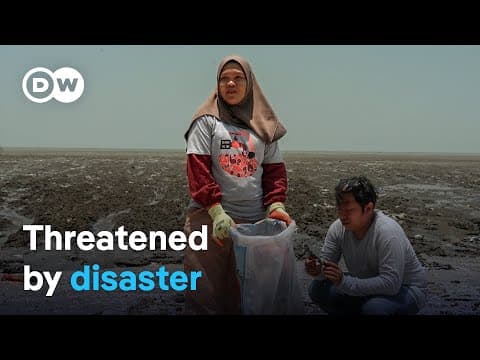
Indonesia faces severe environmental challenges, including rampant plastic pollution, deforestation for palm oil production, and the sinking of Jakarta due to over-extraction of groundwater. Local activists are fighting to combat these issues, but the scale of the problems is daunting.
Bali, known for its stunning temples and beautiful beaches, attracts millions of tourists each year. However, beneath its picturesque surface lies a troubling reality: the island is grappling with a severe waste management crisis. In the first half of 2023 alone, nearly 3 million tourists visited Bali, which has a population of approximately 4.5 million. Despite its allure, the island is plagued by plastic waste, with garbage accumulating on beaches, in streets, and in rivers.
Bali's waste management systems are virtually non-existent, leading to a significant trash problem. Local activists Gary and Kelly, who have lived in Bali for over 20 years, founded the organization Sungai Watch to tackle this issue. They focus on intercepting garbage in rivers before it reaches the ocean. Their efforts include installing floating barriers to catch trash, but the scale of the problem is overwhelming. In just two hours, their team can collect 200 kilograms of plastic waste, contributing to over 1,700 tons collected in the past three years. Despite these efforts, they acknowledge that their work is merely a drop in the ocean, as Indonesia is the world's second-largest plastic polluter after China.
Indonesia, an archipelago of over 177,000 islands, is rich in natural resources but also faces significant environmental degradation. The country is experiencing rapid industrialization, particularly in Java, which is the most populous and industrialized island. This industrial growth comes at a cost, leading to deforestation and pollution. Local communities are increasingly vocal about the destruction of their forests and the impact of plastic pollution.
Jakarta, Indonesia's capital, is gradually sinking due to excessive groundwater extraction. Many residents rely on wells for water, exacerbating the problem. The city is also prone to flooding, with significant events causing loss of life and property. The government has proposed relocating the capital to Borneo, aiming to create a new, sustainable city. However, this move has raised concerns about the ecological impact on Borneo's rainforests and the displacement of local communities.
Activists like Daru, a biologist and climate advocate, are working tirelessly to combat plastic pollution. She runs an NGO called Oton, which focuses on raising awareness and conducting research on plastic contamination in food. Daru's efforts include analyzing tofu for microplastics, revealing alarming levels of contamination. Her work highlights the pervasive nature of plastic pollution, which affects not only the environment but also human health.
Daru's investigations have uncovered troubling practices in the tofu production industry, where plastic waste is used as fuel due to its low cost. This practice releases harmful microplastics into the air and food supply. Furthermore, Indonesia has become a dumping ground for plastic waste from developed countries, as exporters seek cheaper alternatives for waste disposal. Despite a ban on importing plastic waste, illegal practices persist, with significant amounts of plastic smuggled into the country.
Deforestation for palm oil production is another critical issue facing Indonesia. The country is the world's largest producer of palm oil, leading to the destruction of vast areas of rainforest. Activists like Basuki are working to protect orangutans and their habitats, which are threatened by palm oil plantations. The expansion of these plantations has led to significant biodiversity loss and has put local communities at risk.
Indigenous communities, such as the Togo tribe, are particularly vulnerable to the consequences of deforestation and industrialization. As mining companies expand their operations, these communities face displacement and loss of their ancestral lands. The struggle for land rights and environmental protection is ongoing, with activists fighting to preserve their heritage and the natural environment.
Indonesia's environmental challenges are complex and multifaceted, involving plastic pollution, deforestation, and the sinking of Jakarta. Local activists are making significant efforts to combat these issues, but the scale of the problems is daunting. As the country grapples with the consequences of industrialization and environmental degradation, the fight for a sustainable future continues. The resilience of local communities and activists will be crucial in addressing these pressing challenges and protecting Indonesia's rich natural heritage.



















