
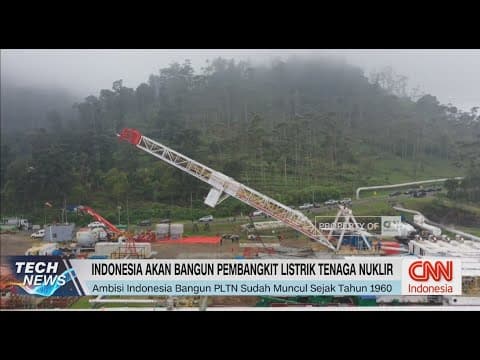
Indonesia is set to build its first nuclear power plant in Bangka Belitung by 2032, aiming for 18 GW of nuclear energy by 2040 as part of its transition to net-zero emissions by 2060. The project is privately funded, with international interest and a focus on safety and sustainability.
Indonesia is on the verge of realizing its long-awaited nuclear power plant (PLTN) project. According to the national electricity general plan (RUKN), the Bangka Belitung province has been identified as the initial site for the country's first nuclear power plant. The government aims to have electricity generated from nuclear energy available by 2032, marking a significant step in Indonesia's energy transition towards achieving net-zero emissions by 2060.
The Indonesian government has included nuclear energy as a crucial part of its energy strategy. Under the leadership of Prabowo Subianto, the target is to generate 18 GW of electricity from nuclear sources by 2040. The immediate goal, as outlined in the RUKN, is to have the first nuclear power plant operational by 2032, contributing approximately 4,450 MW to the national grid.
Currently, the government is expediting the completion of the legal framework necessary for the agency responsible for implementing nuclear energy utilization in Indonesia. The target for the initial phase of the project is to generate 250 MW, with potential for expansion based on expert studies conducted by the National Research and Innovation Agency (BRIN).
BRIN has identified 29 potential sites for nuclear power plants across Indonesia, from Banten to Papua. These locations have been selected based on their low risk of earthquakes and tsunamis, as well as their distance from populated areas.
Several international companies from Russia, France, South Korea, and the United States have expressed interest in participating in the construction of Indonesia's nuclear power plants. The government plans to fund the project through private investments, avoiding reliance on the state budget (APBN). One of the interested parties is Thorkon, a Singapore-based company that has been preparing studies for the past three to four years to establish Indonesia's first nuclear power plant.
Bob S. Effendi, Chief Operating Officer of Thorkon Indonesia, has proposed the construction of a small modular reactor on Kelas Island in Bangka Belitung. The estimated cost for this project is around 1.2 million USD. Currently, the project is privately funded, but discussions are ongoing with several European and Asian consortiums for further investments, which could reach approximately 300 million USD.
Despite the promising prospects, there has been a lack of interest from local Indonesian companies in participating in the nuclear power sector, even though the opportunities are substantial. The internal rate of return (IRR) for nuclear investments could exceed 20%, making it an attractive option for investors. The long-term vision for Indonesia includes generating between 54 GW to 150 GW of nuclear energy, which would require the establishment of 100 to 150 nuclear power plants, creating a significant industry.
Indonesia's ambition to develop nuclear power has been present since the era of President Sukarno. Subsequent administrations, including those of Presidents Suharto and Susilo Bambang Yudhoyono, attempted to realize the first nuclear power plant but faced public opposition. However, the current government believes that the public is now more prepared to accept the idea of nuclear energy, especially in light of rising energy costs.
In conclusion, Indonesia's move towards establishing its first nuclear power plant represents a pivotal moment in its energy strategy. With a focus on safety, sustainability, and private investment, the country is taking significant steps towards a more diversified and resilient energy future.



















