
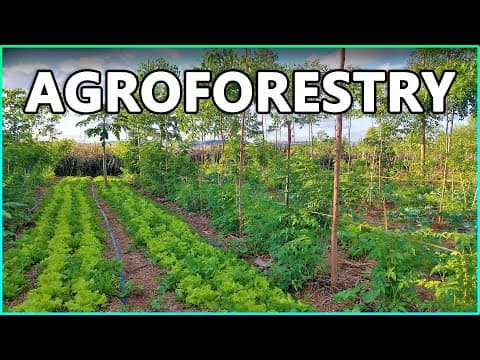
Agroforestry integrates trees, crops, and livestock to create sustainable land management systems. This blog explores innovative agroforestry ideas that address climate change, biodiversity loss, and food security, including precision agroforestry, silver pastoral systems, carbon sequestration, blockchain traceability, urban agroforestry, and crowdsourcing platforms.
Agroforestry is a sustainable land management system that integrates the cultivation of trees and shrubs with crops and/or livestock. This approach combines traditional agricultural practices with forestry to create a more diverse, productive, and resilient system. In recent years, there has been a growing emphasis on innovative agroforestry ideas to address contemporary challenges such as climate change, biodiversity loss, and food security. This article explores some of the cutting-edge agroforestry concepts that hold promise for a more sustainable and productive future.
Precision agroforestry involves the integration of precision farming technologies such as GPS, sensors, and remote sensing into agroforestry practices. This allows for precise monitoring and management of tree-crop interactions, optimizing resource use, and improving overall productivity. By utilizing data-driven approaches, farmers can make informed decisions that enhance the efficiency of their agroforestry systems.
Silver pastoral systems integrate livestock with strategically chosen multifunctional trees. These trees not only provide fodder for animals but also contribute to soil fertility, carbon sequestration, and biodiversity conservation. This system promotes a symbiotic relationship between livestock and trees, enhancing the productivity of both components while supporting ecological health.
Agroforestry systems can be utilized as a means to sequester carbon from the atmosphere. By planting trees alongside crops, carbon is stored in both above-ground biomass and soil, contributing to climate change mitigation. This dual benefit of agricultural productivity and environmental stewardship makes agroforestry a vital strategy in the fight against climate change.
Leveraging blockchain technology enhances transparency and traceability in agroforestry supply chains. This ensures the origin and sustainability of products, fostering consumer trust and supporting environmentally friendly practices. By providing a secure and verifiable record of agricultural products, blockchain can help consumers make informed choices and encourage sustainable practices among producers.
Integrating agroforestry principles into urban environments promotes green spaces with a mix of trees, crops, and other vegetation. This not only enhances urban biodiversity but also provides local food production and improves the overall well-being of urban residents. Urban agroforestry can transform cities into more sustainable and livable spaces, contributing to food security and environmental health.
Developing digital platforms that connect farmers, researchers, and policymakers facilitates the sharing of knowledge, experiences, and innovations in agroforestry. These crowdsourcing platforms enable collaborative learning and the dissemination of best practices, fostering a community of innovation in agroforestry practices.
Innovative agroforestry ideas are crucial for addressing the complex challenges facing agriculture and the environment. These concepts not only improve the efficiency and productivity of agroforestry systems but also contribute to environmental sustainability, climate resilience, and community well-being. As we continue to advance in technology and our understanding of ecological processes, the potential for innovative agroforestry solutions to positively impact global food systems and ecosystems becomes even more significant. Embracing these ideas and fostering a culture of continuous innovation is key to realizing a future where agroforestry plays a central role in sustainable and resilient agriculture.



















