
This blog post explores the innovative use of bubble curtains in underwater construction to mitigate noise pollution affecting marine life. It discusses the challenges faced during the Bay Bridge replacement project and how bubble curtains effectively reduce sound pressure, benefiting both construction efforts and aquatic ecosystems.
In 1989, the Loma Prieta earthquake struck California, causing significant damage to infrastructure, particularly bridges. The Bay Bridge suffered extensive damage, prompting Caltrans to plan a replacement project. However, the construction posed a serious risk to aquatic wildlife due to the noise generated during pile driving operations. This blog post delves into the challenges faced during the Bay Bridge replacement and the innovative solution of using bubble curtains to mitigate underwater noise pollution.
Following the Loma Prieta earthquake, Caltrans recognized the need to replace the damaged Bay Bridge to withstand future seismic events. The project required the installation of over 250 heavy-duty piles, which are essential for the structural integrity of the new bridge. However, during the initial pile driving operations in October 2000, biologists observed a concerning trend: fish in the surrounding area began to die.
The cause of the fish deaths was traced back to the intense sound generated by the pile driving process. The large steel pipes used in the operation acted like bells, radiating sound pressure throughout the San Francisco Bay. This noise not only affected fish directly but also had serious implications for threatened and endangered species in the area. Caltrans faced the challenge of installing the necessary piles without harming the local aquatic ecosystem.
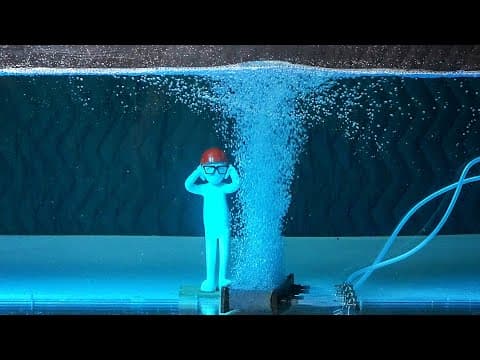
To address the noise pollution issue, Caltrans developed a solution involving the use of bubble curtains. The concept is simple yet effective: by creating a barrier of bubbles around the construction site, the sound pressure generated during pile driving can be significantly reduced. This method not only protects marine life but also allows construction to proceed with minimal disruption.
Bubble curtains work by taking advantage of the differences in acoustic impedance between air and water. Sound travels differently in water than in air, and the presence of bubbles creates an impedance mismatch that reduces sound transmission. When air is pumped through a series of pipes at the construction site, it forms a curtain of bubbles that absorbs and dissipates sound energy.
Sound pressure is measured in decibels (dB), a logarithmic scale that makes it easier to compare different sound levels. Underwater, the reference pressure for sound measurements is 1 micropascal, which differs from the 20 micropascals used in air. This means that underwater sound levels can be perceived very differently by marine life compared to human perception.
In a practical demonstration, a model was created to showcase the effectiveness of bubble curtains. Using a hydrophone to measure sound levels, the experiment compared sounds recorded with and without the presence of bubbles. The results indicated a noticeable reduction in higher frequency sounds, which are particularly harmful to fish.
While bubble curtains are an innovative solution, their implementation is not without challenges. Effective bubble curtain systems require careful planning and logistics, including:
The Bay Bridge project was completed in 2005, and the use of bubble curtains earned Caltrans an Environmental Excellence Award from the Federal Highway Administration. The lessons learned from this project have been applied globally, demonstrating the effectiveness of bubble curtains in various underwater construction scenarios.
Bubble curtains are not only useful for reducing noise; they have several other applications in underwater environments:
Interestingly, marine animals also utilize bubbles for hunting. Humpback whales, for example, use bubble net feeding techniques to corral fish, showcasing that the use of bubbles is a natural phenomenon as well as a human-engineered solution.
The innovative use of bubble curtains in underwater construction represents a significant advancement in minimizing environmental impacts. By reducing noise pollution, these systems protect vulnerable marine species while allowing essential infrastructure projects to proceed. As we continue to explore and develop new technologies, it is crucial to consider the ecological implications of our actions and strive for solutions that benefit both humanity and the natural world. The success of the Bay Bridge project serves as a model for future underwater construction efforts, highlighting the importance of creativity and environmental stewardship in engineering.



















