
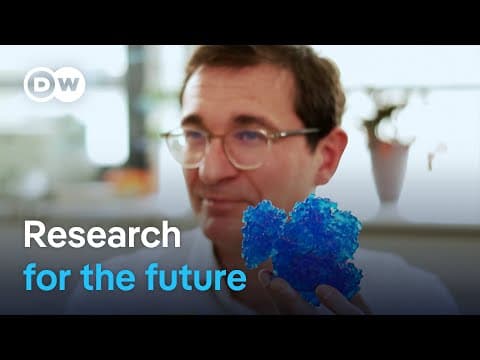
This blog post explores groundbreaking research in bioplastics and sustainable agriculture aimed at combating climate change. It highlights the development of a new bioplastic from chitin, innovative meat substitutes, and eco-friendly concrete, showcasing how these advancements can reduce carbon emissions and promote environmental sustainability.
As the world grapples with the looming threat of climate collapse, scientific research is stepping up to provide innovative solutions. This blog post delves into groundbreaking research in bioplastics and sustainable agriculture, showcasing how these advancements can help combat climate change.
At the University in Gishon, researchers Susanna Fespa and Elizabeth Pollon have made a significant breakthrough in the development of a new bioplastic. This material, discovered by chance during a failed project involving algae and crustacean shells, has the potential to revolutionize the plastics industry. Over five years, the researchers have experimented tirelessly to create a natural material that is tear-resistant, elastic, and durable, all without chemical additives.
The new bioplastic has a wide range of industrial applications, including potential replacements for silicone in baking paper, circuit boards, and medical syringes. With plastic production being a major contributor to CO2 emissions—approximately 800 million tons of CO2 are released annually from plastic production—this bioplastic offers a promising alternative. Currently, only a third of plastic waste in Germany is recycled, highlighting the urgent need for sustainable solutions.
The researchers are also addressing the issue of compostable bags, which often decompose too slowly. Their new material could lead to the creation of bin liners that are quick and easy to compost, providing a practical solution for households.
In Hessa, Germany, researchers at Fula University of Applied Sciences are working on the Patty Project, which aims to develop a new type of meat substitute using broad beans. This initiative focuses on creating a protein-rich, plant-based alternative without artificial additives, suitable for various portion sizes.
The project emphasizes regional production and processing, aiming to reduce the environmental impact associated with meat production. Traditional meat production generates significant greenhouse gas emissions—1 kilogram of beef produces 30.5 kilograms of greenhouse gases, while plant-based substitutes only produce 2.8 kilograms. The researchers believe that a shift towards plant-based diets can significantly reduce CO2 emissions and water consumption.
At an agricultural research center near Frankfurt, researchers are investigating ways to make dairy farming more sustainable. By measuring methane emissions from cows, they aim to develop strategies to reduce these emissions, which are significantly more harmful to the environment than CO2.
The Green Dairy Project involves feeding cows different diets to assess their impact on methane production and soil health. The researchers are exploring how to breed cows that naturally produce less methane, contributing to a more sustainable agricultural system.
Concrete is essential for infrastructure, but its production is a major source of CO2 emissions. Researchers at the University of Castle are developing eco-concrete that reduces the cement content by using alternative materials, such as ash from waste incineration.
This eco-concrete not only conserves resources but also has the potential to significantly lower CO2 emissions associated with traditional concrete production. The research team is focused on refining the material to ensure it meets strength and durability standards for various applications.
At the Mox Plunk Institute, researchers are exploring ways to enhance photosynthesis, the natural process that captures CO2 from the atmosphere. By studying enzymes that facilitate this process, they aim to develop methods for more efficient carbon capture.
The potential applications of this research are vast, ranging from designing new plants that capture CO2 more effectively to creating biotechnological systems that utilize CO2 emissions from industrial processes.
From bioplastics to sustainable agriculture and eco-friendly construction materials, innovative research is paving the way for a more sustainable future. Each of these initiatives represents a step towards reducing carbon emissions and promoting environmental sustainability, highlighting the critical role of scientific research in combating climate change.



















