
This article discusses the importance of integrating Science-based Climate and Disaster Risk Assessment (CDRA) into land use development and infrastructure planning (LUDIP) to enhance resilience against climate change and disasters, emphasizing the need for comprehensive planning across all sectors.
In the face of increasing climate-related challenges, the integration of Science-based Climate and Disaster Risk Assessment (CDRA) into land use development and infrastructure planning (LUDIP) has become essential. Alfredo Mahar Francisco Lagmay, Executive Director of the UP Resilience Institute and the UP NOAH Center, emphasizes the significance of this integration in his discussion on mainstreaming CDRA into comprehensive land use plans.
The primary goal of mainstreaming CDRA is to identify appropriate risk reduction and climate change adaptation measures that can inform comprehensive development planning and investment programming. Under Republic Act 11396, state universities and colleges (SUCs) are mandated to prepare and implement land use development and infrastructure plans that include the construction of dormitories for students and housing for employees. This requirement highlights the need for campuses, which function as communities, to adopt similar planning strategies as municipalities and cities.
As campuses are often large enough to be affected by climate change impacts, it is crucial to apply the same principles of climate change adaptation and mitigation that are used in municipal planning. Lagmay points out that many campuses have claimed land that is actually part of river systems, which complicates development efforts. By utilizing science and technology, planners can identify areas prone to flooding and other hazards, allowing for better visualization and preparation.
Effective planning can lead to increased resilience, ensuring that when hazardous events occur, communities are prepared and safe. This proactive approach not only facilitates sustainable development goals but also promotes well-planned development across various sectors, including energy, infrastructure, tourism, and education. Lagmay argues that disasters often stem from unresolved development issues, thus highlighting the need for comprehensive community planning that leverages disaster scenarios to foster national development.
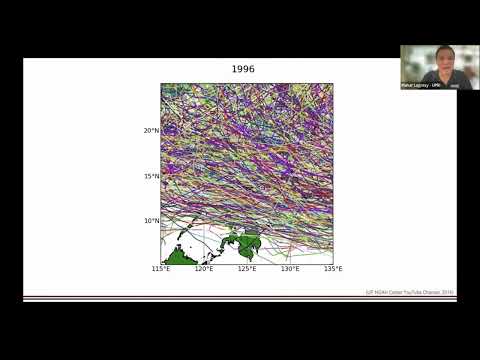
Growing populations and climate change exacerbate existing problems, increasing poverty and human mobility. In the Philippines, the challenges posed by hydrometeorological hazards—such as strong winds, storm surges, floods, and rainfall-triggered landslides—are intensified by climate change. This necessitates a shift from traditional Disaster Risk Reduction (DRR) strategies to include Climate Change Adaptation (CCA), which prepares communities for the future impacts of climate change.
To effectively address these hazards, corresponding hazard maps are essential for resilient community planning. The United Nations Office for Disaster Risk Reduction (UNDRR) advocates for the use of probabilistic models to understand uncertainties and alternative futures. The Intergovernmental Panel on Climate Change (IPCC) emphasizes that the goal of working with scenarios is not to predict the future but to better understand the range of possible outcomes and the robustness of different decisions.
Data plays a critical role in building trust among stakeholders. Lagmay stresses that data cannot remain isolated; hazards affect all sectors, and planning must be comprehensive. A science-based approach, as outlined in the Sendai Framework, relies on replicable methods supported by accessible data. When stakeholders trust the data and the scientific processes behind it, communication and collaboration become more effective.
In conclusion, integrating Science-based Climate and Disaster Risk Assessment into land use planning is vital for enhancing community resilience against climate change and disasters. By adopting a comprehensive, data-driven approach, planners can ensure that development is sustainable and that communities are prepared for future challenges. The collaboration across sectors and the emphasis on science will pave the way for more resilient and adaptive communities.



















