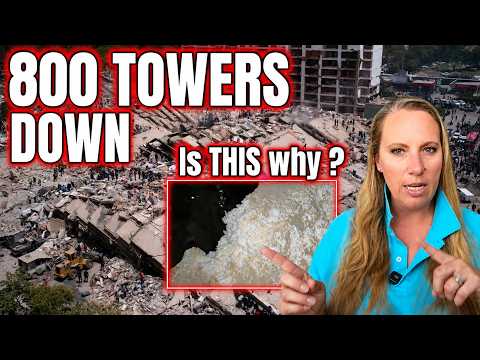
Nearly 800 buildings collapsed in Venezuela following powerful earthquakes, with over 1,400 confirmed dead and more than 68,000 missing. Rescue efforts face challenges from aftershocks and structural failures possibly linked to poor construction materials and lack of enforcement of seismic codes. Comparisons with earthquake preparedness in Japan, Mexico, and the Philippines highlight the importance of geological factors and building regulations.
Venezuela has experienced a devastating series of earthquakes resulting in the collapse of nearly 800 buildings. The confirmed death toll ranges from 1,430 to 1,450, with injuries reported between 3,150 and 3,238. However, the most alarming figure is the number of missing and unaccounted people, which exceeds 68,000 according to some reports, with other sources estimating between 50,000 and 55,000.
The hardest-hit area is Laguaria State, approximately 40 kilometers (25 miles) north of Caracas, where dozens of buildings, including towers with swimming pools along the coastline, have collapsed into rubble. This has displaced nearly 13,000 people in that region alone.
Rescue teams have managed to save at least 33 people over the weekend, including children. However, the critical 72-hour window for finding survivors has now passed, significantly reducing the chances of finding people alive. A Swiss rescue leader noted that survival probability drops sharply after roughly three days.
International aid has been mobilized, with 24 countries providing support and nearly 600 tons of supplies. There are 86 K9 search teams and over 2,741 search and rescue personnel, supported by around 30,000 Venezuelan specialists.
Rescue operations have been hindered by aftershocks, including a moderate earthquake of magnitude 4.7 west of Caracas, which may have compacted debris and endangered survivors still trapped under rubble. Authorities have urged residents to remain alert, avoid entering damaged structures, and follow emergency recommendations due to the risk of further collapses.
Videos from rescuers show rubble that appears to contain highly porous materials resembling styrofoam or expanded polystyrene (EPS), raising concerns about the quality of construction materials used. Some speculate that these materials were used in load-bearing columns, which would explain the widespread collapse.
However, experts clarify that EPS is commonly used as lost formwork or expansion joints in construction, not as structural support. These materials fill gaps between buildings to prevent damage from shaking or thermal expansion but do not bear weight. The exposed EPS in rubble may give the false impression that columns were made of this material.
Despite this, there are complaints and images suggesting a lack of structural steel reinforcement in many buildings. Proper load-bearing columns should contain dense cages of steel rebars and high-strength concrete. The absence of such reinforcement would make buildings vulnerable to collapse.
The Hugo Chavez housing complex, built in 2011 to relocate families affected by heavy rains in 2010, suffered massive destruction. Of 193 buildings, only three remain standing. This complex was intended for low-income families and was not luxury housing. Experts suggest that low-quality materials, lack of supervision during construction, and absence of anti-seismic building codes contributed to the disaster.
The severity of the damage is also influenced by geological conditions. Caracas sits on soft sedimentary basin fill, such as old riverbeds and lakebeds, which amplify seismic waves and prolong shaking. This phenomenon is similar to what happened in Mexico City during the 1985 magnitude 8 earthquake, where soft clay caused buildings to sway violently and collapse despite the epicenter being hundreds of kilometers away.
Buildings constructed on firmer ground in Caracas fared better, indicating the critical role of ground conditions in earthquake damage.
Japan experiences frequent and often larger earthquakes but has significantly fewer casualties due to stringent and continuously updated seismic building codes. After the 1923 Great Kanto earthquake, Japan implemented national seismic codes and has revised them after every major quake, learning from each event to improve building resilience.
Mexico learned from the 1985 earthquake disaster and rebuilt its codes considering ground conditions. The city installed the first public earthquake early warning system in the Americas. When a magnitude 7.1 earthquake struck in 2017, far fewer buildings collapsed compared to 1985.
The Philippines, located on the Pacific Ring of Fire, has experienced devastating earthquakes and building collapses. Although it has a national building code with seismic provisions, enforcement remains a challenge. Issues include substandard materials, unauthorized plan alterations, and construction without proper supervision.
Venezuela has a history of strong earthquakes, including a major event in 1812 and another in 1967 that led to new design rules. However, enforcement of these codes has been lacking, especially during the country's prolonged economic crisis marked by hyperinflation.
Many buildings that collapsed were old, unreinforced concrete structures from the oil boom years, never retrofitted or strengthened. Economic constraints likely discouraged developers from investing in expensive seismic standards.
Geologists warn that further strong earthquakes and aftershocks are likely in the region. The ongoing seismic activity along fault zones parallel to Venezuela's coast indicates persistent stress that could trigger more events.
The disaster underscores the necessity of continuous enforcement of building codes, proper construction supervision, and public awareness. The ground will move again, and only through preparedness and adherence to seismic standards can future tragedies be mitigated.
The collapse of nearly 800 buildings in Venezuela following powerful earthquakes is a complex tragedy involving geological factors, construction practices, and socio-economic challenges. While rescue efforts continue amid aftershocks, the long-term solution lies in learning from past disasters, enforcing seismic building codes, and investing in resilient infrastructure.
Countries like Japan, Mexico, and the Philippines provide instructive examples of how to adapt and prepare for inevitable seismic events. Venezuela's experience is a stark reminder that knowledge alone is insufficient without action and enforcement.
Separately, a mysterious crack has opened at Mount Etna volcano, showing vertical displacement and indicating a potential flank collapse. This ongoing geological activity highlights the dynamic nature of Earth's crust and the importance of monitoring and preparedness in volcanic regions as well.