
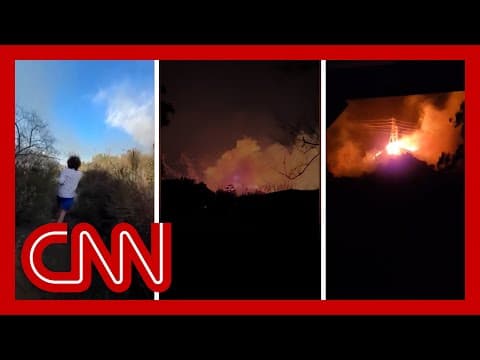
Recent videos and eyewitness accounts reveal the beginnings of two significant wildfires in Los Angeles, the Palisades Fire and the Eaton Fire. Investigations are ongoing to determine their causes, with local officials examining the role of dry conditions, high winds, and potential electrical sources.
Recent events in Los Angeles have raised alarms as two significant wildfires, the Palisades Fire and the Eaton Fire, have emerged, devastating large areas and prompting urgent investigations into their origins. Eyewitness accounts and video footage have provided crucial insights into how these fires began and the conditions that fueled their rapid spread.
On January 7th, Kai Cranmer was hiking in Temescal Canyon when he and his friends noticed smoke on the horizon. As they turned around, they saw a plume of smoke rolling over the mountain, indicating the start of the Palisades Fire. A satellite image captured by the European Space Agency at 10:37 a.m. local time confirmed the initial signs of the fire.
Later that day, Sheryl Kunj alerted her husband, Jeffrey, about a fire she spotted while driving home from work. With no power in the neighborhood, she saw a bright light on the hillside, which turned out to be the base of an electrical tower engulfed in flames. Jeffrey's cell phone video captured this alarming scene, marking one of the first images of the Eaton Fire.
The Eaton Fire reportedly started at 6:18 p.m. on the same day. Residents captured videos showing flames at the base of an electrical tower, further raising concerns about the potential causes of these fires. Local officials are investigating the area around the electrical tower as a possible origin site for the Eaton Fire.
The Palisades Fire has had a devastating impact, burning over 23,000 acres (more than 37 square miles) and resulting in at least nine fatalities. It has also destroyed approximately 5,000 structures and is currently only 18% contained. The rapid growth of the fire can be attributed to dry brush and high winds, which have historically exacerbated wildfire conditions in Southern California.
As investigations continue, questions arise about the initial spark that ignited these destructive fires. The Palisades Fire reportedly began around 10:30 a.m. on January 7th, just minutes before the first signs of smoke were recorded. Interestingly, it appears to have started near the site of another fire that broke out on New Year's Day, raising speculation about whether winds could have rekindled smoldering debris from that earlier blaze.
Authorities, including the Bureau of Alcohol, Tobacco, Firearms and Explosives (ATF), are actively investigating the causes of both fires. While no leading theory has emerged yet, the proximity of the two fires has led to increased scrutiny of the conditions that allowed them to ignite and spread so rapidly.
Weather conditions have played a significant role in the development of these wildfires. The infamous Santa Ana winds, known for their ability to fan flames and spread fires quickly, have been a concern for local residents and officials. Although initial forecasts predicted strong gusts, the winds have not been as severe as expected, providing a temporary reprieve for firefighting efforts.
As the fires continue to burn and investigations unfold, local officials are focusing on recovery and rebuilding efforts. Mayor Bass and the governor are working to streamline the permitting process to facilitate quicker rebuilding in affected areas. Utility companies are also on-site, addressing downed power lines and other infrastructure issues resulting from the fires.
The recent wildfires in Los Angeles serve as a stark reminder of the dangers posed by dry conditions and high winds. As investigations into the causes of the Palisades and Eaton Fires continue, the community remains hopeful for a resolution that will not only provide answers but also pave the way for recovery and rebuilding in the aftermath of these devastating events.



















