
Irish wool prices suffered a significant decline during the COVID-19 pandemic due to reduced demand from industries like carpet manufacturing, which supply cruise ships, hotels, and casinos. However, with declining sheep numbers in Ireland, the UK, and Australia, wool supply has decreased, leading to improved market conditions and optimism for rising prices in the coming years. This article explores the wool buying process, market challenges, and future outlook.
Good morning and welcome back to the channel. Today, we explore the journey of Irish wool from farm to market, focusing on the challenges faced by the wool industry in recent years and the hopeful signs of recovery.
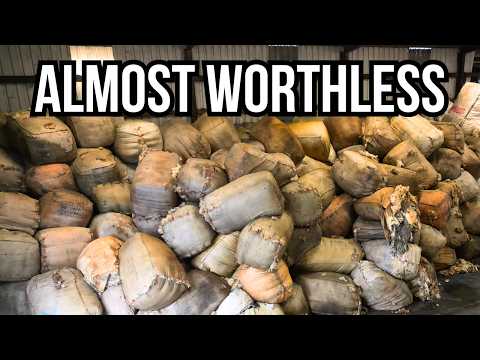
We visited Dooley's Wool in County Offaly, a key wool buying business in the region. Kevin, the owner, shared insights into the wool market, the impact of COVID-19 on prices, and the future outlook. Behind him, large piles of wool await processing, illustrating the scale of the operation.
For many farmers, shearing their sheep is just the beginning of the wool's journey. After shearing, farmers bag the wool and sell it to buyers like Dooley's Wool. This marks the first major step in the wool supply chain beyond the farm.
Kevin explained that the last few years have been particularly challenging for wool merchants and farmers alike. The cost of shearing often exceeded the price farmers received for their wool, making it an unprofitable endeavor.
Before the pandemic, Irish wool was primarily used in carpet manufacturing. These carpets were then supplied to cruise ships, hotels, and casinos. However, when COVID-19 struck, these industries shut down, drastically reducing demand for wool.
This led to a collapse in wool prices starting in 2020. Wool stockpiles grew as sales stalled, leaving sheds full of unsold wool. Despite these challenges, Dooley's Wool continued buying wool to support farmers and keep the business running.
Kevin highlighted that the price of Irish wool is generally influenced by sales in the UK market. Sheep numbers have declined in Ireland, the UK, New Zealand, and Australia, leading to a reduction in wool supply.
During the pandemic, auctions in the UK saw significant overhangs of unsold wool, sometimes with only half of the available wool selling. This created a backlog that carried over to subsequent auctions, causing market indigestion.
Now, the surplus wool has largely cleared. Auctions are seeing full sales with no leftover stock, indicating a healthier market balance between supply and demand.
The decline in sheep populations across major wool-producing countries means less wool is entering the market. This reduction in supply, combined with recovering demand, is expected to support higher wool prices moving forward.
At Dooley's Wool, the intake shed serves multiple purposes: weighing incoming wool bags, grading the wool, and pressing it for export.
Each bag brought in by farmers is carefully graded based on quality. Irish wool grading is simpler than in the UK, with around 13 to 15 grades, sorting out black fleeces, Scotch fleeces, yellow fleeces, and others.
Once graded, the wool is pressed into large bales weighing around 466 kilograms, containing approximately 200 fleeces. These bales are then stored temporarily before being exported.
Wool is bulky, and storage space is a constant challenge. The sheds at Dooley's Wool are often too large for half the year and too small for the other half, reflecting the seasonal nature of wool intake.
Kevin emphasized the importance of moving wool quickly through the supply chain, as prices can fluctuate significantly. Holding onto wool for too long is risky, despite old sayings suggesting prices will rise if you wait.
Looking back, wool prices have varied greatly. Before 1989, wool prices were around one pound per pound of wool, translating to about six pounds per fleece. The recent years of low prices have been a stark contrast to those times.
The Irish wool industry has faced tough times, especially during the COVID-19 pandemic, with prices plummeting and demand drying up. However, the market is showing signs of recovery thanks to declining sheep numbers and renewed demand.
Farmers and wool merchants like Dooley's Wool remain hopeful that prices will continue to improve, making wool production a more viable and profitable part of Irish agriculture once again.
This journey from farm shearing to wool export highlights the complexities and resilience of the wool industry in Ireland.
This comprehensive look at the Irish wool market underscores the challenges and opportunities ahead for farmers and buyers alike.



















