
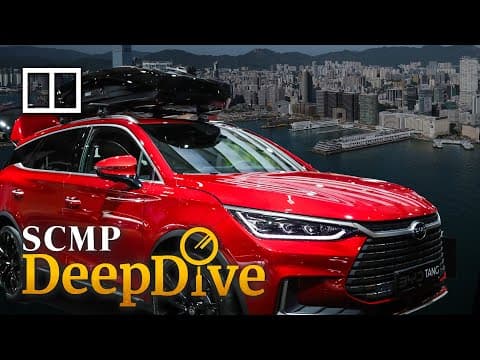
Hong Kong is experiencing a significant rise in electric vehicle (EV) adoption, with projections indicating that EVs may outnumber petrol and diesel vehicles within 15 years. However, challenges such as insufficient charging infrastructure and slow electrification of public transport remain critical hurdles. The government aims to enhance charging facilities and promote EV use to achieve net zero emissions by 2050.
Hong Kong is witnessing a remarkable shift towards electric vehicles (EVs), with 102,000 electric vehicles currently registered in the city. This figure represents 11.5% of all cars on the road, and projections suggest that within the next 15 years, electric vehicles may outnumber petrol and diesel vehicles on Hong Kong streets.
In the first nine months of 2024, the percentage of EVs among new car registrations averaged an impressive 72%, positioning Hong Kong among the highest ratios of EV adoption globally. This pace is comparable to countries renowned for their EV uptake, such as Norway and the Netherlands, and even surpasses the adoption rates seen in mainland China.
Despite the rapid adoption of electric vehicles, Hong Kong faces significant challenges in charging infrastructure. Currently, the city has only 8,728 public EV chargers, which includes 5,234 medium-speed and 1,511 fast chargers. This translates to one charger for every 11.7 cars, a stark contrast to neighboring Shenzhen, which boasts one charger for every 3.13 vehicles with its 370,000 charging stations.
Many EV owners express frustration over the limited availability of charging stations, stating that they must constantly monitor their vehicle's charge levels. The high cost of charging at public stations, which can be double the price of home charging, further complicates the situation.
Hong Kong has set an ambitious goal to become a net zero emissions economy by 2050, with phasing out internal combustion engine (ICE) vehicles being a crucial step. The government aims to install approximately 200,000 EV chargers by mid-2027, as announced by Chief Executive John Lee in his 2024 policy address. However, the feasibility of this goal remains uncertain, given the challenges of finding suitable locations for fast charging stations.
To encourage the installation of fast chargers, suggestions have been made to incentivize existing gasoline stations to provide charging facilities. Potential incentives could include tax reductions or extending the contract periods for these stations, encouraging them to install at least one fast charger.
Hong Kong generally imposes a hefty first registration tax on new vehicles. However, individuals trading in an existing petrol or diesel vehicle can receive a discount of up to 58,500 HKD on the initial fee when switching to an electric vehicle. This financial incentive makes it more affordable for residents to transition to EVs.
Another area where Hong Kong lags is the electrification of public transport. As of April 2024, only 90 electric buses were operating on franchise routes out of a total of 5,900 buses. Compared to other regions in mainland China, the pace of public transport electrification in Hong Kong is slow. Experts argue that the government should implement more supportive policies to accelerate the transition, particularly in the bus sector, as public transport is a significant source of emissions in the city.
While Hong Kong may be relatively late in fully embracing electric vehicles, the high uptake of EVs suggests that the city’s streets will look very different in just a few years. The government has plans to ban the majority of new ICE vehicle registrations by 2030, including hybrids.
Chinese brands such as Xpeng and GAC Ion have recently opened showrooms in Hong Kong, viewing the city as a potential launchpad for international expansion. Meanwhile, Tesla continues to dominate the market, holding over 46% of the EV market share in the city.
In conclusion, while Hong Kong is on the brink of an electric vehicle boom, addressing the challenges of charging infrastructure and public transport electrification will be crucial for the city to achieve its ambitious environmental goals and fully embrace the electric vehicle revolution.



















