Jamie Dimon, CEO of JP Morgan Chase, shares insights on global geopolitical risks including the wars in Ukraine and Iran, the impact of AI on jobs and cybersecurity, the importance of American values, and the need for business leaders to engage more actively in societal issues. He also reflects on political leadership, immigration, and the legacy of powerful figures like Jeffrey Epstein.
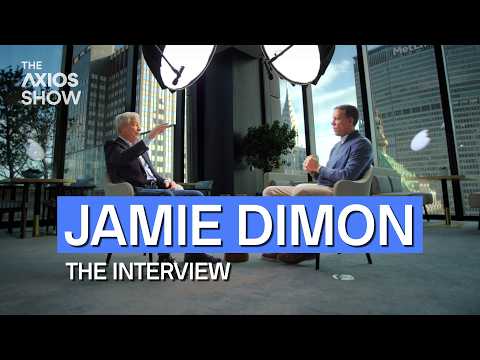
Jamie Dimon, the CEO of JP Morgan Chase, recently appeared on The Axios Show to discuss a wide range of pressing issues facing the United States and the world today. From geopolitical tensions and artificial intelligence to the role of business in society and political leadership, Dimon offered candid insights drawn from his extensive experience running one of the world's largest financial institutions.
Dimon acknowledged that the world is currently facing unprecedented geopolitical risks, the likes of which have not been seen since World War II. He highlighted conflicts such as the war in Ukraine and the ongoing tensions in Iran, as well as the complex relationships with China and other nations in the Asia-Pacific region.
He noted that while private credit risks are relatively normal, the geopolitical landscape is fraught with uncertainty. However, Dimon expressed cautious optimism about the possibility of long-term peace in the Middle East, citing the interests of Saudi Arabia, the UAE, America, and Israel in achieving stability. He also emphasized the complexity of China's neighborhood, including countries like South Korea, Vietnam, the Philippines, Australia, Japan, and Indonesia, which complicates the geopolitical dynamics.
When asked about whether the war in Iran is a war of choice and if it benefits adversaries like Russia and China, Dimon offered a nuanced perspective. He pointed out that Iran has been a source of terrorism and conflict for over 45 years, funding groups such as Hamas, Hezbollah, and the Houthis, and possessing ballistic missile capabilities. While the conflict creates short-term risks, especially for oil prices, he hopes for a peaceful resolution.
Turning to domestic issues, Dimon stressed that America has no divine right to success and that the country's strength lies in its Constitution and core values such as freedom of enterprise, liberty, freedom of speech, religion, and equal opportunity. He expressed concern that America has become somewhat soft and that there has been a failure to adequately teach these values in schools.
Dimon identified the real domestic risk as the erosion of the nation's heart, soul, grit, and courage—qualities that drive economic and military strength. He lamented the tendency to tear down American achievements rather than celebrate its virtues, especially during the nation's 250th anniversary.
On the topic of artificial intelligence (AI), Dimon described himself as net optimistic but realistic about the challenges. He acknowledged that AI will cause job displacement but also has the potential to improve lives by enabling shorter workweeks, curing diseases, and enhancing safety.
His greatest fear regarding AI is its potential to exacerbate cybersecurity threats. He highlighted that cyber risks are already significant and that AI could make cyberattacks more severe. Despite this, he noted that America has strong cyber capabilities to defend itself.
Dimon emphasized the importance of reskilling and retraining workers to adapt to AI-driven changes and expressed confidence that with proper planning, the negative impacts can be managed. He also pointed out that many jobs, especially in skilled trades like welding, electrical work, and plumbing, will remain vital and increasingly sophisticated.
Regarding fears of AI leading to catastrophic outcomes or loss of human control, Dimon believes guardrails will be developed to prevent such scenarios, though vigilance is necessary.
Dimon criticized the silence of many CEOs in the current environment, attributing it partly to fear but also to the traditional role of businesses not commenting on every policy issue. He argued that business made a mistake by not engaging more actively earlier and that societal problems cannot be fixed by politicians alone.
He called for a renewed spirit of service and responsibility among business leaders, echoing John F. Kennedy's famous call to ask what one can do for the country. Dimon also discussed the challenges of speaking out under different presidential administrations and the complexities of navigating political discourse.
On immigration, Dimon expressed support for border security and a merit-based system, noting that many immigrants want to become American citizens and contribute to the economy. He acknowledged that the Business Roundtable has supported a path to citizenship for law-abiding immigrants and that policies like DACA should remain.
Dimon shared his mixed views on former President Trump, recognizing that while Trump raised important issues, some policies such as tariffs and micromanaging business deals were problematic. He emphasized the need for careful evaluation of government involvement in economic matters.
He also discussed the current political climate, noting institutional decay and mistrust in government, media, and big business. Dimon sees a need for leaders who can unite the country, fix broken systems like education, and restore common sense and trust.
Addressing the controversial topic of Jeffrey Epstein, Dimon condemned Epstein's actions and criticized those who continued to associate with him despite knowledge of his crimes. He questioned why the government did not act sooner and reflected on the allure of being part of exclusive social circles.
Dimon expressed skepticism about the feasibility of a viable third party in the U.S. political system but acknowledged that new leaders can emerge who bring competence and common sense. He stressed the importance of leaders who admit mistakes and lead with clear vision.
When asked about running for office himself, Dimon declined, citing his love for his current work and the challenges of political life.
Dimon is optimistic about technological advances, including potential breakthroughs in reversing aging and curing diseases, envisioning a future where people live longer and healthier lives.
He also expressed interest in media as a tool for education and policy understanding, emphasizing the need for clear communication to policymakers and the public.
Jamie Dimon's wide-ranging discussion on The Axios Show offers a thoughtful perspective on the challenges and opportunities facing America and the world. His emphasis on values, leadership, and proactive engagement by business and society underscores the complexity of today's issues and the need for collective effort to navigate them successfully.