
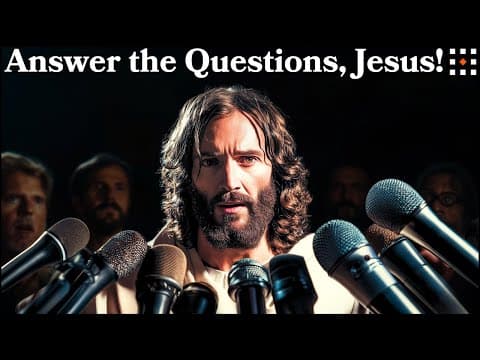
This blog post explores the evasive responses of Jesus in the Gospels, questioning whether his cleverness in avoiding direct answers reflects wisdom or manipulation. Through various examples, it highlights the implications of his non-responses and the expectations of clarity in theological discourse.
Jesus is often celebrated for his wisdom, clever comebacks, and storytelling abilities. Many view him as a genius for his use of parables and analogies, which are seen as profound methods of teaching. However, upon closer examination, particularly after deconversion, one might question Jesus's tendency to avoid direct answers. This post will explore several instances from the Gospels where Jesus's responses can be interpreted as evasive rather than enlightening.
Throughout history, many great thinkers, including Socrates and various motivational speakers, have employed similar rhetorical strategies. However, the stakes are significantly higher for Jesus, as Christian theology posits that understanding his teachings is crucial for salvation. Given this context, one might expect Jesus to provide clear and direct answers to fundamental questions about faith and morality.
In a tense moment during his final week, Jesus is confronted by the chief priests and elders who demand to know by what authority he performs his miracles and teachings. Instead of answering directly, Jesus poses a counter-question about the baptism of John, effectively trapping his questioners. While some may view this as a clever rhetorical move, it raises the question: does this avoidance serve the greater good of clarity for the audience?
During his trial, Pontius Pilate asks Jesus if he is the king of the Jews. Jesus deflects with another question, avoiding a straightforward answer. When Pilate presses for clarity, Jesus speaks vaguely about his kingdom not being of this world. This moment presents a golden opportunity for Jesus to define truth, yet he remains silent, leaving Pilate—and the audience—without a clear understanding. This silence can be interpreted as a failure to engage with a critical question about his identity and mission.
When questioned about the lawfulness of paying taxes to Caesar, Jesus responds with a question about whose image is on the coin. His famous line, "Render unto Caesar what is Caesar's, and unto God what is God's," is celebrated for its cleverness but ultimately lacks practical guidance. The ambiguity of what belongs to Caesar versus God leaves room for interpretation, leading to confusion rather than clarity.
In this story, Jesus is presented with a woman accused of adultery, and the Pharisees challenge him to uphold the law of Moses. Instead of providing a clear stance, Jesus writes in the dirt and ultimately tells the accusers that the one without sin should cast the first stone. While this response is often lauded for its ethical implications, it sidesteps the legal and moral questions at hand, leaving the woman's fate unresolved.
When a Canaanite woman pleads for her daughter’s healing, Jesus initially ignores her and later refers to her as a dog, implying she is unworthy of his help. This interaction raises questions about Jesus's attitude towards non-Jews and his willingness to engage with those outside his immediate community. His eventual healing of her daughter, after she demonstrates persistence, can be seen as a reluctant concession rather than a compassionate response.
When asked how to inherit eternal life, Jesus redirects the question back to the lawyer, who answers correctly. Instead of providing a straightforward answer, Jesus tells the parable of the Good Samaritan. While this story expands the definition of neighborly love, it avoids directly addressing the lawyer's question about eternal life, leaving the audience to interpret the moral lesson.
When asked why he speaks in parables, Jesus states that he does so so that people will not understand and thus not be forgiven. This admission raises significant theological concerns about the nature of his teachings and the intention behind them. If the goal is to save, why employ a method that obscures understanding?
The examples discussed illustrate a pattern of evasion in Jesus's responses, raising questions about the clarity and intent of his teachings. While some may argue that his rhetorical strategies are brilliant, they also highlight a troubling lack of direct engagement with critical questions about faith, morality, and identity. If Jesus is indeed the embodiment of truth, one must wonder why he often chose ambiguity over clarity. This analysis invites readers to reflect on the implications of these evasive tactics and their impact on the understanding of Jesus's message.
In the end, whether one views Jesus as wise or evasive may depend on their expectations of clarity in theological discourse. If God is not the author of confusion, then the teachings of Jesus present a complex challenge to reconcile with the claims of divine truth.



















