
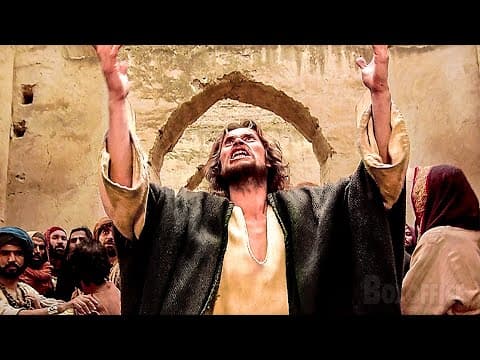
In a powerful confrontation at the temple, Jesus condemns the commercialization of worship, asserting that God transcends traditional laws and belongs to all humanity, not just a select group.
In a dramatic scene set in the temple, Jesus confronts the merchants and money-changers who have turned a sacred space into a marketplace. This moment encapsulates his radical teachings and the transformative message he brings to the world.
As Jesus arrives at the temple, he is met with the sight of money-changers and merchants conducting business. The atmosphere is charged with the sounds of commerce, which starkly contrasts with the intended purpose of the temple as a place of prayer and worship.
"We came here to pray. Look at this. The money-changers?" Jesus remarks, highlighting the inappropriate activities taking place in what should be a sacred space. The merchants justify their presence, claiming they are facilitating the temple tax for the feast, but Jesus sees through their rationalizations.
Jesus passionately declares, "This is my Father's house! It is a place of worship, not a market!" His words resonate with a deep conviction that the sanctity of the temple is being compromised. He challenges the merchants, questioning the need for material wealth in the service of God.
"God doesn't need a palace. He doesn't need cypress trees or dead animals! He doesn't need shekels!" This statement underscores his belief that true worship cannot be bought or sold, and that the essence of faith lies beyond material transactions.
The conversation escalates as Jesus confronts the established norms of worship. He criticizes the requirement for people to pay the temple tax with Roman coins, which bear the images of false gods. "You want pagan gods in the temple?" he asks, challenging the very foundation of the laws that govern worship.
In a bold declaration, Jesus states, "I have a new law and a new hope." This proclamation signifies a pivotal shift in religious understanding, suggesting that the old laws are being redefined. When questioned about the implications of this new law, he asserts, "I'm the end of the old law and the beginning of the new one."
Jesus's radical message does not come without risk. He acknowledges the potential consequences of his words, stating, "I didn't come here to bring peace. I came to bring a sword." This metaphor illustrates the divisive nature of his teachings, which challenge the status quo and provoke strong reactions from those in power.
He further prophesies the destruction of the temple, saying, "This temple will be destroyed in three days. Torn down to the ground! There won't be one stone left to build with!" This statement not only foreshadows the physical destruction of the temple but also symbolizes the end of an era in religious practice.
In his confrontation, Jesus emphasizes the universality of God, declaring, "You think God belongs only to you? He doesn't. God's an immortal spirit who belongs to everybody! To the whole world!" This assertion challenges the exclusivity of religious identity and invites all people to recognize their connection to the divine.
The scene at the temple serves as a powerful reminder of Jesus's radical approach to faith and worship. By condemning the commercialization of religion and proclaiming a new understanding of God's relationship with humanity, he invites a broader, more inclusive vision of spirituality. This moment not only highlights the tensions of his time but also resonates with contemporary discussions about the nature of faith and the role of institutions in spiritual life.



















