
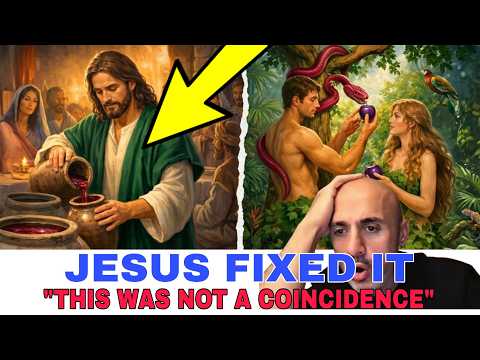
The Gospel of John intentionally echoes the Genesis creation narrative, presenting Jesus as the divine Word involved in creation and new creation. Jesus's first miracle at the wedding in Cana, turning water into wine, symbolizes the transition from old Jewish purification rituals to the new covenant through His blood, highlighting a better way and God's ultimate provision of salvation.
The Gospel of John opens with profound theological insights that connect Jesus's identity and mission to the very beginning of creation as described in Genesis. This connection becomes even more striking when we examine Jesus's first miracle at the wedding in Cana of Galilee, where He turned water into wine. This event is not just a simple miracle but a rich symbol revealing a hidden mystery in Christianity about creation, purification, and the new covenant.
John 1:1 famously begins with the words, "In the beginning was the Word," mirroring the opening phrase of Genesis, "In the beginning." The "Word" (Logos) is described as being with God and being God, intimately involved in creation. John explains that all things were made through Him, and in Him was life, which is the light of men (John 1:1-5). This passage is an inspired exposition of Genesis 1, showing Jesus's divine role as Creator.
The Gospel of John also references the separation of light and darkness from Genesis 1:3-5, emphasizing that the light shines in the darkness and the darkness cannot overcome it. This theological symbolism sets the stage for understanding Jesus as the source of life and light in a fallen world.
The narrative in John chapters 1 and 2 carefully counts days leading up to the wedding feast:
When these days are counted cumulatively, the wedding feast occurs on the seventh day, paralleling the seven-day creation week in Genesis, where God created the heavens and the earth in six days and rested on the seventh. The wedding feast symbolizes the culmination of creation and the beginning of God's rest.
At the wedding, Jesus's mother informs Him that the wine has run out. Jesus responds by addressing her as "Woman," a term that echoes Genesis 2:23, where Adam calls his bride "Woman" because she was taken out of man. This deliberate use of "Woman" contrasts two women:
Unlike Eve's sinful prompting, Mary's request leads to the manifestation of Jesus's glory and the beginning of a new creation.
Jesus instructs the servants to fill six stone water jars, used for Jewish purification rituals, with water, which He then turns into wine. This act carries deep symbolism:
Wine later becomes a symbol of Jesus's blood in the new covenant, as He states in Mark 14:24-25, referring to the cup as His blood shed for many. Thus, the miracle signifies the transition from the old covenant's incomplete purification rituals to the new covenant established by Christ's sacrifice.
The ruler of the feast remarks that the best wine is saved for last, which symbolizes that Jesus brings a better way:
This miracle reveals that God's ultimate provision and salvation come through Jesus, not through external rituals.
The Gospel of John uses layered symbolism to present Jesus as the author of both creation and new creation. The deliberate parallels with Genesis, the counting of days, and the symbolism of water and wine all point to a profound theological truth:
This understanding challenges readers to see Jesus not only as a historical figure but as the divine agent restoring a fallen world and offering eternal rest and purification.
What do you think about these connections? Are they intentional and meaningful, or are they overinterpretations? Regardless, the message of a better covenant through Christ remains central to Christian faith.
This exploration invites thoughtful reflection on the deep mysteries embedded in the Gospel of John and encourages believers to appreciate the richness of biblical symbolism and theology.



















