
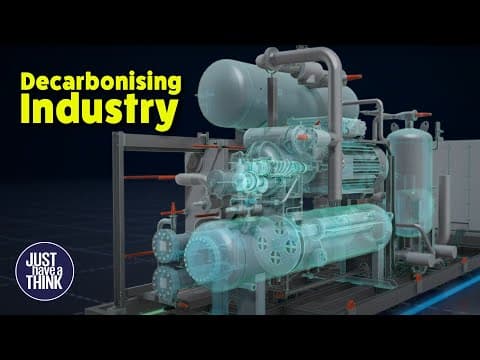
This blog post explores how the industrial sector can transition from fossil fuels to electrification, highlighting various technologies and strategies that could meet up to 90% of energy demand in Europe while significantly reducing carbon emissions.
The laws of thermodynamics dictate that energy can only be transferred as heat or work. In industrial settings, it may seem intuitive that most energy is used for work, such as driving machinery. However, a significant portion of energy consumption is actually due to process heat, which accounts for three-quarters of all industrial carbon dioxide emissions. This is primarily due to the burning of fossil fuels in the production of essential goods like chemicals, steel, paper, and food.
A recent analysis by Agora Industry, in collaboration with Energy Innovation, the Fraunhofer Institute, and the German Industry Initiative for Energy Efficiency (DENEFF), suggests that direct electrification technologies could meet up to 90% of all European industrial energy demand within the next decade. This optimistic outlook challenges the notion that fossil fuels are indispensable in industrial processes.
European industrial greenhouse gas emissions can be categorized as follows:
Agora's analysis provides a detailed breakdown of energy demand met by electricity across various industrial sectors in 2019, with projections for 2025, 2030, and beyond. While iron and steel production still heavily relies on fossil fuels, the overall trend indicates a significant shift towards electrification.
Several existing technologies can facilitate this transition:
Electric boilers can handle applications ranging from small-scale needs to large systems exceeding ten megawatts. They can achieve temperatures over 500 °C and operate without greenhouse gas emissions. However, their higher upfront costs compared to gas-fired systems pose a challenge.
Heat pumps are gaining traction in industrial applications. They transfer heat from sources like air or ground into a heat sink, achieving a coefficient of performance (COP) of four to five. They are suitable for steam generation in textiles, food production, and paper industries, although installation costs can be high.
These heaters can reach temperatures up to 3,000 °C and are limited by power density. Research is ongoing to develop materials that can withstand higher temperatures and improve efficiency.
Induction heating uses fluctuating magnetic fields to generate heat within materials, achieving efficiencies of over 95%. This technology is already in use in the steel industry and other metal processing sectors.
While still under development for industrial heating, plasma torches can reach temperatures of 5,000 °C. They are currently used in cutting and welding but show promise for heating applications.
This experimental technology uses high-pressure waves to heat fluids, potentially reaching temperatures of 1,500 °C by 2030. It could be applicable in various industrial processes.
Thermal storage systems can store heat generated from renewable sources and release it when needed. They can help manage energy costs and support grid stability.
Hydrogen is mentioned as a potential indirect heating alternative, but its current production methods are carbon-intensive. The focus remains on electrification technologies that can reduce reliance on fossil fuels without hydrogen.
Transitioning away from fossil fuels in industry will require overcoming several hurdles:
The electrification of industry presents a viable path towards reducing carbon emissions and transitioning away from fossil fuels. While challenges remain, the technologies discussed offer promising solutions. The success of this transition will depend on the willingness of industrial operators to invest in these technologies and the support from governments to create a conducive environment for change.
As we look towards the future, the question remains: Is the electrification of industry achievable on a global scale, or is it merely wishful thinking?



















