
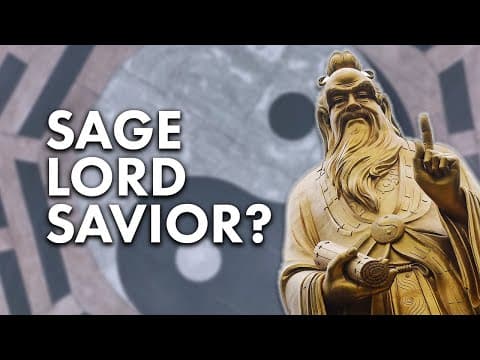
Li Hong is a significant messianic figure in Daoism, prophesied to restore cosmic harmony and reign as a sage king. His teachings emphasize the cyclical nature of time and the importance of moral responsibility in achieving societal stability. This blog post explores the origins, teachings, and historical impact of Li Hong within Daoist thought and the broader context of Chinese messianism.
For centuries, believers across various cultures have awaited the arrival of a messiah—a savior who promises a world purified of evil, a paradise for the faithful. While many religions feature such figures, in Daoism, the messianic figure of Li Hong stands out for his unique role in restoring order to chaos rather than emerging at the end of a long struggle between good and evil.
Li Hong is prophesied to descend from the heavens to restore cosmic harmony and reign as a sage king in perfect alignment with the Dao. The idea of Li Hong is deeply embedded in medieval Daoist theology and political thought, inspiring various rebellions throughout history. The concept of a messianic savior in Daoism is rooted in early teachings about Tai Ping or the Great Peace, an era characterized by cosmic, political, and social harmony.
The Dao, often described as the underlying cosmic power that created the universe, is complex and difficult to define. It can be viewed as the energizing process through which everything unfolds and transforms. The foundational text for the doctrine of the Great Peace is the Tai Ping Jing or the Scripture of Great Peace, which dates back to the Han Dynasty. This scripture teaches that the Great Peace can only be achieved through the restoration of cosmic harmony, which relies on the balance of Yin and Yang and the moral responsibility of the emperor to establish social stability.
According to the Tai Ping Jing, there was once a golden age when primordial Qi (vital energy) circulated freely among the people, sustaining life. In this state, humans did not require food or drink, living instead on the inhalation of primordial Qi. However, over time, this vital energy became corrupted due to moral decay, leading to a society plagued by disorder, disasters, and war. This concept of Chung Fu or inherited burden illustrates how generations of moral transgressions accumulate, resulting in societal decline.
The ancient Chinese view of time is cyclical, contrasting with linear interpretations found in other religions. This cyclical perspective suggests that after a period of degradation, another era of Great Peace will eventually follow. This idea resonates with concepts found in Hindu and Buddhist cosmology, where time is also viewed as a series of cycles.
Li Hong emerges as the prophesied sage king who will break the cycle of inherited transgressions and reestablish the Great Peace. He is mentioned in various Daoist scriptures, sometimes as an avatar of Laozi, the legendary sage believed to have composed the Dao De Jing. In these texts, Laozi is depicted as manifesting throughout history to save mankind.
Li Hong's birth is described in texts as miraculous, with his mother experiencing a dream involving dark clouds and celestial bodies. By the age of five, he was already devoted to the Dao, and by twenty, he had transformed into a being of extraordinary radiance. As the world descends into chaos, Li Hong is prophesied to descend from the heavens to save the righteous, known as the Jang Min or seed people, guiding them to a new Earth created by the Dao.
The Scripture of the Divine Spells of the Cavernous Abyss, dating to the 5th century CE, presents a dramatic apocalyptic vision of Li Hong. He is envisioned as the perfect sage king who will reign over a harmonious empire, where human lifespans will increase significantly. His governance will be characterized by Wu Wei, a principle of non-action or effortless action, promoting a society free from coercive policies.
Many Daoist scriptures indicate that Li Hong will appear in a Ren Ren year, which occurs every 60 years in the traditional Chinese calendar. The next Ren Ren year is 2072, but signs of his imminent return include climate upheavals and supernatural occurrences. Unlike traditional messianic figures, Li Hong's role is not to save individuals from sin but to restore order and balance to the cosmos.
Li Hong's figure has inspired numerous messianic movements throughout Chinese history, particularly during times of social and political turmoil. Various uprisings have claimed connections to Li Hong, with leaders often using his name to legitimize their causes. However, the political implications of claiming to be Li Hong have led to severe consequences, including executions of those with the surname Li during paranoid regimes.
After the 14th century, the prominence of Li Hong diminished, partly due to the rise of Buddhism and the establishment of the Yuan Dynasty, which favored Buddhist teachings. Despite this decline, the memory of Li Hong persists in local heterodox movements and contemporary religious practices, such as Falun Gong, which reveres him as a significant figure.
Li Hong represents a unique aspect of Daoist thought, embodying the cyclical nature of time and the quest for cosmic harmony. His teachings and the messianic movements inspired by him reflect the political realities of their time, illustrating how apocalyptic ideologies serve as responses to societal challenges. As we look forward to the future, the enduring legacy of Li Hong continues to resonate within the fabric of Chinese spirituality and culture.



















