
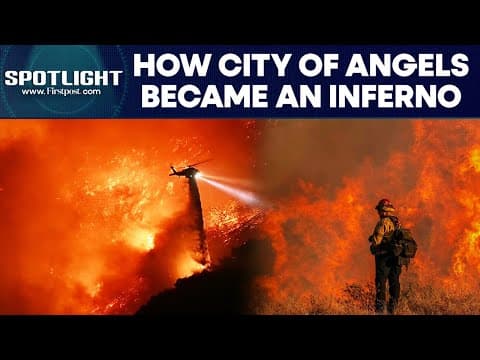
The Los Angeles wildfires have become one of the most destructive in the city's history, with significant loss of life and property. As firefighters battle multiple blazes fueled by strong winds and dry conditions, investigations into the causes are underway, highlighting the impact of climate change and infrastructure failures. Amidst the devastation, political tensions rise as leaders respond to the crisis.
The Los Angeles wildfires have escalated into a catastrophic event, with two major blazes wreaking havoc across the city. Firefighters are currently in a critical phase of their battle against these fires, which have been raging for nearly a week. Despite some progress over the weekend in containing the flames, authorities have issued warnings about dangerous winds that could exacerbate the situation.
The wildfires are among the most destructive in Los Angeles history, resulting in at least 24 fatalities, with the death toll expected to rise as search teams continue their efforts. Over 92,000 individuals have been displaced, and more than 12,000 structures, including homes and vehicles, have been reduced to ruins. Approximately 40,000 acres of land have been scorched, and the fight against these wildfires is ongoing.
The first fire ignited in the Pacific Palisades on January 7, coinciding with the outbreak of the Eaton and Hurst fires. As of Monday, 14% of the Palisades fire, which has burned around 24,000 acres, has been contained. The Eaton fire, affecting northern Los Angeles, has consumed over 14,000 acres and is 33% contained, while the Hurst fire, which grew to nearly 800 acres, is almost fully contained. Previous fires in the region, including Kenneth Archer, Lydia Woodley, Olivia, and Sunset Hollywood Hills, have all been contained.
Authorities are investigating the origins of these wildfires, considering several potential causes:
Old Fires: A small blaze near the Palisades ignited around January 1, reportedly caused by fireworks. Although it was contained, strong winds may have reignited old embers, leading to the current situation.
Climate Change: Southern California has faced a prolonged drought for two decades, but unusual rainfall in previous years led to explosive vegetative growth. This year, the region experienced its driest winter, creating conditions ripe for wildfires, where even the smallest spark could ignite a blaze.
Power Lines: Typically, Los Angeles utilities cut power during high winds to prevent fires. However, in the Eaton area, the electrical company failed to de-energize overhead wires despite warnings from the Weather Service.
The Santa Ana winds have been a significant factor in the rapid spread of these wildfires. These fierce gusts have turned manageable fires into devastating infernos, complicating firefighting efforts.
In the midst of the devastation, a $9 million mansion in Malibu remained unscathed while surrounding homes were reduced to ashes. The owner attributed the survival of the mansion to its concrete construction, fireproof roof, and solid concrete perimeter wall. This highlights a growing trend in coastal California, where traditional wooden structures are increasingly being replaced with fire-resistant materials due to the rising threat of wildfires.
To combat the wildfires, approximately 14,000 firefighters are on the ground, supported by 84 aircraft and over 1,300 fire engines. Air tankers are deploying a bright pink powder known as "Foscheck," a fire retardant that has been used across the United States since the 1960s. Assistance has also come from neighboring countries, with firefighting teams from Mexico and Canada joining the efforts, and even Ukraine offering to send 150 firefighters.
Amid the crisis, a political firestorm has emerged. Republicans have launched a campaign against California's Governor Gavin Newsom, labeling him incompetent in handling the wildfires. Former President Trump has also criticized Newsom, exacerbating tensions. In a recent exchange, Newsom responded to Tesla CEO Elon Musk, who accused him of encouraging looting during the crisis. This back-and-forth comes as concerns grow over looting in areas affected by the fires, where homeowners returning to their properties have found them ransacked.
As California races to contain the wildfires, the situation remains dire with dangerous winds expected to trigger further explosive fire growth. The combination of environmental factors, infrastructure failures, and political tensions paints a complex picture of the challenges facing the state. The ongoing battle against these wildfires serves as a stark reminder of the increasing frequency and intensity of such disasters in the face of climate change and the need for effective disaster management strategies.



















