
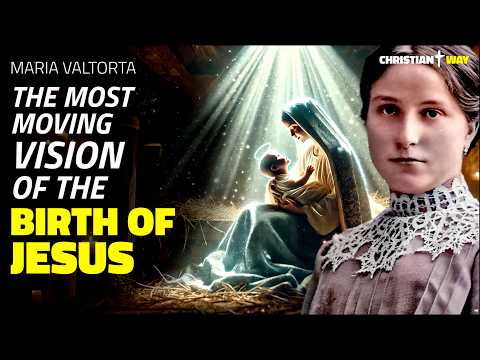
Explore the vivid and detailed vision of the Nativity as described by Italian mystic Maria Valtorta. Her portrayal enriches the traditional Gospel narrative with intimate scenes of Mary, Joseph, and the newborn Jesus in a humble stable, illuminated by divine light and profound spiritual symbolism. This unique account offers a deeply moving perspective on the birth of Christ, capturing the sacredness and humanity of that holy night.
Imagine witnessing the most important night in human history—the night when the Son of God came into the world. This profound moment has been depicted countless times, yet Maria Valtorta, a 20th-century Italian mystic, offers an extraordinary and deeply intimate vision of the Nativity that enriches and deepens our understanding of this sacred event.
Maria Valtorta is renowned for her spiritual writings, particularly her work The Poem of the Man-God (also known as The Gospel as it was revealed to me), which contains detailed visions and revelations about the lives of Jesus and Mary. Her writings provide insights that complement and expand upon the canonical Gospels.
Valtorta’s vision begins inside a poor, rocky shelter where Mary and Joseph have taken refuge. The stable is simple and shared with animals, illuminated by a small, flickering fire. Mary is resting, her head gently lifted as she surveys her surroundings. Joseph, weary from the cold and the night’s trials, has fallen asleep with his head bowed.
Mary rises quietly, kneeling in prayer with a blissful smile. Her posture is reverent, arms open with palms turned upward, embodying a tireless devotion. Joseph awakens to tend the fire, adding twigs and branches to keep the cold at bay. The serene winter night seeps through every crevice, and Joseph, positioned near the entrance, warms himself by the fire.
The stable is enveloped in silence, broken only by the crackling fire and the occasional sounds of the donkey stamping and the ox stirring. Joseph kneels beside the fire to pray, while Mary remains in her deep, intense prayer. A sliver of moonlight pierces the darkness, eventually resting upon Mary’s head like a crown of radiance.
Mary rises again, bathed in the ethereal moonlight, her face glowing with an otherworldly smile. The light around her grows, emanating from heaven and the humble surroundings, transforming the scene into one of divine splendor.
In Valtorta’s vision, the stable undergoes a miraculous transformation. The cracked ceiling, cobwebs, and debris become a vaulted royal hall adorned with silver blocks, opals, and diamond-like canopies. A hibernating lizard appears as an emerald jewel, and bats resemble a precious onyx chandelier. The hay turns into strands of pure silver, and the walls are covered in brocade with pearly embroidery.
The floor becomes a crystal illuminated by radiant white light, with stones resembling roses of light and hollows like precious cups emitting fragrant aromas. This divine illumination purifies and glorifies the entire space, making it resplendent and holy.
As the light intensifies, Mary disappears within it and reemerges as a mother holding her newborn son. The baby Jesus is described as tiny, rosy, and plump, with hands no bigger than rosebuds and feet small enough to fit within a rose’s hollow. His voice is a trembling cry like a newborn lamb, and his mouth resembles a wild strawberry.
Mary adores her child, laughing and crying simultaneously. She kisses him not on the head but on the center of his chest, where his heart beats—a heart destined to bear a wound. Her kiss is a preemptive healing of that future suffering.
The ox and donkey awaken to the bright light, greeting the newborn as if recognizing their creator. Joseph, deeply moved and almost in a state of rapture, notices the unusual light and turns to see Mary holding the infant.
Mary calls Joseph to come and hold the baby, assuring him of his worthiness and divine selection. Joseph, initially hesitant, accepts the child with trembling arms, drawing him close to his heart and weeping in awe and devotion.
He notices the baby’s cold feet and carefully shelters him using his cloak and body, creating a protective niche between the ox and donkey. The animals’ warmth and presence form a natural cradle, shielding the newborn from the chill of the night.
Maria Valtorta’s vision of the Nativity offers a richly detailed and deeply spiritual portrayal of the birth of Jesus. Through vivid imagery and heartfelt emotion, she invites us to witness the sacredness of that holy night—the humility of the stable, the reverence of Mary and Joseph, and the divine light that transforms all around them.
This extraordinary account enriches our understanding of the Nativity, reminding us of the profound mystery and beauty of the Incarnation. It encourages believers and readers alike to contemplate the human and divine dimensions of Jesus’ birth with renewed awe and devotion.



















