
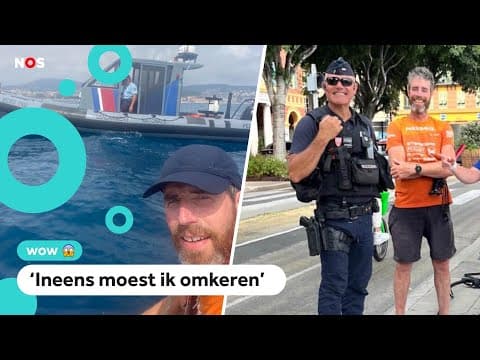
Marijn Tinga undertook a grueling 1250 km journey from Paris to Nice on a stand-up paddleboard to raise awareness for deposit return schemes for plastic bottles and cans in France. Despite facing numerous challenges, including being stopped by the police just before finishing, Tinga remains committed to his cause of reducing plastic pollution and promoting effective solutions.
In a remarkable feat of endurance and determination, Marijn Tinga embarked on a 1250 km journey from Paris to Nice on a stand-up paddleboard (SUP) to raise awareness about the urgent need for deposit return schemes for plastic bottles and cans in France. This initiative aims to combat plastic pollution, a pressing environmental issue that affects our oceans and food chain.
Marijn's journey was not just a physical challenge but also a mission to highlight the lack of deposit return systems in France. As he paddled through various waterways and the Mediterranean Sea, he aimed to draw attention to the significant problem of plastic waste. Despite the arduous nature of his trip, which involved paddling approximately 50 km each day for 12 hours, Marijn remained focused on his goal.
The journey was fraught with difficulties. Marijn encountered various obstacles, including insect bites and even a frightening experience in a waterfall, which tested his resolve. He often found himself sleeping in a tent by the water's edge instead of a comfortable bed, adding to the physical strain of his expedition. Despite these challenges, he never considered giving up, stating, "I have often thought I can't go on, but I never thought about going home."
Just as Marijn was nearing the finish line in Nice, he faced an unexpected setback. The French police intervened, preventing him from completing his journey in the harbor where he had planned to finish. This was a disappointing moment for Marijn, who had worked so hard to raise awareness for his cause.
Marijn's advocacy centers around the implementation of deposit return schemes, which have proven effective in reducing plastic waste in many countries. He expressed frustration that France has yet to adopt such measures, emphasizing that without them, many plastic bottles and cans end up in rivers and oceans, breaking down into microplastics that ultimately enter the food chain, affecting both marine life and humans.
Marijn's journey was not just about the physical act of paddling; it was a call to action for the French government and society to prioritize environmental solutions. He participated in the UN Ocean Conference in Nice, where global leaders gather to discuss sustainable practices for ocean conservation. His hope is that by raising awareness through his journey, he can inspire change and encourage the adoption of deposit return systems in France.
Marijn Tinga's 1250 km journey is a testament to the power of individual action in the fight against plastic pollution. Despite the challenges he faced, his commitment to advocating for deposit return schemes remains unwavering. As he continues to push for change, his story serves as an inspiration for others to take action in their communities to protect our oceans and environment.



















