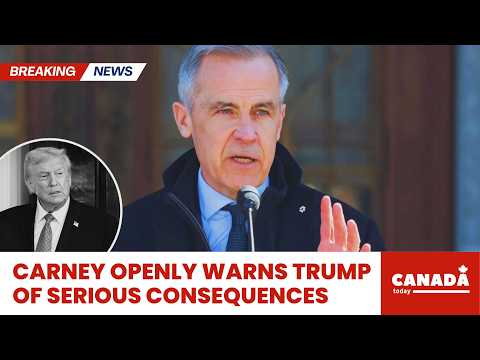
Mark Carney's upcoming trip to China represents a strategic pivot in Canada's approach to economic relations, aiming to reduce dependence on the US amid Trump's tariff pressures. By diversifying trade partnerships and reconsidering tariffs on Chinese goods, Canada seeks to regain leverage, protect key industries, and reshape its global economic posture to withstand political and economic coercion.
Mark Carney, with his extensive global experience, has been at the forefront of Canada's response to the economic challenges posed by former US President Donald Trump. His upcoming trip to China is not a routine diplomatic visit but a calculated move to rebalance Canada's economic relationships and reduce vulnerability to US economic pressure.
For decades, Canada enjoyed a stable and predictable trade relationship with the United States, its largest economic partner. However, under Donald Trump's administration, this dynamic changed dramatically. Tariffs on Canadian autos, agricultural products, and other sectors were imposed, often unpredictably and as political tools rather than economic necessities. This created significant economic pain for Canada, exposing the risks of overdependence on a single market.
Canada's traditional approach of absorbing these pressures quietly was no longer viable. The country recognized that economic dependence on the US had become a strategic vulnerability.
Carney's trip to China symbolizes a fundamental shift in Canada's trade strategy. It is the culmination of six months of efforts to establish stronger trade relationships beyond the US, including with Europe and Asia. The goal is to diversify Canada's economic partnerships to ensure that no single country can exert disproportionate pressure.
This visit is about:
One concrete issue Carney is expected to address is the 100% tariff Canada imposed on Chinese electric vehicles (EVs). This tariff was aligned with US policy but came at a cost to Canadian consumers, who faced higher prices and limited competition. Despite this alignment, Canada still suffered retaliatory tariffs from China on products like canola.
Reconsidering these tariffs could:
Canada's strategy under Carney is not about confrontation but about structural change. By deepening economic ties with China and other global partners, Canada aims to:
This diversification means that aggressive economic moves by the US could backfire, pushing trade towards other partners and weakening US leverage.
Carney's approach signals a new phase of Canadian statecraft characterized by precision and strategic calculation rather than reactive or emotional responses. It reflects an understanding that trade policy should be a tool for negotiation and leverage, not a burden to be quietly borne.
The visit also has implications beyond Canada-China relations. It is closely watched in Washington as it demonstrates Canada's resolve to resist economic intimidation and build resilience through interlocking economic relationships with Europe, Asia, and other regions.
Mark Carney's upcoming visit to China marks a pivotal moment in Canada's economic strategy. By diversifying trade partnerships and reconsidering tariff policies, Canada is reshaping its global economic posture to withstand political and economic pressures from the US. This strategic shift ensures that Canada is no longer an easy target for unilateral economic coercion and signals a more balanced and resilient approach to international trade.
Canada today is entering a new era of economic diplomacy, one that prioritizes leverage, resilience, and strategic partnerships over dependence and vulnerability.