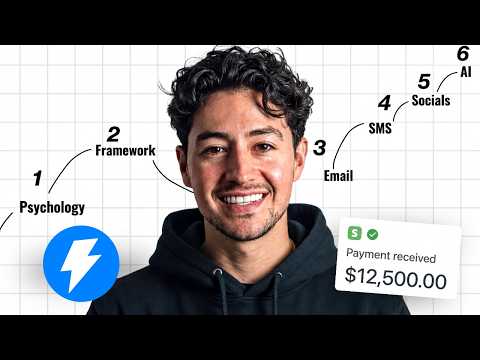
Outbound sales and cold email copywriting are essential skills for anyone looking to generate leads, build relationships, and close deals in today's competitive market. Drawing from over a decade of experience and $15 million in outbound sales, this guide distills the core principles, frameworks, and strategies that will help you succeed in cold outreach across various platforms.
Understanding the Psychology of Saying Yes to a Stranger
Successful outbound communication hinges on convincing a stranger, who has no prior relationship or trust with you, to engage and ultimately buy from you. This is fundamentally different from traditional copywriting, which often involves an opt-in or pre-established relationship.
Seven Psychological Principles Behind Saying Yes
- Give First: Start by offering something valuable without asking for anything in return. This creates a sense of obligation and lowers resistance.
- Micro Commitments: Build momentum by asking for small commitments that escalate gradually towards the ultimate goal.
- Social Proof: Show evidence that others have taken the action you want your prospect to take.
- Authority: Demonstrate your expertise and credentials relevant to the prospect.
- Rapport: Establish shared context or common ground to build comfort and trust.
- Scarcity: Limit availability or create time pressure to encourage prompt action.
- Shared Identity: Highlight common values, challenges, or experiences to foster connection.
These principles are grounded in psychological research and have been proven effective in influencing human decision-making.
The Four Components of a Successful Outbound Message
Every effective outbound message, whether email, SMS, LinkedIn DM, or other, should include the following components:
- Personalization: Capture attention with a personalized, informal, and brief opening that signals the message is crafted specifically for the recipient.
- Who Am I?: Clearly state who you are and why you matter to the recipient, incorporating social proof and authority.
- Offer: Present a compelling, quantified offer that addresses a specific pain point or need, ideally with risk reversal.
- Call to Action (CTA): Make a clear, specific ask with minimal friction, such as proposing exact times for a call.
Personalization Tips
- Keep it short (1-2 sentences).
- Use cold reading techniques to make general statements that feel personal.
- Avoid AI-generated generic phrases that sound unnatural.
- Include voluntary disclosure of information about yourself to build trust.
Crafting the Offer
- Quantify the result (e.g., "20 meetings in 60 days").
- Set a clear time frame.
- Include risk mitigation (e.g., "or you don't pay").
- Align the offer with the prospect's business size and needs.
Effective CTA
- Be specific and reduce steps (e.g., "Can I call you at 3:30 p.m. tomorrow?").
- Avoid vague asks like "Let me know your thoughts."
Conversion Rate (CVR) is proportional to:
Return on Investment (ROI) × Trust / Friction
- ROI: The tangible, quantified benefit you promise.
- Trust: Built through social proof, authority, rapport, and shared identity.
- Friction: The effort or barriers the prospect must overcome to engage.
Maximize ROI and trust while minimizing friction to increase conversion rates.
Examples of Offers
- Guarantee 20 booked sales appointments in 60 days or no payment.
- Build a live chat widget at no cost until the first 10 paying clients.
- Provide a high-converting proposal template within 48 hours, free to try.
- Run a full SEO audit and deliver results within 24 hours for free.
Analyzing and Improving Cold Emails: Real-World Examples
Reviewing actual cold emails reveals common pitfalls:
- Lack of giving first: Not offering value upfront.
- Poor personalization: Using scraped or incorrect names.
- Weak social proof and authority.
- Vague or missing CTAs.
- No scarcity or shared identity.
By applying the four-step framework, emails can be rewritten to:
- Include personalized, casual openers.
- Clearly state who you are with relevant social proof.
- Present a quantified, risk-reversed offer.
- Make a specific, low-friction CTA.
Cold Email
- Optimize sender name, subject line, and teaser text.
- Aim for about 150 characters combined in subject and teaser.
- Avoid links in initial emails to prevent spam filters.
LinkedIn
- Use a professional profile picture and premium badge.
- Include a clear job title and credentials.
- Personalize messages and avoid overly formal language.
- Write casually, using lowercase and emojis.
- Aim to get out of message requests.
Instagram
- Similar to X, focus on casual tone and getting out of message requests.
iMessage/SMS
- Fill the teaser with engaging content.
- Use message effects or images to stand out.
- Keep messages concise but informative.
Subject Lines, Follow-Ups, and Iteration
Subject Lines
- Avoid selling in the subject line.
- Use plausible deniability to encourage opens.
- Include personalization or curiosity hooks.
- Keep them short and informal.
Follow-Ups
- Send 1-2 follow-ups; more can increase spam risk.
- Keep follow-ups simple and human.
- Use different subject lines to test effectiveness.
Iteration
- Start with multiple fundamentally different versions.
- Send enough volume (500-1000 per variant) for statistical significance.
- Make big changes early, small tweaks later.
- Use data to guide improvements, not gut feelings.
Using AI in Cold Email Copywriting
- AI is not yet capable of crafting highly persuasive copy.
- Use AI for small templated variables, such as casualizing company names or generating personalized snippets.
- Avoid relying entirely on AI-generated emails.
- Combine AI assistance with human judgment for best results.
Advanced Gray Hat Outbound Techniques (Use with Caution)
- Buying pre-warmed social media or email accounts.
- Using power dialers to increase cold call efficiency.
- Sending cold SMS or WhatsApp messages via third-party APIs that emulate trusted platforms.
These techniques may violate platform terms of service or local laws and can result in account suspension or legal issues. Use at your own risk.
Conclusion
Mastering cold email copywriting and outbound outreach requires understanding human psychology, applying a proven copywriting framework, crafting compelling offers, optimizing for specific platforms, and continuously iterating based on data. While AI can assist in personalization, human skill remains paramount. Advanced techniques exist but come with risks. With dedication and strategic execution, you can significantly improve your outbound success in 2026 and beyond.
Thank you for reading this comprehensive guide. If you found it valuable, consider subscribing to stay updated with more insights and strategies.