
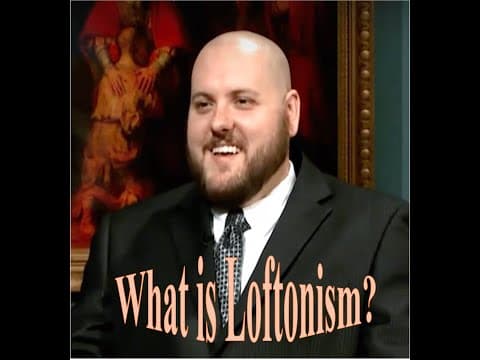
In a recent address, Father Jason critiques Michael Lofton's approach to Catholic theology and media, emphasizing the need for humility, respect for tradition, and the importance of community in theological discussions. He defends the integrity of the Catholic faith and calls for Lofton to reconsider his methods and attitudes towards established theologians and the Church's teachings.
In a recent address, Father Jason has taken the opportunity to respond to criticisms leveled against him by Michael Lofton, a prominent figure in Catholic media. Father Jason's remarks not only defend his own position but also advocate for a more respectful and humble approach to theological discourse within the Catholic community.
Father Jason explains that he has been away from making videos for about three months, focusing on his parish and family life. However, he felt compelled to address Lofton's misrepresentation of him and others in the Catholic community. He describes Lofton's YouTube channel as a platform that often generates conflict rather than truth, suggesting that it operates on a model of sensationalism and personal attacks.
Father Jason coins the term "Loftonism" to describe what he perceives as a movement within Catholic media characterized by self-parody and a lack of depth in theological understanding. He critiques Lofton's style, which he believes relies on rhetorical subterfuge and a tendency to confuse clarity with ambiguity. This approach, according to Father Jason, leads to a disorientation among viewers and a relativization of important theological differences.
Father Jason emphasizes that he does not seek to defend himself personally but rather to uphold the truth of the Catholic faith. He acknowledges his own imperfections and sins but insists that his commitment to Jesus Christ and the teachings of the Church is unwavering. He expresses concern over Lofton's tendency to misrepresent the views of faithful Catholics and to undermine the authority of the Church.
Father Jason argues that platforms like YouTube are not the best venues for serious theological discussions. He advocates for more traditional forms of discourse, such as scholarly journals and face-to-face dialogues, which allow for deeper engagement with the faith. He expresses skepticism towards self-appointed theologians who lack the mandate of their bishops to speak authoritatively on theological matters.
A significant point made by Father Jason is his belief that new converts should not lead theological discussions. He cites St. Paul's warning in 1 Timothy about the dangers of conceit among new converts. Father Jason argues that Lofton's background and rapid transition through various denominations raise concerns about his theological authority and understanding.
Father Jason passionately defends the papacy and the Ukrainian Greek Catholic Church's fidelity to it. He recounts the historical persecution faced by his Church for its adherence to papal authority, emphasizing that loyalty to the papacy does not equate to blind obedience. He insists that it is possible to critique the actions of popes while maintaining a commitment to the Church's teachings.
To illustrate his point, Father Jason provides historical examples of saints and theologians who have respectfully challenged popes and bishops when they strayed from the truth. He highlights figures like St. Athanasius and St. Vincent of Lérins, who maintained that popes must adhere to the consensus of the Church's tradition. These examples serve to reinforce his argument that loyalty to the papacy should not preclude honest critique.
Father Jason concludes his address with a heartfelt plea for Lofton to reconsider his approach to theology and media. He urges Lofton to cultivate humility, respect for the wisdom of established theologians, and a deeper understanding of the faith. He warns against the dangers of pride and the superficiality that can arise from seeking fame and validation in the digital age.
In a world where theological discourse can often devolve into sensationalism and conflict, Father Jason's call for reflection and humility serves as a reminder of the importance of community, tradition, and respect in the pursuit of truth within the Catholic faith. He encourages Lofton and others to return to the roots of their faith and engage in a manner that uplifts rather than divides the Church.



















