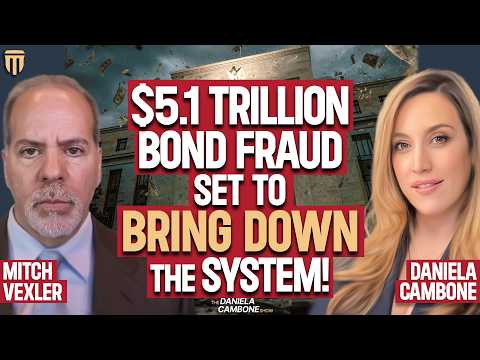
Mitch Wexler reveals a massive $5.1 trillion school district bond fraud driven by inflated property appraisals and systemic overtaxation, stripping equity from homeowners nationwide. This crisis, linked to broader issues in fiat currency and unbacked debt, challenges financial stability and highlights the importance of physical precious metals as safe assets. Legal battles are ongoing in Texas to uncover and address this fraud.
In a recent revealing discussion, Mitch Wexler, a real estate developer, quantitative finance expert, and president of Mockingbird Properties, brought to light what he calls the biggest hidden financial time bomb in America: a staggering $5.1 trillion spiral of school district bond fraud. This fraud is fueled by inflated property appraisals, systemic overtaxation, and what Wexler terms "institutionalized moral hazard." The consequences are severe, stripping equity from homeowners across the nation and potentially dwarfing the financial crisis of 2008.
Wexler explains that the fraud revolves around school district bonds, which are financed through property taxes. The core issue lies in inflated property appraisals that lead to excessive taxation. This overtaxation is not just a local problem but a systemic one, embedded within institutional practices that allow such moral hazards to persist unchecked.
The fraudulent activity results in homeowners paying taxes on unrealized gains in property value, which Wexler argues is a violation of the 16th Amendment to the U.S. Constitution. This amendment allows Congress to levy income taxes but does not permit taxation on unrealized gains, making the current practice constitutionally questionable.
Mitch Wexler has taken significant steps to combat this fraud. He has filed criminal complaints with the Department of Justice and pushed for investigations through Freedom of Information Act (FOIA) requests, particularly in Texas. His efforts have uncovered patterns of fraud that mirror those prosecuted by the Securities and Exchange Commission (SEC) in other contexts.
Recently, the Supreme Court of Texas issued an order requiring opposing counsel to respond to a motion for rehearing filed by Wexler and his team. The opposing counsel represents the Central Appraisal District and individuals personally involved, including John Spencer. Wexler anticipates that the opposing side will resist discovery efforts, aiming to prevent Texans from accessing information about the fraud.
This resistance to transparency is telling. Wexler asserts that prohibiting discovery of fraud implies an intention to defraud. The evidence compiled and presented on his website is irrefutable, showing clear instances of fraudulent activity.
The ramifications of this bond fraud extend beyond homeowners and local taxpayers. Wexler highlights that the excessive taxation and inflated appraisals contribute to inflation and the erosion of purchasing power nationwide. Essentially, every American citizen bears the cost of this fraud indirectly through higher prices and diminished economic stability.
Moreover, Wexler connects this crisis to a larger loss of confidence in fiat currency systems, which rely heavily on money printing and unbacked debt. As volatility in financial markets increases and trust in traditional monetary systems wanes, Wexler advocates for physical precious metals as the only true zero counterparty risk refuge.
While the primary focus is on the bond fraud, Wexler also shares his perspective on the current state of precious metals and cryptocurrencies like Bitcoin. He suggests that as confidence in fiat currencies erodes, assets like gold and silver become increasingly valuable as safe havens.
Regarding Bitcoin and companies like MicroStrategy, led by Michael Saylor, Wexler acknowledges their role in the evolving financial landscape but emphasizes the enduring security of physical metals amidst systemic financial risks.
Mitch Wexler's crusade against the $5.1 trillion school district bond fraud sheds light on a deeply entrenched financial malpractice that threatens homeowners and the broader economy. His legal battles in Texas and efforts to expose this fraud are crucial steps toward accountability and reform.
This crisis not only challenges property taxpayers but also signals broader vulnerabilities in the U.S. financial system, particularly concerning fiat currency and unbacked debt. As the situation unfolds, the importance of transparency, legal scrutiny, and alternative safe assets like precious metals becomes ever more apparent.
The fight against this hidden financial time bomb continues, with significant implications for every American.
This article is based on insights shared by Mitch Wexler in a recent interview discussing the $5.1 trillion bond fraud and its impact on homeowners and the economy.