
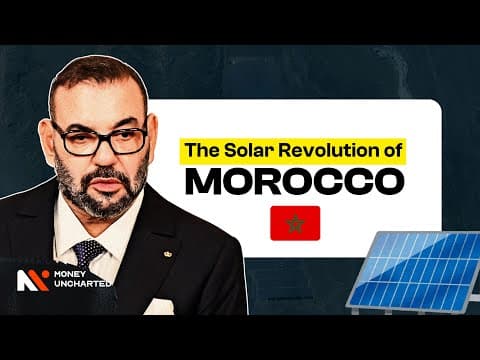
Morocco is transforming its energy landscape by investing $5.2 billion in solar energy projects, aiming to become a global leader in renewable energy. With ambitious goals to meet 52% of its energy needs through renewables by 2030, Morocco is not only addressing its energy dependence but also contributing to global climate change mitigation and economic growth.
Imagine a land where the vast sunbaked deserts hold the key to a nation's energy independence and environmental sustainability. This is not a scene from a futuristic novel; it is the reality unfolding in Morocco. With limited fossil fuel resources, Morocco has faced significant energy challenges, importing over 90% of its energy needs. However, the tide is turning as the country invests $5.2 billion in solar energy projects, setting its sights on becoming a world leader in solar energy.
Morocco's pivot towards renewable energy was not merely a choice but a necessity. Unlike many other countries in the MENA region, Morocco is not an oil or gas-producing country. In fact, it is a net energy importer, and this reliance on imported oil and gas has weighed heavily on its economy, costing billions annually. Additionally, environmental concerns prompted the government to recognize the urgent need to reduce carbon emissions and combat climate change. Therefore, renewable energy emerged as the only viable solution for Morocco to reduce its energy bill and gain control over its energy needs.
The initial steps towards this energy transformation involved legislative and policy reforms aimed at attracting investment in the renewable sector. In 2009, Morocco launched the Moroccan Solar Plan, an initiative that aimed for 42% of the total installed power capacity to be renewable energy by 2020. This vision translated into five mega solar power plants strategically scattered across the country, each harnessing the sun's power in unique ways. Over the following decade, Morocco saw a strong expansion of both wind and solar energy, with solar photovoltaic capacity increasing sixteenfold and wind energy capacity increasing sixfold by 2020.
Morocco's ambitions do not stop there. The country has taken its national energy strategy to the next level, aiming for an impressive 52% of its total energy mix to come from renewables by 2030. Solar, wind, and hydro each play pivotal roles in this strategy. The nation's extensive coastline and consistent winds provide an ideal setting for wind energy, with notable investments like the Tarfa wind farm. Morocco aims to achieve a wind energy capacity of 2,000 megawatts, aligning with its ambitious renewable energy goals.
Similarly, by capitalizing on its river systems, Morocco has developed several hydroelectric plants that contribute approximately 1,770 megawatts to the national grid, highlighting hydroelectricity's role as a consistent and reliable energy source. In terms of solar energy, Morocco aims to add around 10 gigawatts of renewable energy capacity, accounting for 4,560 megawatts.
At the forefront of this solar revolution is the Noor 8 solar power station, also known as the Noor complex, which aims to become the world's largest concentrated solar power plant. This behemoth will boast a capacity of 580 megawatts, utilizing cutting-edge technology to capture and store solar energy even after sunset. The Noor complex alone prevents thousands of tons of carbon emissions each year, equivalent to planting a forest larger than Rabat.
The shift towards solar energy is not just an environmental imperative but also an economic catalyst. By reducing dependency on imported fuels, Morocco is safeguarding its economy against volatile oil markets, creating thousands of jobs, and setting a global example in the fight against climate change. Socially, the benefits are significant; rural electrification projects are bringing light to the darkest corners of Morocco, connecting remote villages to the grid. Clean energy translates to clean water, improved healthcare, and enhanced education, laying the foundation for a brighter, more equitable Morocco.
Moreover, the country has been praised for using money saved from fossil fuel subsidies to increase funds for education and implement a health insurance scheme. Morocco's solar success story has not gone unnoticed; Europe, grappling with its energy security challenges, sees Morocco as a potential renewable energy powerhouse and a reliable partner.
Morocco's strategic location and renewable energy capabilities position it as a vital partner for Europe's green energy transition. It is the only African country to have a power cable link to Europe and plays a key role in the Mediterranean Solar Plan and the Desertec Industrial Initiative. The Desertec concept aims to build concentrated solar power plants to supply renewable energy from the MENA region to European countries using high-voltage direct current transmission lines. This vision of Morocco as an energy bridge between Africa and Europe is a testament to the Kingdom's renewable energy prowess and the global need for sustainable energy solutions.
Transitioning to green energy has not been without its challenges. Morocco faced financial hurdles, technological trials, and skepticism. However, the country is tackling these issues through international partnerships, technological investments, and policy reforms. Attracting foreign investments and leveraging public-private partnerships have been crucial in financing these projects.
As the sun sets on the Sahara, it rises to a new era of hope and sustainability. With its ambitious projects in solar, hydro, and wind power, Morocco is not just transforming its energy portfolio but also making significant contributions to global climate change mitigation efforts. This is more than Morocco's story; it is an invitation to the world to embrace the power of renewable energy and envision a brighter future for all. Let us take inspiration from Morocco's journey and work towards a world where renewable energy lights every home, powers every industry, and preserves our planet for future generations.



















