
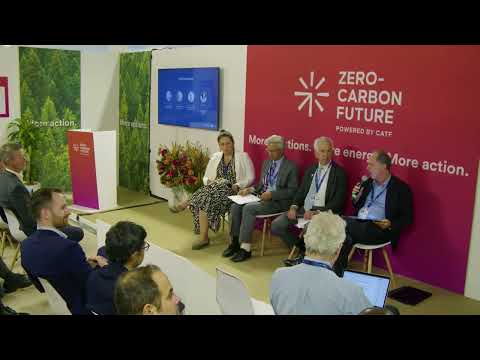
A panel of experts from major environmental organizations discusses the critical role of hydrogen in decarbonization, the importance of establishing robust standards, and the challenges of hydrogen leakage and economic viability. They emphasize the need for careful planning and community engagement to ensure that hydrogen development contributes positively to climate goals without exacerbating existing inequalities.
In a recent panel discussion featuring leaders from prominent environmental organizations, the focus was on the emerging hydrogen market and the critical need for establishing effective standards and regulations. The panelists included Manish Bapna, President of the Natural Resources Defense Council (NRDC), Fred Krupp, President of the Environmental Defense Fund (EDF), and Armen Cohen, Executive Director of the Clean Air Task Force. This article summarizes their insights on hydrogen's potential, the challenges it faces, and the necessary steps to ensure its development aligns with climate goals.
Hydrogen is increasingly recognized as a vital component in the transition to a low-carbon economy. It has the potential to decarbonize sectors that currently lack viable zero-carbon alternatives, such as steel production, fertilizers, shipping, and aviation. However, the panelists stressed that the key question is how to ensure that the hydrogen produced is genuinely clean and contributes to climate goals.
Manish Bapna highlighted the recent announcement involving 39 countries, led by the UAE, to coordinate hydrogen standards. The introduction of a new ISO standard on hydrogen production is a step forward, but it has notable weaknesses, particularly the absence of a threshold for greenhouse gas intensity. This threshold is crucial for determining what qualifies as clean hydrogen.
The panel identified three critical pillars for establishing effective hydrogen standards:
Fred Krupp brought attention to the often-overlooked issue of hydrogen leakage. While hydrogen itself is not a greenhouse gas, its leakage can have indirect effects on the environment. For instance, hydrogen can deplete hydroxyl radicals, which are essential for breaking down methane, thus extending methane's lifespan in the atmosphere. Additionally, hydrogen can contribute to the formation of water vapor and smog, both of which are greenhouse gases.
The challenge lies in measuring hydrogen leaks, as current technology is inadequate for detecting small, chronic leaks that can cause significant environmental harm. The EDF is working on developing measurement tools to address this issue before hydrogen infrastructure is widely built out.
Armen Cohen emphasized the need for caution regarding the economic aspects of hydrogen production. Currently, green hydrogen is significantly more expensive than natural gas, which poses a barrier to its adoption. The panelists discussed the importance of prioritizing the decarbonization of existing gray hydrogen production, which accounts for a substantial portion of global emissions, before expanding into new hydrogen applications.
Cohen also pointed out the substantial infrastructure and energy requirements for large-scale hydrogen production, particularly in sectors like steel manufacturing. The costs associated with building the necessary infrastructure must be carefully considered to avoid overcommitting resources to hydrogen production that may not yield the expected benefits.
As the U.S. government prepares to release guidance on the 45V hydrogen tax credit, the panelists stressed the importance of designing policies that promote high-integrity hydrogen production. They advocated for strong provisions that ensure environmental standards are met, which could help stimulate the hydrogen market while minimizing emissions.
Community engagement is also crucial in the development of hydrogen projects. The panelists agreed that local communities should have a say in how hydrogen projects are implemented, ensuring that their needs and concerns are addressed. This approach not only fosters public support but also helps to avoid exacerbating existing inequalities.
The discussion underscored the potential of hydrogen as a clean energy source, but also highlighted the complexities involved in its production and use. Establishing robust standards, addressing leakage, and ensuring economic viability are essential steps in harnessing hydrogen's potential for decarbonization. As the hydrogen market evolves, careful planning and community engagement will be vital to ensure that it contributes positively to climate goals and supports local economies.



















