
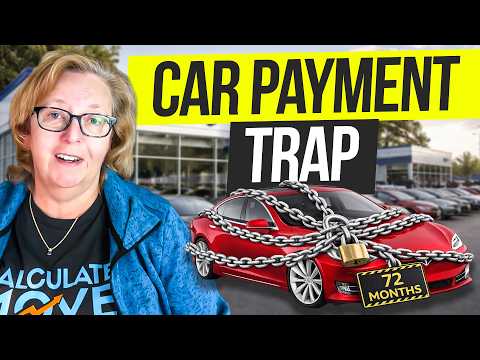
Many car buyers lose thousands by negotiating monthly payments instead of the car's total price. This article explains why focusing on the total price first, removing emotion, shopping around, and using timing and financing strategies can save you significant money when buying a car.
Walking into a car dealership and falling in love with the perfect car is an exciting moment. However, when the salesperson asks, "What monthly payment works for your budget?" you might unknowingly be setting yourself up to lose thousands of dollars. This article explains why negotiating based on monthly payments can be costly and how to take control of the car buying process to save money.
When you answer the question about what monthly payment you can afford, you shift the negotiation from the car's total price to the length and terms of your loan. For example, if you say you can afford $800 a month, the dealer might agree but add $3,000 to the car's price and extend your loan from 5 to 7 years. While your monthly payment stays at $800, you end up paying an extra $7,000 in interest and fees over the life of the loan.
The car business has trained buyers to think about monthly payments rather than the total cost, which benefits the dealer but can be devastating for the buyer.
When asked about your desired payment, respond firmly that you are not discussing payments yet and want to know the best price on the vehicle. This keeps the negotiation focused on the total cost rather than the monthly payment.
Instead of driving from dealership to dealership, decide on the exact make, model, trim, and color you want. Then call five dealerships and ask for their best "out the door" price via email or phone. Let the dealers compete for your business while you remain at home.
Avoid falling in love with the car before negotiating. Acting indifferent and treating the purchase as a business transaction preserves your negotiation power. Remember, there are many similar cars available at other dealerships.
If the dealer does not meet your price, thank them for their time and leave without argument or emotion. Walking away is a powerful negotiation tool.
Dealerships and salespeople often have monthly quotas. If you walk away near the end of the month (around the 20th to 30th), you might receive a call with a better offer as they try to meet their goals.
Although conventional wisdom suggests putting down a large down payment to lower monthly payments, it is better to put down as little as possible. Cars lose about 20% of their value as soon as you drive off the lot, so putting down a large sum means losing that money immediately. You can always make extra payments later if you want to pay off the loan faster.
Get pre-approved for a loan from your bank or credit union before visiting the dealership. This gives you leverage to negotiate better financing rates or to reject dealer financing if their rates are higher.
Suppose you want a specific SUV. You call five dealerships, and three offer prices between $34,000 and $35,000, one offers $32,000, and one does not respond. You call the $32,000 dealership and mention you have a $31,500 offer from another dealer and ask if they can match it. If they cannot, you say you will think about it and walk away.
If it is near the end of the month, the dealer might call you back with a better offer, say $31,200, to close the deal. By being patient and willing to walk away, you save $2,800.
When you return to the dealership, you already know the price, have your financing ready, and are not emotionally attached. You can decline extras like extended warranties, gap insurance, and paint protection, sign the papers, and drive home with a great deal.
Many buyers walk in without a plan, fall in love with the first car they see, negotiate monthly payments, refuse to leave without the car, put down all their cash, and finance through the dealership at whatever rate is offered. This often leads to being upside down on the loan within a few years.
Your car is likely one of the most expensive purchases you will make besides your home. Treat it as a major financial decision. Do your research, negotiate the price first, be willing to walk away, and use timing and financing strategies to your advantage. The difference between doing this right and wrong can be tens of thousands of dollars over the life of your loan.
Stop negotiating monthly payments and start negotiating the total price. Your future self will thank you.



















