
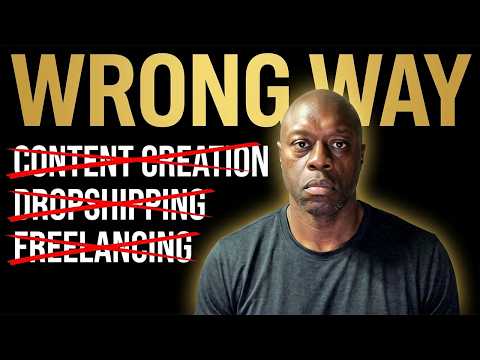
Starting an online business with zero dollars is possible in 2026, but success depends on how quickly you can turn your time into money and avoid relying on platform payouts. This article ranks nine online business ideas from slowest to fastest income generation, emphasizing practical approaches like selling simple guides, freelancing, tutoring, and coaching, with detailed insights on each.
Many people have tried to start an online business for at least six months without making significant progress. The main reason is that most videos and guides make online businesses sound exciting but often overlook what actually works in practice. When starting with zero dollars, excitement is the wrong filter to choose your business by. Instead, the key factor is how fast the hours you invest turn into real money.
This article ranks nine online businesses you can legitimately start with zero dollars in 2026, based on how quickly you can earn your first dollar and how sustainable the income is without depending on platforms paying you.
The ranking is based on three honest rules:
Platforms like Facebook, TikTok, or YouTube can provide traffic but not guaranteed income. If a business breaks any of these rules, it drops in the ranking. For example, dropshipping is not near the top because it often requires upfront investment or depends on platforms.
Content creation includes earning through AdSense, brand deals, TikTok creativity funds, user-generated content (UGC), and platform payouts. While millions succeed, the first real dollar usually takes months or even years to arrive. Typically, it takes at least 3 to 4 months for most people.
The income depends on platforms like Meta, TikTok, or YouTube deciding to pay you. If they don't, it's not your fault but the reality of platform dependency. If you already have a growing channel, keep going, but content creation should not be your day one or only plan. It should be part of a bigger strategy.
Reselling involves selling textbooks, used software, hardware, retail arbitrage, or flipping items found locally (e.g., couches on Facebook Marketplace). Real margins exist, but so do shipping, storage, and returns.
Starting with zero dollars only works if you already have inventory lying around. The hours you put in do not compound; you trade time for money with each sale. This is a slow way to start and not the most scalable.
This is the first business on the list where things get interesting. Selling a simple template or guide means picking one person with one problem and offering one solution.
For example, helping men in their 40s get back into the gym in 45 days with a 14-day back-to-gym guide sold as a PDF for $17. You don't need to film videos, hire anyone, build a website, or create a brand initially.
You can build the product over a weekend and start selling it on Monday through content, Etsy, or other platforms. The first dollar can show up quickly, often within a weekend.
Everyone has something worth packaging based on their experience, whether from work, parenting, injury recovery, or fixing problems in life.
Real freelancing is offering a named service to a named audience, not just listing gigs on Fiverr and hoping for clients.
Example: Editing podcast episodes for health coaches with 5,000 to 20,000 downloads per episode, charging $300 per episode.
It costs zero to start, and the first dollar usually arrives in 2 to 4 weeks if you can cold pitch via emails, DMs, or calls. However, you still trade hours for dollars, so income stops when you stop working.
Freelancing is effective but limited until you package your service into a product, which leads to number 7.
Pick one subject, one age group, and one hourly rate. For example, teaching SAT math to 11th graders at $60 an hour for four students a week.
Costs zero to start, and the first dollar can come within a week if you know the subject well. Like freelancing, you trade time for money.
Most tutors don't turn their sessions into guides. If you write down your knowledge into a $19 guide, you move back to number 7, creating a scalable product.
Platforms like Etsy, Redbubble, Printify, and Shopify allow you to sell custom designs on mugs, shirts, and more.
Zero dollars to start only applies if you do your own design and marketing. Paying for designs or ads means it's no longer zero cost.
Print on demand is not passive income. Successful sellers treat it like building a brand, testing markets, and investing time and effort.
Managing a Discord, school community, or Circle community for creators or coaches who lack time.
Pay ranges from $1,500 to $3,000 per month per client. Zero dollars to start, and the first dollar comes after landing your first client, usually after two weeks of outreach.
Once experienced, you can sell a playbook on community management, turning this into a product and moving back to number 7.
This is number 7 scaled up. Instead of selling one guide for $17, you sell a starter guide, a bundle for $47, and a full mini-course for $97.
You target the same person with the same problem but offer more comprehensive solutions. The first dollar timeline is similar to number 7, but the lifetime value is higher as customers buy multiple products.
This creates a value ladder, increasing revenue and deepening customer relationships.
Start with one-on-one coaching at $200 per session to validate the problem and learn if people will pay.
Then move to group coaching at $97 per month per person. Ten clients equal $970 per month with the same effort as two one-on-one sessions.
Alternatively, run a paid community with 100 members at $49 per month, generating $4,900 monthly.
Costs zero to start using platforms like Facebook or Circle (which offers free trials). The first dollar can come in 1-2 weeks if you have a following or network.
This has the best effort-to-income ratio but is the hardest to start cold. Beginners should start at number 7 and grow into number 1.
All nine businesses are variations of the same core move: find a problem you know how to solve and package it for someone willing to pay $9 to $20.
Number 7 is the cleanest version of this move, and the top three are just bigger versions.
If you're unsure which problem to solve or product type fits your niche, consider practical bundles or guides that help you decide your one person, one problem, and one first solution.
Starting an online business with zero dollars in 2026 is achievable by focusing on practical, scalable models that turn your time into money quickly. Avoid relying solely on platform payouts and instead build products or services that solve specific problems for specific audiences. Begin with simple guides or templates, then grow into coaching or community management for higher income potential.
Which number will you start with?



















