
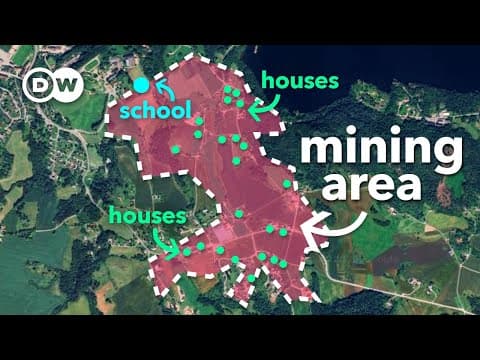
The Fen mine in Ulefoss, Norway, holds Europe's largest deposit of rare earth elements, crucial for technology and defense. As the EU seeks to reduce reliance on China for these materials, the mine's innovative 'invisible' mining approach aims to minimize surface disruption while addressing community concerns. With strong local support and strategic importance, the Fen project could significantly impact Europe's rare earth supply chain by 2035.
In the small town of Ulefoss, Norway, lies a significant opportunity for Europe: the largest deposit of rare earth elements on the continent. These elements are essential for various technologies, including electric vehicles (EVs), smartphones, and defense systems. As the European Union (EU) grapples with its dependence on China for these critical materials, the Fen mine could play a pivotal role in securing a stable supply.
Rare earth elements, a group of 17 metals, are vital for modern technology. They are used in everything from mobile phones to missile defense systems. Despite their name, these elements are relatively common but are most efficiently extracted from areas with high concentrations. Currently, the EU relies heavily on imports from China, with some rare earths sourced entirely from there. This dependency has raised concerns about supply security, prompting the EU to seek internal sources of these materials.
Located about a two-hour drive from Oslo, Ulefoss has a rich mining history dating back to the 1600s. However, the last mining operation ceased in the 1960s, leaving the community without a mine. Tor Espen Simonsen, the community liaison for Rare Earths Norway, emphasizes the urgency of tapping into the Fen deposit, which is believed to contain approximately 9 million tonnes of rare earth oxides. While this is less than the largest deposits in China and the USA, it surpasses any known deposit in Europe.
The Fen deposit is situated within volcanic limestone rocks, which are known to contain rare earth elements. The company is currently extracting core samples to better understand the deposit's composition and quality. Initial findings indicate a concentration of 2-3% rare earth elements, which is considered favorable for extraction.
To access the rare earth elements without disrupting the town above, Rare Earths Norway plans to implement an innovative mining technique dubbed the 'invisible mine.' This approach involves drilling a long, narrow tunnel from a distance of 4 kilometers into the deposit, allowing for the extraction of large sections of ore while minimizing surface impact. The extracted material will be processed on-site, with waste material being returned underground to fill the voids left behind, thereby preventing subsidence issues that have plagued other mining operations.
Despite concerns about potential disruptions, many residents of Ulefoss are optimistic about the return of mining to their town. A 2023 survey revealed that 80% of locals support the project, with many viewing it as a revival of their community's historical significance. The local school has even partnered with Rare Earths Norway to involve students in the mining operations, fostering a sense of excitement about the future.
However, some residents remain apprehensive about the environmental impact, particularly regarding noise and the management of tailings. The company has assured the community that measures will be taken to ensure the safe storage of waste materials, including the use of membranes to prevent contamination of nearby lakes.
The Fen project aligns with the EU's Critical Raw Materials Act, which aims to reduce reliance on external sources for critical materials by setting production targets for 2030. Although Norway is not an EU member, its close ties and strong trading relationships position it as a key ally in this endeavor. The state secretary of the Norwegian ministry responsible for mining, Tomas Norvoll, highlights the urgency of developing internal supply chains to avoid vulnerabilities similar to those experienced with energy supplies from Russia.
If all goes according to plan, Rare Earths Norway aims to commence operations by 2035, with the goal of meeting 30% of the EU's rare earth demand by 2050. While the Fen deposit is the largest known in Europe, other potential sources, such as Greenland, are also being explored. However, access to these resources remains challenging due to geopolitical factors.
The Fen mine represents a significant opportunity for both Ulefoss and Europe as a whole. By leveraging innovative mining techniques and fostering community support, Rare Earths Norway hopes to establish a sustainable and secure supply of rare earth elements. As the EU continues to navigate its dependence on external sources, the success of the Fen project could have far-reaching implications for the continent's technological and economic future.
As the community of Ulefoss looks toward a new chapter in its mining history, the question remains: how will the balance between resource extraction and community well-being be managed?



















