
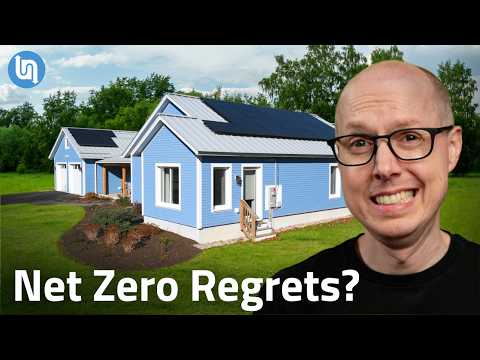
After a year of using solar panels and a home battery, the author shares insights on energy production, costs, and the overall effectiveness of their net-zero energy home, revealing both successes and challenges in achieving energy independence.
It has been a full year since I installed solar panels and a large home battery in my new house. The promise of solar power saving thousands on energy bills intrigued me, but the reality was a rollercoaster ride filled with challenges and surprises. In this post, I will share my experiences, the performance of my solar system, and whether the investment was worth it.
In my journey towards energy independence, I installed 43 REC Alpha 400 watt panels, creating a 17.2 kW system. Most panels face south, while a few are positioned to capture late afternoon and evening sun. This setup is estimated to produce nearly 18,000 kWh per year. To complement the solar panels, I added 20 kWh of Enphase IQ 5P batteries, which are sufficient for essential needs during emergencies but not enough for full 24-hour use.
The total cost of the solar panels and batteries was significant, amounting to $88,791. I will delve into the financial aspects later, but it’s important to note that the decision to go solar should be based on individual circumstances and long-term goals.
In the first 12 months, my solar system produced 18.1 MWh, aligning with the estimates provided by my installer. My home consumed around 15.8 MWh, allowing us to comfortably achieve our net-zero energy goal. I was particularly surprised by the performance during winter months, especially in November and February, which exceeded expectations.
To understand the overall performance, it’s crucial to consider how the solar system interacted with other energy-consuming systems in my home, such as the geothermal heating and hot water production systems. The geothermal system, which cost $78,000, utilized around 2,260 kWh over the year, translating to approximately $700.69 annually without solar. The heat pump water heater consumed about 818 kWh, costing around $253.68 per year.
The financial implications of installing solar panels and a battery system are complex. I took advantage of a 30% federal tax credit and a $1,000 Massachusetts credit for solar and battery installations, reducing the effective cost to $61,153. Additionally, I enrolled in my utility’s Connected Solutions program, which compensates me for using my battery to stabilize the grid during peak loads. This could yield around $9,407 over five years, further lowering my effective costs.
Without solar, my annual electricity costs would have been approximately $4,875.71. With the solar system, I anticipate breaking even in about nine years, with potential savings of around $196,030.64 over 30 years.
The cost per kWh of my solar energy is projected to decrease over time. By year 30, the cost could drop to $0.09 per kWh, while utility rates may rise to $0.76 per kWh. This stark contrast highlights the long-term savings potential of solar energy.
Despite the successes, there are challenges to consider. For instance, I still incur a $10 monthly minimum charge for grid connection. Additionally, while Massachusetts offers a 1-to-1 net metering credit for energy sent to the grid, this credit diminishes once I exceed my monthly energy use, which complicates the financial benefits of going solar.
After comparing my home’s energy costs and usage to a standard-efficiency home, it is clear that the investment in solar, geothermal, and energy-efficient systems has paid off. My home, which achieved a HERS rating of 32, costs about $4,875.71 to run annually, significantly less than comparable homes.
In conclusion, my wife and I believe that the investment in solar panels, batteries, and energy-efficient systems was worth it. We have achieved our goals of saving money, reducing dependence on the grid, and enhancing our comfort in our forever home. However, it’s essential to recognize that each situation is unique, and potential solar adopters should conduct thorough research and consider their specific circumstances before making a decision.



















