
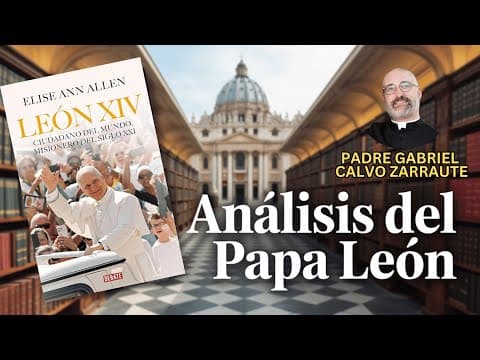
In this blog post, we explore the insights from P. Zarraute regarding Pope León XIV, who has been described as a progressive of low intensity. The discussion revolves around León XIV's recent interview book, his theological background, and the implications of his papacy in the context of the Catholic Church's current challenges.
Pope León XIV has recently published an interview book titled "León XIV, ciudadano del mundo, misionero del siglo XXI," which has sparked discussions about his progressive stance within the Catholic Church. This book, published by Debate in Barcelona, features an interview conducted by journalist Elis Anen. In this blog post, we will delve into the key points raised by P. Zarraute regarding León XIV's perspectives, his theological background, and the implications of his papacy.
To fully grasp the insights shared by León XIV in the interview, it is essential to consider his biography. The philosopher Ortega y Gasset famously stated, "I am I and my circumstance," emphasizing that while circumstances do not determine us, they significantly influence our thoughts and actions. This notion applies to León XIV, whose life experiences shape his views and decisions as Pope.
The interview book has been reviewed by León XIV himself, ensuring that the content reflects his thoughts and beliefs. However, Zarraute warns that the book is somewhat biased due to the journalist's selection of questions. This has led to mixed reactions among faithful Catholics, some of whom feel that León XIV represents a continuation of Pope Francis, albeit with a more polished demeanor.
Zarraute expresses skepticism about journalists who label themselves as "vaticanistas," suggesting that many lack a deep understanding of the complexities involved in Vatican affairs. He argues that such superficial knowledge can lead to misinterpretations of the Pope's messages.
Despite the criticisms, Zarraute acknowledges that León XIV is a man of faith, possessing a deep understanding of Catholic doctrine. He believes that León XIV is not an heretic but rather a well-educated individual who genuinely believes in God and the teachings of Jesus Christ. Zarraute emphasizes that León XIV's religious upbringing and education have equipped him to navigate the complexities of his role as Pope.
Zarraute describes León XIV as a disciplined and pious man, capable of living under a rule and working collaboratively with others. His ability to manage relationships and foster community is highlighted as a significant strength. Unlike some of his predecessors, León XIV is not characterized by tyranny or narcissism, which Zarraute sees as a refreshing change.
Zarraute argues that León XIV embodies a unique blend of qualities from previous popes, including aspects of John Paul II, Benedict XVI, and Francis. However, he cautions against oversimplifying León XIV's position as merely a "Francisco 2.0." Instead, he suggests that León XIV is a progressive of low intensity, capable of consensus-building in a time of high stress within the Church.
The discussion also touches on the tension between tradition and progress within the Church. Zarraute notes that León XIV has not supported liberation theology or its more diluted forms, which have been associated with Pope Francis. This distinction is crucial in understanding León XIV's approach to contemporary issues facing the Church.
Zarraute emphasizes the need for a strong adherence to traditional Catholic doctrine, especially in light of the challenges posed by modernity. He argues that León XIV's background in canon law and his understanding of Church law are vital for restoring order and clarity within the Church's teachings.
One of Zarraute's significant critiques is the trend of popes publishing interview books. He believes that this format can blur the lines between personal opinions and official Church doctrine, leading to confusion among the faithful. He argues that popes should refrain from expressing personal opinions publicly, as this can mislead the laity regarding the Church's teachings.
In conclusion, P. Zarraute's analysis of Pope León XIV presents a nuanced view of a leader navigating the complexities of modern Catholicism. While León XIV may be seen as a progressive of low intensity, his commitment to tradition and doctrine remains a cornerstone of his papacy. As the Church faces unprecedented challenges, León XIV's leadership style may offer a path forward that balances progress with fidelity to Catholic teachings. Zarraute encourages readers to engage with León XIV's messages critically, recognizing the complexities of his role in a rapidly changing world.



















