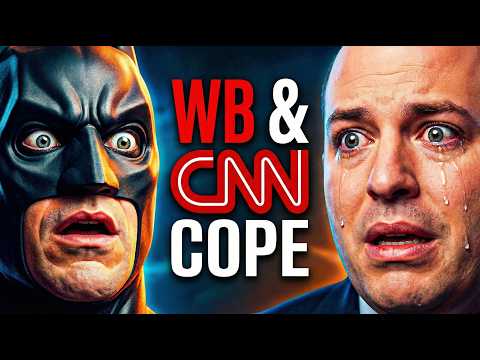
Paramount's successful bid to acquire Warner Bros after Netflix withdrew has caused significant unrest among Warner Bros and CNN employees, concerns from movie theater chains, and regulatory challenges. The deal raises fears of layoffs, reduced theatrical releases, and changes to CNN's operations, amid broader industry contraction and political tensions.
The recent announcement that Paramount has successfully acquired Warner Bros, following Netflix's decision not to submit a competing offer, has sent shockwaves through the entertainment industry. This development has led to widespread concern among Warner Bros and CNN employees, apprehension from movie theater chains, and regulatory scrutiny from government officials.
Netflix's withdrawal from the bidding process was a pivotal moment. Investors responded positively, with Netflix's stock price rising significantly as the company avoided taking on the substantial debt associated with acquiring Warner Bros. This move was seen as a financial safeguard for Netflix, but it left Paramount as the sole bidder, setting the stage for the acquisition.
David Zaslav, CEO of Warner Bros Discovery, held a town hall meeting to address employee concerns. The mood was tense and somber, with many staffers expressing disappointment and fear about the future. Employees were particularly anxious about the implications for CNN, given Paramount's ownership and political affiliations.
The town hall was described as brief and somewhat tentative, with leadership attempting to reassure staff by highlighting the financial benefits of the deal and the company's turnaround efforts. However, many employees perceived these remarks as tone-deaf, especially in light of recent layoffs and the uncertain future ahead.
Mergers of this scale typically lead to redundancies, and this acquisition is no exception. Paramount's significant debt load raises concerns about potential cost-cutting measures, including layoffs. Employees fear that many positions, especially within CNN, may be eliminated or consolidated, as maintaining multiple news outlets under one corporate umbrella is often unsustainable.
The acquisition has also unsettled movie theater chains. There is anxiety that the deal will lead to a contraction in theatrical offerings, a trend already underway due to industry strikes, the rise of streaming, and changing consumer habits.
Movie theaters like AMC have reported declining attendance and are implementing new membership programs to secure premium seating for frequent patrons. However, ticket prices remain high, which may further deter casual moviegoers.
Industry insiders acknowledge that the market is shrinking and that releasing a large volume of films, many of which do not perform well financially, is unsustainable. There is a growing emphasis on quality over quantity, with studios focusing on fewer, more impactful releases.
The acquisition faces regulatory hurdles, with the California Attorney General and movie theater lobbyists actively seeking to block the deal. Concerns about antitrust issues and market consolidation are central to these efforts.
Political figures like Senator Elizabeth Warren have criticized the deal as an "antitrust disaster," warning that a handful of billionaires aligned with former President Trump are attempting to control what audiences watch and at what price.
CNN employees are particularly distressed, fearing that the network may be rolled into CBS or sold off, as maintaining multiple news outlets is often not viable post-merger. There is apprehension about losing the network's editorial voice and facing increased scrutiny or restructuring under new management.
Critics argue that CNN has long been a partisan outlet, and the acquisition could lead to a shift toward more centrist reporting or even the network's closure. This uncertainty contributes to the overall anxiety among staff.
The entertainment industry is undergoing significant transformation, with mergers, technological advancements like AI, and changing consumer preferences reshaping the landscape. The Paramount-Warner Bros deal exemplifies these shifts and highlights the challenges faced by traditional media companies.
Employees and stakeholders must navigate a complex environment marked by financial pressures, political dynamics, and evolving audience behaviors.
Paramount's acquisition of Warner Bros marks a significant turning point in the entertainment industry, eliciting a range of reactions from employees, industry players, and regulators. While the deal promises financial benefits for shareholders, it also brings uncertainty and potential upheaval for workers and the broader market.
As the situation develops, stakeholders will be watching closely to see how the merger impacts content production, theatrical releases, news media, and the overall health of the industry.
The coming months will be critical in determining the long-term effects of this high-profile acquisition.
What are your thoughts on Paramount's acquisition of Warner Bros and its implications for the industry? Share your views and stay tuned for further updates.