
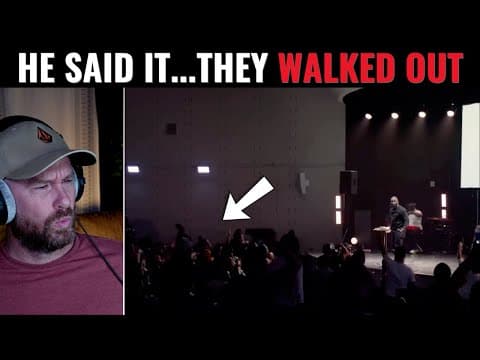
Pastor Philip Anthony Mitchell's recent sermon at 2819 Church in Atlanta has ignited a heated debate, as he boldly denounces practices he deems demonic, leading to walkouts from the congregation. His call for biblical literacy and genuine faith challenges the audience to reflect on their spiritual practices and beliefs.
In a recent sermon at 2819 Church in Atlanta, Pastor Philip Anthony Mitchell delivered a powerful message that has stirred significant reactions among his congregation. Known for his unfiltered approach to preaching, Mitchell's sermon led to a split response, with some members of the audience walking out while others applauded his words. This incident raises important questions about faith, spirituality, and the practices that some may consider acceptable.
Pastor Mitchell's sermon was marked by a passionate denunciation of various spiritual practices that he labeled as demonic. He referenced biblical scripture to support his claims, stating, "Satan ain't stronger than God," and emphasized the importance of understanding the origins of evil as depicted in the Bible. He cited Revelation, explaining how Satan was cast out of heaven and took a third of the angels with him, who are now the demons that influence people today.
Mitchell argued that many people unknowingly engage with demonic forces through practices such as tarot card reading, astrology, and the use of crystals. He warned that these practices are not benign but rather tools used by demons to lead individuals away from a true relationship with Jesus Christ. He stated, "Your little tarot cards, your little sage, your little crystals, your little readings—all that stuff is demonic."
One of the central themes of Mitchell's sermon was the need for individuals to read and understand the Bible for themselves. He criticized the congregation for relying solely on sermons without engaging with scripture directly. He urged them to seek knowledge and truth, saying, "Too many sermons, not enough literacy."
Mitchell referenced 1 Corinthians 10:21, emphasizing that one cannot partake in both the Lord's table and the table of demons. He challenged the audience to reflect on their spiritual practices and to eliminate anything that does not align with biblical teachings.
As Mitchell continued to preach, the tension in the room escalated. Some members of the congregation began to walk out, unable to accept his bold assertions. However, many others responded with applause, indicating their agreement with his message. This division highlights the varying perspectives within the church community regarding spiritual practices and the interpretation of scripture.
Mitchell's sermon also touched on the concept of true Christianity versus cultural Christianity. He pointed out that the term "Christian" is often misused and that true followers of Christ should be identified by their fruits—evidence of grace and transformation in their lives. He stated, "We’re checking for fruit. We’re looking for evidence of your Christianity."
He emphasized that genuine faith should lead to a life reflective of the teachings of Jesus, characterized by love, joy, kindness, and peace. He warned against the dangers of hypocrisy and the importance of repentance for any sin that may hinder one's relationship with God.
In closing, Pastor Mitchell referenced Deuteronomy 18:10-12, which warns against practices such as divination and sorcery. He urged those who may have engaged in such activities to seek forgiveness and to turn away from these practices. He expressed a deep concern for the spiritual well-being of his congregation, stating, "If you have any of those things in your house, get rid of them in Jesus' name."
Pastor Philip Anthony Mitchell's sermon has sparked a significant conversation about the intersection of faith and modern spiritual practices. His bold stance against what he perceives as demonic influences challenges individuals to examine their beliefs and practices critically. As the church navigates these complex issues, the call for biblical literacy and genuine faith remains more relevant than ever.
Let us reflect on the importance of understanding scripture and the implications of our spiritual choices in our daily lives.



















