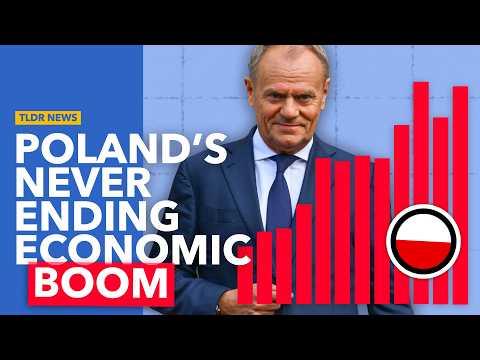
Poland has experienced remarkable economic growth since the fall of Communism, with GDP per capita increasing over tenfold. Key factors include EU funding, access to the single market, and a diversified economy. However, challenges such as inflation, labor shortages, and weak external demand pose risks to sustaining this growth.
Poland's economic rise over the last 30 years has been nothing short of remarkable. Following the fall of Communism in the early 1990s, Poland's GDP per capita has increased more than tenfold, outpacing its EU neighbors. In fact, in the second quarter of this year, Poland recorded the EU's fastest GDP growth and is projected to have the third highest GDP growth in the EU by 2025. This blog post explores Poland's impressive economic growth, the factors behind it, and whether this momentum can be sustained.
Poland's economic transformation comes after a tumultuous history. Positioned between Russia and Western Europe, Poland has faced numerous invasions and suffered immensely during World War II, losing more citizens than any other future EU country in the Allied Forces. After the collapse of the Communist regime in 1990, Poland's GDP per capita was a mere $1,700, significantly lower than its Western European counterparts, which ranged from $19,000 to $20,000.
Since the early 1990s, Poland's economy has steadily grown. By the early 2000s, GDP per capita reached approximately $5,000. After joining the EU in 2004, this growth accelerated, reaching $14,000 by 2008, just before the financial crisis. Today, Poland's GDP per capita stands at about $22,000, making it one of the fastest-growing economies in the EU.
Several factors have contributed to Poland's impressive economic growth:
EU Cohesion Funds: Poland has been the largest recipient of EU cohesion funds, receiving a total of €213 billion since joining the EU. This funding has been wisely invested in infrastructure and agriculture, laying a strong foundation for economic development.
Access to the EU Single Market: Membership in the EU single market has allowed for the free flow of capital, goods, services, and people. Poland's strategic location between Western Europe and Russia, combined with a large population and solid consumer base, has positioned it as a trading hub. Currently, intra-EU trade accounts for 74% of Poland's exports and 67% of its imports.
Diversified Economy: Poland's economy is not solely reliant on agriculture and manufacturing; emerging industries are also playing a significant role. The automotive industry employs around 200,000 people, making it the fourth largest industrial employer in the country. Additionally, Poland's ICT sector has become a leading destination for research and development projects in Central and Eastern Europe. The government is also focusing on expanding its defense industry, planning to raise defense spending to 4% of GDP.
Poland's diversified economy has proven resilient to crises and external shocks. For instance, during the pandemic in 2020, Poland's GDP contracted by only 3.5%, significantly less than the OECD average of 5.5%. The country also experienced a quicker recovery, with GDP growth surpassing 3% in the following months.
Despite Poland's economic strengths, there are reasons for caution:
Inflation: Poland has experienced soaring wage growth driven by high inflation rates, exacerbated by the pandemic and the war in Ukraine. In the second quarter of this year, the average wage grew by 14.7% year-on-year, the largest increase in two decades. However, this could lead to a wage-price spiral, where higher wages fuel further inflation. Inflation reached a staggering 18.4% last year and continues to linger above the national bank's target range of 1.5% to 3.5%.
Labor Shortages: Poland's employment rate stands at 2.9%, the second lowest in the EU. While low unemployment is generally positive, it may indicate significant labor shortages, particularly in sectors like transportation and construction. Estimates suggest that by 2035, Poland could lose around 2.1 million workers due to a declining and aging population.
Weak External Demand: Poland's export industry faces challenges due to weak economic conditions in the Eurozone, which accounts for 75% of Polish exports. Germany, Poland's largest trading partner, is particularly struggling, reducing demand for Polish exports. As a result, Poland has been running a current account deficit since July, with projections indicating a negative contribution from the export sector in 2024.
Poland's economic miracle has been fueled by strategic investments, EU membership, and a diversified economy. However, to maintain this growth, the Polish government must address inflation and labor market challenges. Increasing the migrant quota could be a potential solution, but the current government's hardline stance on migration complicates this approach. As Poland navigates these challenges, its economic future remains a topic of keen interest and scrutiny.