
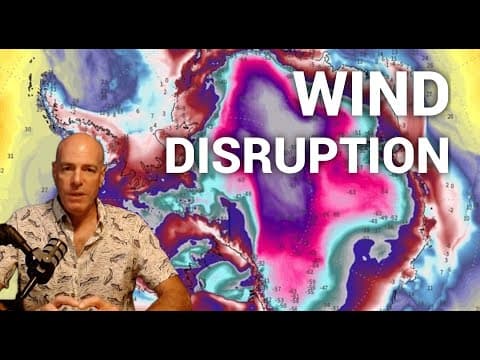
Recent stratospheric warming events over Antarctica have led to unprecedented cold temperatures in South America, closing borders and causing significant weather anomalies. This blog explores the implications of these changes, including wind reversals and their potential impact on global weather patterns and agriculture.
In recent weeks, the southern ocean has experienced a series of anomalies that have raised concerns among meteorologists and climate scientists. A significant stratospheric warming event over Antarctica has resulted in record cold temperatures affecting regions in Chile and Argentina, leading to border closures due to extreme weather conditions. This blog post delves into the details of these events, their implications, and the broader context of changing weather patterns.
On July 4th, weather models predicted that the world might witness the coldest temperature ever recorded. By July 12th, forecasts indicated temperatures plunging to unprecedented lows. The models showed a formation of extreme cold, with temperatures reaching as low as 109 degrees Fahrenheit below zero. This phenomenon was not just a fluke; it was part of a larger pattern of stratospheric warming that displaced cold air across the continent.
As the polar wave swept across the region, Argentina was forced to close its border crossings due to the extreme cold. The area around Angul recorded the coldest temperatures since records began in 1941, with measurements surpassing previous extremes. This cold wave was particularly notable as it affected mountainous regions that typically experience cooler winters.
Simultaneously, there have been significant changes in wind patterns across the southern hemisphere. Measurements indicated that easterly and westerly winds along the equator were reversing, leading to unprecedented wind speeds. This anomaly is linked to the quasi-biennial oscillation (QBO), which influences tropical cyclones and weather patterns globally.
The QBO is a significant atmospheric phenomenon that affects wind patterns at higher altitudes. Recent data shows that the wind speed differential has reached levels not previously observed, indicating a potential shift in global weather dynamics. This change could lead to cooler daytime temperatures in regions like Indonesia and central Africa, impacting agriculture and local economies.
The disruptions in wind patterns and the resulting weather anomalies could have far-reaching consequences for agriculture, particularly in regions dependent on stable weather conditions. Traders and agricultural stakeholders are closely monitoring these changes, as they could significantly affect crop yields and food supply chains.
Looking back at the economic data from South America, there has been a notable increase in prosperity over the past 43 years. However, the current weather disruptions raise questions about the sustainability of this growth. If agricultural production is adversely affected, it could lead to economic downturns and increased food insecurity.
The recent polar wind disruptions and record cold temperatures in the southern hemisphere highlight the complex interplay between atmospheric phenomena and global weather patterns. As we continue to observe these changes, it is crucial to understand their implications for agriculture, economies, and the environment. The ongoing dialogue about these anomalies is essential, as it may provide insights into future weather patterns and their potential impacts on civilization.
In summary, the combination of stratospheric warming, record cold, and wind anomalies presents a unique challenge that requires attention and action from both scientists and policymakers. As we navigate these changes, it is vital to remain informed and prepared for the potential consequences that lie ahead.



















