
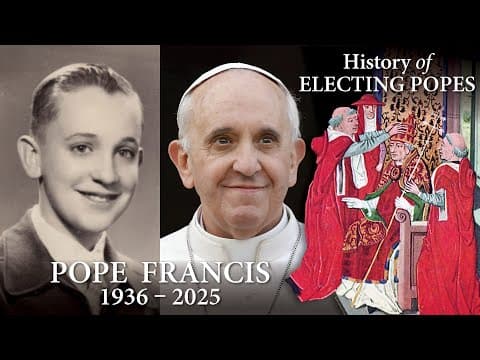
Pope Francis, the first South American pontiff, passed away after 12 years of progressive leadership. This article explores his life, the history of papal elections, and the ceremonies surrounding the death and election of popes, highlighting significant changes over the centuries.
Pope Francis has died after 12 years on the papal throne. This article takes a look at the remarkable life of the first South American pontiff in history, the ceremonies surrounding the deaths, elections, and accessions of popes, and what will be happening behind the walls of the Vatican in the coming days and weeks.
Jorge Mario Bergoglio was born on December 17, 1936, in Buenos Aires, Argentina. His grandparents immigrated from northern Italy to escape the fascist regime of Benito Mussolini. Jorge was the eldest of five children born to accountant Mario Jose Bergoglio and homemaker Regina Maria Civori. Raised in the lower middle-class neighborhood of Flores, he was no stranger to poverty.
Jorge studied chemistry at secondary school while working as a bouncer and janitor. During his youth, Argentina was in the midst of political turmoil, with populist leader Juan Perón being reelected in 1952. After graduating, Jorge worked as a food scientist but felt a calling to the priesthood after a transformative experience in confession at the age of 19. Despite initial doubts, a serious illness at 21 solidified his decision to join the seminary.
In 1960, Jorge joined the Society of Jesus, also known as the Jesuit order, which was founded in 1540. The Jesuits are known for their commitment to education and social justice. Jorge received a master's degree in philosophy and taught literature and psychology at several high schools. He was ordained as a priest in 1969.
During the 1970s, Argentina faced violent political upheaval known as the Dirty War, where thousands were killed or disappeared. Although Jorge did not openly oppose the dictatorship, he was later scrutinized for his involvement. However, he reportedly helped people escape the regime.
In 1980, he became rector of the philosophical and theological faculty at his alma mater and later served as Archbishop of Buenos Aires in 1997. Known as the "slum bishop," he was deeply committed to social justice, often taking public transportation to visit the poor and washing the feet of inmates during Holy Thursday.
In 2001, Jorge was named a cardinal by Pope John Paul II. He participated in the conclave following John Paul II's death in 2005 but made an emotional plea for Cardinal Joseph Ratzinger, who became Pope Benedict XVI. In 2013, after Benedict's unprecedented resignation, Jorge Mario Bergoglio was elected pope, becoming the first Jesuit, the first from the Americas, and the first non-European pope since Gregory III.
Choosing the name Francis after St. Francis of Assisi, he signaled a shift in the papacy. He opted for a simple white cassock instead of the traditional red and gold attire, emphasizing humility and reform.
Pope Francis immediately set out to reform the Vatican, canceling bonuses traditionally paid to employees and redirecting the funds to charity. He chose to live in a Vatican guest house rather than the luxurious papal apartments and made significant strides in addressing social issues, including climate change, immigration, and LGBTQ rights.
His papacy was marked by a focus on social justice, and he took a permissive stance on divorce, made women full members of the Roman Curia, and condemned the death penalty, abortion, and euthanasia. He also faced criticism for his initial leniency towards priests accused of sexual abuse but later took decisive action against those involved in cover-ups.
Pope Francis passed away on April 21, 2025, at the age of 88. Following his death, a series of ceremonial procedures were initiated. A doctor and a ceremonial Vatican official confirmed his passing, and the papal office was declared vacant. His body was embalmed and laid in state in St. Peter's Basilica for public viewing.
When a pope dies, the gold signet ring and seal are broken, and the papal apartment is sealed. Nine days of mourning follow, culminating in a funeral attended by church leaders and dignitaries. Pope Francis chose a simpler ceremony, opting for an open wooden coffin and being buried in Santa Maria Maggiore Basilica, rather than the Vatican.
The election of a new pope occurs during a conclave, a meeting of cardinals. The structure of this secret election has remained largely unchanged since established by Gregory X in 1274. Cardinals under the age of 80 are eligible to vote, and a two-thirds majority is required for election.
During the conclave, cardinals are sequestered in the Sistine Chapel, casting secret ballots. The ballots are burned after each round, with black smoke indicating no decision and white smoke signaling the election of a new pope. This tradition dates back to the early 1800s.
Historically, papal elections were contentious, often lasting weeks or even years. Today, the process is more streamlined, though speculation about potential candidates continues. Favorites for the next papacy include cardinals from various countries, but the outcome remains uncertain until the smoke rises from the Sistine Chapel.
The papacy is the second oldest surviving monarchy in the world, with St. Peter considered the first pope. Over the centuries, the papacy has endured through significant historical events, including the fall of the Western Roman Empire and the establishment of the Papal States.
The tradition of papal tiaras and coronations evolved over time, with modern popes opting for simpler ceremonies. Pope Francis furthered this trend by declining to wear a tiara during his inauguration.
As the world awaits the election of a new pope, the legacy of Pope Francis and the history of the papacy continue to shape the future of the Catholic Church. The next pope will inherit a complex legacy and face the challenges of leading a global faith in a rapidly changing world.



















