
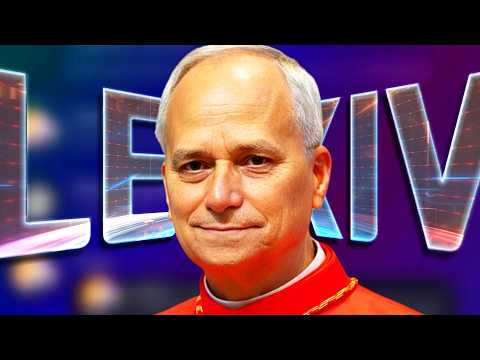
Pope Leo XIV, the first American Pope, has a rich background in the Augustinian order and a strong focus on church unity and administration. His positions on key issues reflect a continuity with Pope Francis, emphasizing traditional Catholic teachings while navigating contemporary challenges.
In a historic moment for the Roman Catholic Church, Cardinal Robert Francis Prevost was elected as the first American Pope, taking the name Leo XIV. This blog post delves into the background of Pope Leo XIV, his career, and the ideological positions he has taken throughout his decades-long service.
Pope Leo XIV was born on September 14, 1955, in Chicago, Illinois, to a Spanish mother and a father of French and Italian descent. At the age of 22, he entered the Augustinian order, taking solemn vows in 1981. His academic journey began at Villanova University, the only Augustinian college in America, where he studied mathematics. He later pursued a Master of Divinity at the Catholic Theological Union in Chicago.
Following his theological studies, Leo moved to Rome to attend the Pontifical College of St. Thomas Aquinas, known as the Angelicum. Here, he earned a licentiate and doctorate in canon law, focusing his doctoral thesis on "The Office and Authority of the Local Prior in the Order of St. Augustine."
In 1985, Leo was sent to Peru to serve as a missionary priest. His work during this period involved significant roles in both Peru and the United States, where he taught canon law in seminaries and held various diocesan positions, including judicial vicar. Leo emphasized his missionary vocation, stating in a 2023 interview with Vatican News, "I still consider myself a missionary; my vocation, like that of every Christian, is to be a missionary to proclaim the gospel wherever one is."
In 2001, Leo's rise within the church hierarchy began when he was elected as the Prior General of the Augustinian order, a position he held for 12 years. His administrative skills became evident during this time. In 2015, he was appointed by Pope Francis as a bishop in Peru, where he served in various roles within the Peruvian Bishop's Conference until 2023.
One of Leo's significant contributions was his involvement in authenticating a Eucharistic miracle from the 17th century. A Spanish source noted that he undertook the project to seek formal recognition from the Vatican for an ancient Eucharistic miracle that occurred in northern Peru in 1649. He announced a crusade in September 2021 to build the first Eucharistic shrine in Peru in honor of this miracle.
In January 2023, Leo was appointed by Pope Francis as the Prefect of the Dicastery for Bishops, one of the most powerful positions in the church, responsible for selecting bishops worldwide. His reputation as a discreet and effective administrator was quickly established, with colleagues praising his judicious questions and ability to synthesize complex issues.
Pope Leo XIV's ideological positions have been shaped by his extensive experience and the teachings of the Catholic Church. He is known for being non-confrontational, yet he has taken clear stances on several key issues:
On the topic of female ordination, Leo has expressed opposition, stating that it would not resolve existing problems and could create new ones. He emphasized the clarity of apostolic tradition regarding this issue in a press conference.
Leo has voiced concerns about Western culture's promotion of beliefs and practices that contradict the gospel, specifically referencing the homosexual lifestyle and alternative family structures. He has also spoken against the inclusion of gender ideology in schools and supported African bishops in their stance against same-sex blessings.
In a high-profile case of child sex abuse in Peru, Leo opposed calls for capital punishment or chemical castration, aligning with Pope Francis's position on the death penalty.
Throughout his career, Leo has emphasized the importance of church unity and dialogue. In a 2023 interview, he stated, "The bishop is called to this charism to live the spirit of communion to promote unity in the church... without Peter, where is the church?" His focus on unity reflects a desire for all to be one, as Jesus prayed at the Last Supper.
Overall, Pope Leo XIV is seen as a continuity figure with Pope Francis, reflecting a similar style and emphasis but with a stronger background in administration and canon law. His election marks a significant moment in the history of the Catholic Church, and as he embarks on this new role, many are encouraged to pray for his leadership and guidance.



















