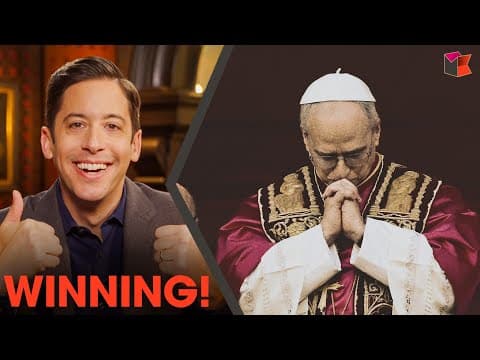
Pope Leo XIV's early actions suggest a departure from his predecessor's approach, emphasizing traditional Catholic values and addressing contemporary issues like artificial intelligence and social justice. His pontificate may signal a hopeful direction for the Church amidst political and social challenges.
In recent days, the world has been introduced to Pope Leo XIV, and the early signs of his papacy are more promising than many had anticipated. This article explores the implications of his actions and statements, particularly in the context of contemporary challenges facing the Catholic Church and society at large.
Pope Leo XIV has already made headlines with his traditional approach, which contrasts sharply with that of his predecessor, Pope Francis. On just the second or third day of his pontificate, he appeared on the balcony of St. Peter's Basilica and sang the Regina Caeli, a traditional Latin chant that honors the Virgin Mary. This act is significant not only for its liturgical importance but also as a symbol of a return to traditional Catholic practices.
Unlike Pope Francis, who opted for a more modest lifestyle by living in apartments, Pope Leo XIV has chosen to reside in the papal palace, donning the traditional papal garments, including the Mozetta. These choices reflect a commitment to the rich traditions of the Church, which many believe had been sidelined in recent years.
While some critics have labeled Pope Leo XIV as a liberal or a leftist, his early actions suggest a nuanced approach that may not align neatly with such labels. He has expressed admiration for Pope Francis, indicating a desire for continuity in certain areas, yet his emphasis on traditional Catholic teachings and practices suggests a potential shift in focus.
Pope Leo XIV's choice of name is also telling. He has stated that he chose the name in honor of Pope Leo XIII, who was known for addressing social issues during the first industrial revolution. This connection is particularly relevant today as the Church faces new challenges posed by technological advancements, including artificial intelligence. Pope Leo XIV aims to respond to these modern issues while upholding the dignity of human life and justice.
Despite the challenges facing the Church and society, there is a sense of hope surrounding Pope Leo XIV's papacy. His commitment to traditional values, combined with a willingness to engage with contemporary issues, may signal a new direction for the Catholic Church. As he navigates the complexities of modernity, many are optimistic that his leadership will foster a renewed sense of purpose and clarity within the Church.
Interestingly, there is a broader trend of young people returning to religious practices, particularly among young men. Reports indicate that Gen Z men are more likely to attend weekly religious services than previous generations. This resurgence is not merely a reaction to loneliness but a quest for truth and meaning in a world that often feels chaotic and disjointed.
Young people are gravitating towards more traditional forms of worship and teachings, seeking the stability and guidance that these practices offer. This trend aligns with Pope Leo XIV's emphasis on traditional Catholic teachings, suggesting that his papacy may resonate with a generation eager for authenticity and depth in their spiritual lives.
As Pope Leo XIV embarks on his papacy, the early signs indicate a potential for transformative leadership that honors the Church's traditions while addressing the pressing issues of our time. His actions and choices reflect a commitment to the core values of Catholicism, and there is hope that his pontificate will inspire a renewed faith among believers, particularly the youth. In a world rife with uncertainty, the Church may find a guiding light in the leadership of Pope Leo XIV.