
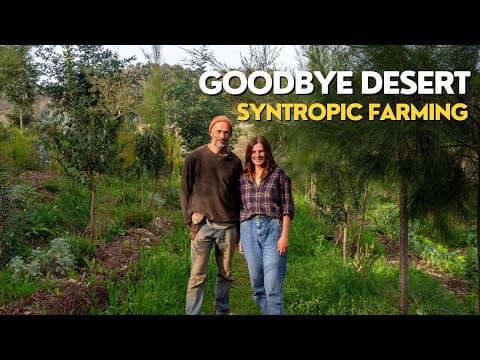
As Portugal faces increasing desertification, innovative farming methods are being employed to regenerate the land. This blog explores the techniques used to improve soil health, manage water resources, and cultivate diverse crops, showcasing the potential for sustainable agriculture in arid regions.
Portugal is experiencing a significant environmental challenge as desertification threatens its agricultural landscape. However, innovative farming methods are emerging as potential solutions to combat this crisis. This blog post delves into the techniques being utilized to regenerate the land, improve soil health, and manage water resources effectively.
One of the key insights from the farming practices in Portugal is the understanding that the country does not face a water problem but rather a water management problem. Effective water management is crucial for sustaining agriculture in arid regions. Farmers are adopting strategies that focus on utilizing existing water sources efficiently, ensuring that water is not wasted but rather replenished in the ecosystem.
Farmers have developed unique irrigation techniques that differ from conventional practices. For instance, instead of waiting for rain to irrigate, they irrigate just before expected rainfall. This approach ensures that the soil is adequately soaked, allowing for better water retention and deeper root growth in plants. By irrigating for longer periods, such as three and a half hours every ten days, farmers encourage trees to develop deeper roots, which enhances their resilience to drought conditions.
Permaculture principles are at the heart of the regenerative farming practices being implemented in Portugal. The focus is on creating a self-sustaining ecosystem that nurtures the soil and promotes biodiversity.
A notable technique is the no-dig approach, which involves minimal disturbance of the soil. This method helps maintain soil structure and health, allowing for the natural processes of soil regeneration to occur. Farmers have observed that trees can penetrate compacted soil layers without the need for digging, leading to healthier and more robust plants.
Another critical aspect of these farming practices is the recycling of biomass. Instead of relying on external compost, farmers return organic matter from trees back to the soil. This practice enriches the soil, keeping it fertile and alive, which is essential for sustainable agriculture.
The diversity of crops being cultivated is a testament to the effectiveness of these regenerative practices. Farmers are successfully growing a variety of vegetables, including broccoli, cauliflower, and salads, alongside fruit trees such as apples and pears. The grafting of different varieties onto robust rootstocks has resulted in impressive growth, with some trees reaching over three meters in height within just one year.
Farmers emphasize the importance of learning from failures in their agricultural practices. For instance, an initial attempt to grow corn did not succeed, but the subsequent planting of artichokes proved fruitful. This adaptability and willingness to experiment are crucial for long-term success in regenerative farming.
A significant aspect of the farming methods being employed is the establishment of feedback systems that enhance water management. For example, wells are strategically placed in valleys to capture and store water, which is then used to irrigate tree lines. This system not only supports the trees but also helps replenish the aquifer, ensuring a sustainable water supply for future use.
The innovative practices have led to remarkable improvements in local water sources. A river that was once salty has transformed into a sweet water source, thanks to the careful management of water and the nurturing of tree lines. This regeneration of the aquifer is vital for the overall health of the ecosystem.
As Portugal grapples with the challenges of desertification, the innovative farming techniques being implemented offer hope for regeneration and sustainability. By focusing on effective water management, soil health, and biodiversity, farmers are not only combating desertification but also creating a model for sustainable agriculture that can inspire others facing similar challenges. The journey towards regeneration is ongoing, and with continued experimentation and adaptation, the potential for revitalizing the land remains strong.



















