
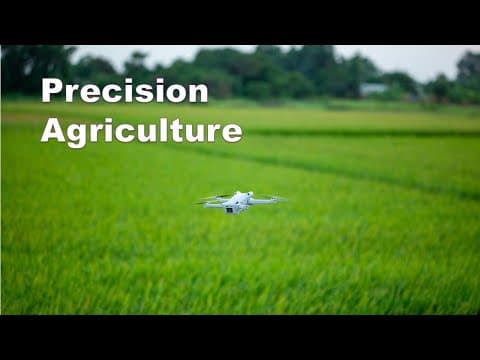
Precision agriculture is revolutionizing the farming industry by utilizing advanced technologies to optimize crop yields, reduce waste, and promote environmental sustainability. This blog explores the tools, benefits, and challenges of precision farming, highlighting its role in addressing global food security and climate change.
In recent years, the agriculture industry has undergone a significant transformation, driven by advancements in technology, data analytics, and a focus on sustainability. This revolution is known as precision agriculture.
Precision agriculture, or precision farming, is a modern farming practice that utilizes technology to monitor and manage variations within fields. Unlike traditional methods that treat entire fields as uniform, precision agriculture focuses on optimizing production by considering the unique needs of specific areas. The primary goals are to increase crop yields, reduce waste, and promote environmental sustainability.
Precision agriculture leverages a suite of advanced technologies to achieve its goals. Here are some of the most important tools driving this shift:
Global Positioning System (GPS) and Geographic Information Systems (GIS) are at the core of precision agriculture. GPS enables farmers to accurately map their fields, while GIS helps analyze spatial data related to soil properties, moisture levels, and crop health. This information allows farmers to make data-driven decisions about where to plant, fertilize, and irrigate.
Remote sensing through satellites and drones provides real-time data on crop conditions. Drones equipped with multispectral cameras can detect subtle changes in plant health, pinpointing areas that may require extra care. By identifying problems early, farmers can take proactive steps to manage crop health before issues spread.
IoT sensors have become essential in modern farms, tracking everything from soil moisture and temperature to nutrient levels. By continuously collecting this data, farmers can optimize water and fertilizer use, saving resources and enhancing plant growth.
While the data collected is valuable, it must be properly analyzed to be useful. This is where big data and artificial intelligence (AI) come into play. Using machine learning algorithms, AI can analyze large datasets to identify patterns and make predictions, guiding farmers on the best practices for planting, watering, and harvesting.
Precision agriculture offers numerous benefits that make it impactful:
By optimizing input use—from fertilizers to water—precision agriculture creates the ideal environment for crops to thrive. Targeting resources only where they are needed allows farmers to reduce costs while ensuring that each plant receives what it requires to grow healthily.
Excessive use of water, fertilizers, and pesticides contributes to pollution and soil degradation. Precision agriculture minimizes environmental impact by using only what is necessary, reducing runoff, and promoting soil health, ultimately fostering a more sustainable ecosystem.
Precision agriculture is not limited to a single type of crop or farming method. It is versatile and adaptable, with applications in various crops and agricultural practices. For instance, in row crops like corn and wheat, precision techniques can manage irrigation, pest control, and fertilization. In vineyards, precision agriculture helps monitor vine health and grape quality, producing a higher quality product with minimal resource use.
Despite its many benefits, precision agriculture faces several challenges:
Implementing these technologies can be expensive, requiring significant investment in equipment and training. Farmers in remote or under-resourced areas may struggle with access to necessary tools and reliable data connectivity.
As farms become more reliant on digital platforms, data privacy and cybersecurity concerns have emerged. Protecting sensitive information is crucial as the industry evolves.
The future of precision agriculture looks promising, with advances in robotics, AI, and sensor technology continuing to push the boundaries of what is possible. Farms of the future could be fully automated, featuring self-driving tractors, AI-driven pest management, and real-time data collection feeding directly into predictive models.
As precision agriculture evolves, it promises not only to improve food production efficiency but also to play a key role in addressing global challenges such as food security and climate change.
Precision agriculture represents the intersection of science, technology, and nature. It is a powerful tool for meeting the growing demands of our world while respecting the environment that sustains us. By leveraging data and technology, farmers around the globe are not only feeding the world but also preserving it for future generations.
Thank you for joining us on this journey into the world of precision agriculture. If you found this information insightful, consider sharing it with others interested in the future of farming and technology.



















