
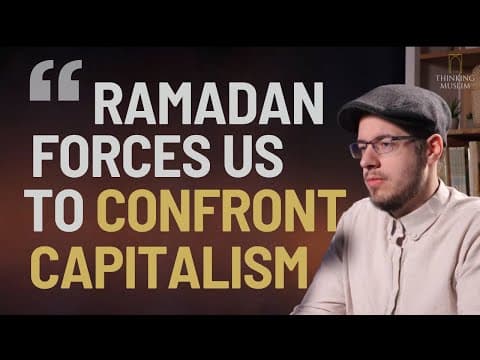
Ramadan serves as a profound critique of capitalism, challenging the scarcity mindset and promoting a collective approach to wealth and morality. Imam Tom Facchine discusses how the practices of Ramadan, such as fasting and zakat, encourage Muslims to confront their relationship with wealth, community, and the divine, ultimately advocating for a more equitable and spiritually fulfilling society.
Ramadan is often viewed as a time for personal reflection and spiritual growth within the Islamic faith. However, Imam Tom Facchine argues that it also serves as a radical critique of capitalism. This blog post explores how Ramadan challenges the capitalist mindset, promotes community values, and encourages a deeper understanding of wealth and morality.
Ramadan is a month where Muslims abstain from food and drink during daylight hours, focusing on worship, good deeds, and charity. This period is not just about personal devotion but also about confronting societal structures and the inequalities perpetuated by capitalism.
Imam Facchine highlights the call of irhan, which he describes as a call to be more than just consumers. In a world that often prioritizes material wealth and individual success, Ramadan encourages believers to seek closeness to Allah and to recognize that true sustenance comes from the Creator.
One of the key themes discussed is the scarcity mindset prevalent in capitalist societies. Ramadan challenges this notion by emphasizing that believers should trust in Allah's provision. Imam Facchine argues that many Muslims act as if they do not believe in divine provision, leading to a life driven by fear of scarcity rather than faith in abundance.
Zakat, or almsgiving, is another critical aspect of Ramadan that serves as a form of wealth redistribution. It is not merely an individual act of worship but a societal obligation that helps to alleviate inequality. By redistributing wealth, zakat fosters community solidarity and counters the tendency for wealth to accumulate in the hands of a few.
Imam Facchine critiques the way success is often measured in capitalist societies, primarily through GDP and material wealth. He argues that these metrics do not account for true happiness, piety, or community well-being. Instead, Ramadan teaches that success should be evaluated based on moral and spiritual criteria rather than material accumulation.
Ramadan emphasizes the importance of community and interdependence. In contrast to the individualism promoted by capitalism, Ramadan encourages believers to support one another, fostering a sense of collective responsibility. This communal approach is essential for creating a more equitable society.
Imam Facchine discusses how capitalism promotes individualism, often at the expense of family and community ties. He argues that this mindset leads to a disconnection from one’s responsibilities to others. Ramadan serves as a reminder of the importance of family and collective well-being, urging Muslims to prioritize communal values over individual gain.
The obsession with wealth and luxury, exemplified by places like Dubai, is critiqued as being contrary to the spirit of Ramadan. Imam Facchine points out that the pursuit of material success often leads to moral compromises and a disconnection from spiritual values. Ramadan encourages believers to reflect on their priorities and the true meaning of success.
Fasting during Ramadan teaches humility and patience. It forces individuals to confront their dependence on Allah and recognize their vulnerabilities. This spiritual practice helps to temper arrogance and greed, fostering a sense of gratitude and awareness of one’s blessings.
While Islam does not prohibit the accumulation of wealth, it emphasizes the importance of intention and purpose behind that wealth. Imam Facchine explains that wealth should be used to serve Allah and the community, rather than for personal validation or comfort. This balance is crucial for maintaining a righteous relationship with wealth.
Ramadan serves as a radical reset for individuals and society, challenging the capitalist mindset and promoting a more equitable and spiritually fulfilling way of life. By emphasizing community, wealth redistribution, and a deeper understanding of morality, Ramadan encourages Muslims to confront the societal structures that perpetuate inequality and to strive for a more just world. Imam Tom Facchine’s insights remind us that the true essence of Ramadan lies in its ability to transform not just individual hearts, but entire communities.



















