
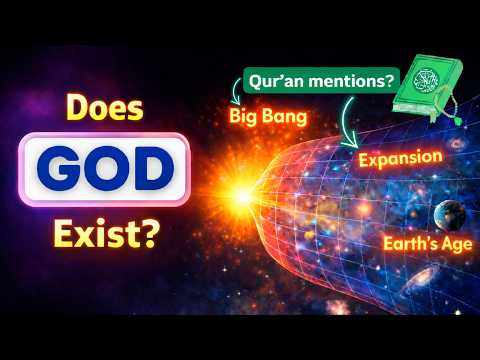
This blog post explores the rational arguments for the existence of God as presented in the Qur'an, focusing on its scientific prophecies, intricate patterns, and unmatched eloquence, suggesting that such a text could not have been authored by a human being.
The existence of God is a profound claim often met with skepticism, primarily due to the lack of objective proof presented in discussions. Unlike the straightforward evidence for physical entities like Pluto, proving God's existence requires a different approach. This blog post aims to explore the rational arguments for God's existence as articulated in the Qur'an, using deductive reasoning, logical analysis, and the identification of inconsistencies in human explanations.
The central argument presented is that the Qur'an is not the work of any human being. If this claim holds true, it implies a divine origin, thus affirming the existence of God. To substantiate this assertion, we will examine three key aspects:
One of the most compelling verses in the Qur'an states: "Do not the unbelievers see that the heavens and the Earth were joined together as one unit of creation before We clothed them asunder?" This aligns closely with the scientific understanding of the Big Bang, suggesting that all matter was once a single entity before expanding into the universe we know today.
If we consider that the Qur'an was revealed in the 7th century, it is astonishing that it accurately predicted the Big Bang and the expansion of the universe—concepts that were only scientifically validated in the 20th century. The improbability of a person in a desert environment predicting such groundbreaking truths raises questions about the authorship of the Qur'an.
Another significant verse mentions that Allah created the Earth in six days. The Arabic word for "day" (aam) does not necessarily refer to our 24-hour days. In the Qur'an, a heavenly day can equate to a thousand years of our time. This suggests that the six days of creation could represent vast eons of time, which aligns with modern scientific estimates of the universe's age (approximately 13.7 billion years) and the Earth's age (around 4.5 billion years).
The Qur'an also states, "And We sent down iron with great might for benefit to humanity." This assertion is remarkable because iron is not native to Earth; it is believed to have originated from supernova explosions. The Qur'an's claim that iron was sent down rather than found on Earth defies the common understanding of the 7th century and aligns with modern scientific discoveries.
The Qur'an provides insights into human anatomy that were unknown at the time of its revelation. For instance, it was long believed that the frontal part of the brain handled vision. However, modern neuroscience has revealed that the part responsible for vision is located at the back of the brain. The Qur'an states, "A lying sinful for loock," which implies a deeper understanding of the brain's functions that could not have been known 1,400 years ago.
The Qur'an exhibits astonishing numerical patterns that suggest a level of complexity beyond human capability. For example, the word "human" appears in the second verse of chapter 7 at the 46th letter, which corresponds to the number of chromosomes in humans. Similar patterns exist for other animals mentioned in the Qur'an, such as apes, horses, and pigs, with their respective chromosome numbers aligning with the placement of their names in the text.
Moreover, the Qur'an maintains a remarkable balance in its references. Life and death are mentioned 145 times each, as are the concepts of this life and the afterlife. The word "month" appears 12 times, matching the number of months in a year, while the word "day" appears 365 times, corresponding to the days in a year.
The Qur'an's intricate patterns, scientific insights, and prophetic statements present a compelling case for its divine origin. The consistency and precision of these elements suggest that it could not have been authored by a human being, especially given the historical context of the 7th century.
As the Qur'an states, "Do they not consider the Qur'an with care? Had it been from other than Allah, they would have surely found therein much discrepancy." The overwhelming evidence presented invites readers to reflect on the rationality of the Qur'an's claims and the existence of God.
In summary, the Qur'an stands as a text that not only conveys spiritual guidance but also aligns with scientific understanding and showcases a level of complexity that challenges human authorship. The exploration of these themes encourages a deeper consideration of the divine and the nature of existence itself.



















