
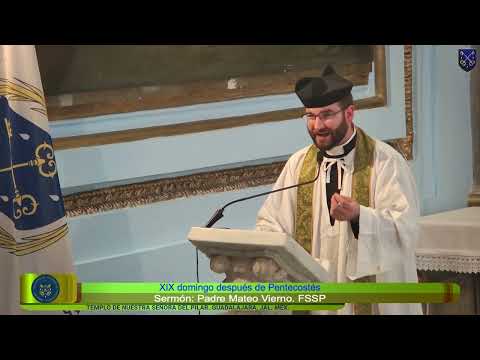
This blog post explores the homily delivered by P. Mateo Vierno, focusing on the parable of the wedding feast from the Gospel of Matthew. It emphasizes the importance of being in a state of grace, the challenges of faith in a secular world, and the call to follow the example of saints. The message encourages readers to reflect on their spiritual journey and the necessity of striving for holiness amidst societal pressures.
In a recent homily delivered by P. Mateo Vierno, the profound message of the Gospel of Matthew was explored, particularly focusing on the parable of the wedding feast. This parable serves as a powerful reminder of the importance of being in a state of grace and the challenges faced by believers in today's secular world.
The parable begins with a king who prepares a grand wedding feast for his son. He sends out invitations to the guests, but they refuse to come. Despite the king's persistence, sending more servants to urge them to attend, the invited guests dismiss the invitation, choosing instead to attend to their own affairs. In a fit of rage, the king punishes those who rejected his invitation and decides to invite anyone from the streets, both good and bad, to fill the banquet hall.
As the king enters to greet his guests, he notices one man without a wedding garment. The king questions him, and upon receiving no satisfactory answer, orders him to be cast out into the darkness. This part of the parable concludes with the sobering statement: "For many are called, but few are chosen."
P. Mateo Vierno emphasizes that these words from Jesus can evoke fear and concern. However, they are not meant to lead to despair but rather to awaken those who may be complacent in their spiritual lives. Each individual will ultimately have to account for their life before God, and it is crucial to take this reality seriously.
The homily highlights the current cultural landscape, where faith is often ridiculed, and adherence to religious principles is met with scorn. Many people feel ashamed to profess their faith publicly, which aligns with the biblical warning about the broad path leading to destruction. Vierno urges believers to resist the temptation to conform to societal norms and instead seek the examples set by the saints.
Following the example of saints may often mean swimming against the tide of popular opinion. P. Mateo Vierno encourages his listeners to embrace their faith, even in the face of ridicule. He reassures them that those who suffer for the name of Christ are recognized and honored by God. The call to holiness is not just a personal journey but a communal one, where believers support each other in striving for righteousness.
A significant part of the homily revolves around the concept of being in a state of grace. Vierno references the words of Saint Joan of Arc, who, when questioned about her state of grace, expressed a profound understanding of her relationship with God. She stated that if she was not in grace, she hoped God would place her there, and if she was, she asked for His protection.
This reflection serves as a guide for believers today. It encourages them to cultivate a sincere desire for holiness and to be vigilant in their spiritual lives. The acknowledgment of one's state of grace is not merely an intellectual exercise but a heartfelt plea for divine assistance and guidance.
In conclusion, P. Mateo Vierno's homily serves as a poignant reminder of the necessity of striving for holiness in a world that often opposes faith. The parable of the wedding feast challenges believers to reflect on their spiritual journey and to seek the grace of God earnestly. By imitating the saints and remaining steadfast in their faith, individuals can navigate the narrow path that leads to eternal life.
As the homily concludes, the message is clear: do not be swayed by the world, but rather seek the truth and grace that God offers. May all who hear this message find hope and encouragement in their pursuit of holiness, knowing that they are called to a higher purpose.



















