
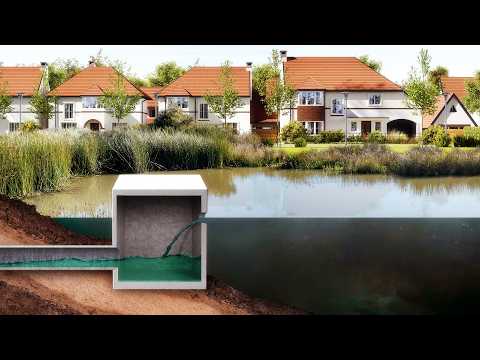
Retention ponds are a widely used urban stormwater management solution that reduce peak runoff rates, mitigate flooding, and improve water quality. By temporarily storing runoff and releasing it slowly, these ponds help maintain predevelopment flow rates despite increased impervious surfaces. Modern designs balance storage volume with land use, and evolving strategies include regional detention and water quality improvements, making retention ponds a vital tool in sustainable urban development.
In many urban areas, flooding and drainage issues have long posed challenges to communities. A prime example is the historic Fourth Ward Park in Atlanta, Georgia. This park features a five-acre pond that is not just an aesthetic centerpiece but a critical infrastructure element designed to address serious flooding problems in the neighborhood.
Urban development replaces natural ground with impervious surfaces such as roads, sidewalks, parking lots, and rooftops. Unlike natural soil, which can absorb some rainfall, impervious surfaces cause nearly all precipitation to run off. This increased runoff flows into creeks and rivers, raising water levels and increasing the frequency and severity of flooding downstream.
Before development, soil absorbs rainfall, recharging aquifers and reducing runoff. However, after development, the volume and speed of runoff increase dramatically, overwhelming natural waterways and drainage systems.
To combat flooding, most cities enforce regulations requiring developers to limit peak runoff rates to predevelopment levels. This means that even though impervious surfaces increase runoff, the flow leaving a development site during a storm must not exceed what it was before development.
Retention ponds, also known as stormwater ponds, are the most common solution to manage stormwater runoff. These ponds temporarily store runoff during storms and release it slowly through controlled outlets, reducing the peak flow rate downstream.
A practical demonstration using a model stormwater pond shows how inflow during a simulated storm peaks sharply, but the outflow from the pond is significantly lower and spread out over time. This reduction in peak discharge is crucial because the peak flow determines how high water levels rise downstream and correlates with flood damage.
While a pond with no outlet would eliminate peak discharge entirely, this is impractical due to the high cost and land area required for large storage volumes. The optimal design uses the minimum pond volume necessary to keep peak discharge below predevelopment levels, balancing cost, land use, and flood protection.
Retention ponds can also improve water quality by allowing sediments and suspended solids to settle out as water sits still. However, they do not clean water to the extent of wastewater treatment plants.
There are challenges, such as mosquito breeding in stagnant water, which limits how long water can be held. Maintenance is essential to prevent clogging of outlets and to ensure ponds function properly.
Instead of many small ponds on individual lots, regional detention involves larger, centralized ponds that serve multiple developments. This approach can improve maintenance consistency and overall effectiveness.
Some systems use advanced controls and are managed by specialized companies. Developers can buy credits in a marketplace to meet runoff requirements without building onsite ponds, allowing for flexible and efficient stormwater management.
If many ponds release water simultaneously, their delayed peaks can coincide downstream, potentially causing higher flood peaks than if no detention existed. Careful design and coordination are necessary to avoid this issue.
Retention ponds are a vital and extensively used tool in modern urban stormwater management. They effectively reduce peak runoff rates, mitigate flooding, and enhance urban spaces when integrated thoughtfully. While not without challenges, ongoing innovations in design, management, and regional planning continue to improve their performance and benefits for communities worldwide.
Understanding how these ponds work and their role in sustainable urban development highlights the importance of combining engineering solutions with environmental and community considerations to address the complex challenges of urban flooding.



















