
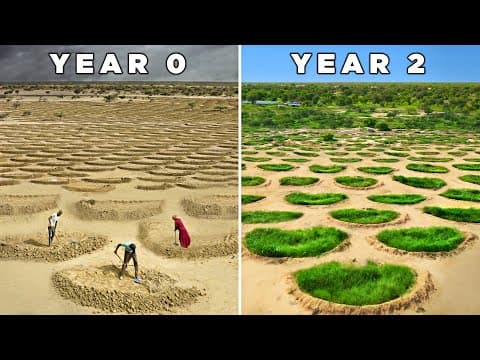
The UN World Food Program is spearheading efforts to restore degraded lands in the Sahel region of Africa through the Great Green Wall initiative, which aims to halt the southward expansion of the Sahara Desert by planting trees and implementing sustainable agricultural practices. This project not only revitalizes the land but also enhances the livelihoods of local communities, reducing migration and fostering social cohesion.
Two years ago, a barren wasteland lay untouched for 40 years in the Sahel region of Africa. The UN World Food Program (WFP) approached local villagers with a bold plan to restore this land as part of the Great Green Wall initiative. Initially met with skepticism, the project has since transformed the landscape, demonstrating the potential for regeneration in one of the world's most vulnerable ecosystems.
The Great Green Wall is an ambitious project aimed at creating a barrier of trees across the width of Africa, from Senegal to Djibouti. Its primary goal is to stop the southern expansion of the Sahara Desert, which has grown by approximately 10% over the last century. This initiative not only seeks to combat desertification but also aims to restore degraded landscapes, enhance biodiversity, and improve the livelihoods of local communities.
The journey began in Dakar, Senegal's bustling capital, before a seven-hour drive through the Sahel. As the landscape changed from larger trees in the south to smaller ones in the north, the impact of climate and human activity became evident. The Sahel, a transitional zone between the Sahara Desert and the savannah, is crucial for maintaining ecological balance.
The Sagal River serves as a natural border between Senegal and Mauritania, as well as between the Sahel and the Sahara. This river is vital for the Great Green Wall, as a vegetated river zone can act as the first line of defense against desert encroachment. The project aims to create a mosaic of forests that collectively form a protective barrier against the advancing desert.
The WFP's approach emphasizes community-based participatory planning. Initially, local residents were doubtful about the feasibility of restoring land that had been barren for decades. However, through education and engagement, the community began to see the potential for recovery.
The WFP has successfully rehabilitated over 300,000 hectares of land, with 30 hectares showcased as part of the Great Green Wall. The restoration process involves several stages:
The revitalization of the land has had profound effects on local communities. Young people, who previously migrated to urban areas or abroad in search of work, are now able to contribute to their villages. The project has fostered social cohesion, as community members work together to cultivate the land and improve their livelihoods.
Before the project, many villagers viewed migration as their only option for a better life. Now, with the introduction of sustainable agricultural practices, they are optimistic about their future. The WFP's efforts have not only restored the land but have also instilled a sense of hope and purpose within the community.
The work of the UN World Food Program in the Sahel exemplifies how targeted interventions can combat desertification and restore degraded landscapes. The Great Green Wall initiative is a testament to the power of community engagement and sustainable practices in creating resilient ecosystems. As the project continues to evolve, it holds the promise of a brighter future for the people of the Sahel, ensuring that they can thrive in harmony with their environment.



















