
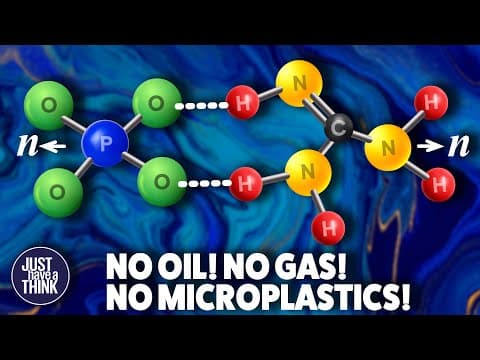
A team at Riken University has developed a new type of plastic that dissolves in seawater and degrades in soil, offering a potential solution to plastic waste without relying on fossil fuels or creating microplastics. However, the production process still has environmental costs that need to be addressed.
In November 2024, an intergovernmental negotiating committee convened in Busan, South Korea, to finalize the Global Plastics Treaty. The goal was to establish legally binding measures to combat plastic waste. However, the discussions were marred by disagreements over limiting plastic production versus focusing solely on waste management, as well as debates on balancing mandatory regulations with voluntary commitments. Ultimately, the session ended without significant progress, leaving many frustrated.
While politicians and international lawyers grapple with bureaucratic challenges, scientists and engineers worldwide are actively developing innovative solutions to the plastic crisis. One notable team at Riken University in Tokyo, Japan, claims to have created a new type of plastic that dissolves in seawater within hours, leaves no microplastics, and degrades in soil within days, enriching the ecosystem with nutrients. This raises the question: is this too good to be true?
The Global Plastics Treaty aims to address the staggering 415 million tonnes of plastic produced annually, with 91% ending up in landfills, incinerators, or oceans. The treaty's discussions revealed that major oil-producing nations opposed any limitations on plastic production, highlighting the complexities of balancing environmental concerns with economic interests.
Plastics are integral to modern civilization, providing essential benefits in communication, food safety, and medical hygiene. However, the proliferation of single-use plastics and unnecessary items contributes significantly to environmental degradation. As the world shifts towards renewable energy sources, the fossil fuel industry seeks to maintain its consumption levels, complicating efforts to reduce plastic production.
Bioplastics have been proposed as a solution, being renewable and biodegradable. However, studies indicate that replacing a significant portion of fossil plastics with bioplastics would require vast amounts of land, leading to deforestation and food supply issues. Moreover, many bioplastics do not dissolve in water, contributing to microplastic pollution in oceans.
The focus now shifts to the research conducted by Professor Takuzo Aida and his team at the Riken Centre for Emergent Matter Science. They have developed a class of materials known as supramolecular plastics, which are polymers held together by reversible bonds, distinguishing them from traditional petrochemical plastics with strong covalent bonds.
The researchers combined two ionic monomers to create cross-linked salt bridges. One monomer is sodium hexametaphosphate, derived from phosphate rocks, while the other is a guanidinium ion-based monomer, originally sourced from guano (bird droppings). This innovative combination allows for the creation of a plastic called alkyl SP2.
When exposed to seawater, the salt bridge structure of alkyl SP2 destabilizes, causing the plastic to dissolve within hours. This property limits its applications but offers significant environmental advantages:
Despite its advantages, the production of supramolecular plastics is not without environmental costs. The extraction and processing of phosphate rock require energy, with estimates suggesting that producing sodium hexametaphosphate consumes between 10 and 15 gigajoules per ton, compared to 27 gigajoules for fossil-derived polyethylene.
The production of guanidine, while efficient, is also energy-intensive. Current methods are not considered sustainable, prompting interest in alternative biological production methods using engineered microbes. However, these methods remain experimental.
The development of supramolecular plastics represents a promising step towards addressing the plastic waste crisis. However, it also highlights the complexities of finding truly sustainable solutions in a world where every human activity has an environmental impact. As we strive to reduce our reliance on harmful materials, it is crucial to consider the broader implications of our consumption patterns and seek ways to manage our planet's finite resources responsibly.
As this conversation continues, your thoughts and opinions are welcome in the comments section below. Thank you for engaging with this important topic, and remember to think critically about the materials we use every day.



















