
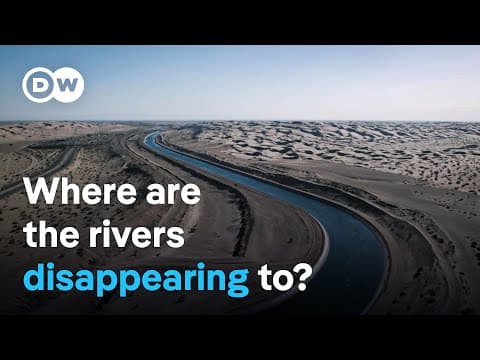
This blog post explores the alarming global water crisis affecting rivers across four continents, highlighting the causes, impacts, and potential solutions. It delves into the exploitation of water resources for agriculture, the political and environmental ramifications, and innovative approaches to sustainable water management.
Water scarcity is becoming a pressing issue worldwide, with rivers drying up and ecosystems suffering. This blog post explores the alarming global water crisis affecting rivers across four continents, highlighting the causes, impacts, and potential solutions.
Across the globe, rivers are disappearing, leaving behind dry riverbeds and stones. This documentary investigates the reasons behind this crisis, questioning why certain populations are prioritized over others in water distribution. The exploitation of water resources for agricultural purposes is a significant contributor to this crisis, raising concerns about the sustainability of our practices.
Agriculture accounts for approximately 70% of global freshwater use, making it a major player in the water crisis. In Egypt, for instance, farmers have relied on the Nile for irrigation for thousands of years. However, modern practices, such as using diesel pumps and lining canals with concrete, have led to increased water loss and rising soil salinity. The Egyptian government has attempted to address these issues, but the solutions have often resulted in negative consequences for the environment.
The Nile Delta, home to over half of Egypt's population, faces severe water shortages. Farmers like Muhammad Elkari depend on the Nile for irrigation, but declining water levels and increased salinity threaten their livelihoods. Despite these challenges, the agricultural sector continues to grow, with exports of crops like strawberries and potatoes increasing significantly. However, this growth exacerbates the water crisis, as the water used for irrigation is often unsustainable.
In the United States, the Colorado River is a critical water source for millions. However, it is facing severe depletion, with Lake Mead holding only a fraction of its capacity. Farmers in California, particularly in the Imperial Valley, rely heavily on Colorado River water for crops like alfalfa, which is used as animal feed. This agricultural dependency raises questions about the sustainability of such practices, especially as drought conditions worsen.
Animal-based foods require vast amounts of water, with estimates suggesting that producing a kilogram of beef can consume up to 15,000 liters of water. The reliance on water-intensive crops for animal feed further complicates the situation, as farmers face increasing pressure to produce more with less water. The debate over water allocation often overlooks the connection between food production and water scarcity, leading to conflicts between agricultural needs and community water access.
India is one of the countries most affected by water scarcity, with two-thirds of its rivers depending on glacial melt and rainfall. The situation is dire, particularly in arid regions like Rajasthan, where groundwater levels are plummeting. Farmers are increasingly reliant on water deliveries, and the overexploitation of resources has led to salinity issues in drinking water supplies.
Critics of industrial agriculture, like Vandana Shiva, argue that sustainable practices can provide food security without depleting water resources. By promoting organic farming and preserving native seed varieties, communities can reduce their water footprint and enhance soil health. Initiatives like seed banks and traditional farming techniques are being revived to combat the water crisis.
Innovative solutions are emerging to address the water crisis. In Spain, for example, advanced irrigation systems are being developed to optimize water use. However, increased efficiency often leads to expanded cultivation areas, which can exacerbate water consumption. The challenge lies in balancing agricultural productivity with sustainable water management.
In India, traditional water conservation methods, such as Johads (earthen ponds), are being revived to replenish groundwater levels. These simple yet effective techniques have shown promise in restoring water supplies and improving agricultural productivity. Similarly, in Egypt, farmers are exploring sustainable practices like aquaponics to maximize water efficiency.
Addressing the water crisis requires a multifaceted approach that includes policy reform, community engagement, and sustainable practices. In regions like the Colorado River basin, the historical agreements governing water distribution are becoming increasingly inadequate in the face of climate change and population growth. Engaging indigenous communities and incorporating their knowledge into water management strategies can provide valuable insights into sustainable practices.
The global water crisis is a complex issue that demands urgent attention. As rivers dry up and communities face increasing water scarcity, it is crucial to rethink our agricultural practices and water management strategies. By addressing the interconnectedness of water and food systems, we can work towards a more sustainable future for our planet. The time to act is now, as the health of our rivers and the well-being of future generations depend on it.



















