
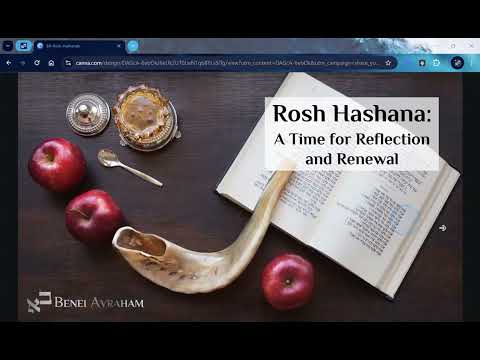
Rosh Hashana, the Jewish New Year, is a time for reflection, renewal, and spiritual introspection. This blog post explores its significance, the historical context of the Jewish calendar, and the customs associated with this important holiday, including the blowing of the shofar and the themes of repentance and God's sovereignty.
Rosh Hashana, the Jewish New Year, is a significant time for reflection and renewal within the Jewish faith. This blog post delves into the teachings from Rabbi Haim Donan's book, "To Be a Jew," and explores the historical context of the Jewish calendar, the customs associated with Rosh Hashana, and its spiritual significance.
The Jewish calendar is unique in its historical context. Ancient civilizations, including the Israelites, counted years based on significant historical events, particularly the reign of kings. For instance, the Bible often references years in relation to the reign of a king, such as in 1 Kings 6:1, which states, "In the 480th year after the Israelites came out of Egypt, in the fourth year of Solomon's reign over Israel."
This method of counting years is also reflected in the Christian calendar, which counts years from the birth of Jesus Christ. However, for Jews, the Exodus from Egypt marks the beginning of their national identity, akin to America's Independence Day.
After the destruction of the Second Temple in 70 CE, the Jewish people shifted their calendar to count years from the creation of the world. This change was significant as it reflected the dispersion of the Jewish nation and the need for a new beginning. Currently, the Jewish year is 5785, which can be calculated by adjusting the Gregorian year.
Rosh Hashana is celebrated on the first of Tishrei, the seventh month of the Jewish calendar. While the Torah designates Nissan as the first month, Rosh Hashana is recognized as the New Year for counting years, particularly in relation to the agricultural cycle and the Jubilee year.
The holiday is also known as Yom Teruah, meaning the Day of Blowing the Shofar. The shofar, a ram's horn, is blown during Rosh Hashana as a call to repentance and a reminder of the covenant between God and the Jewish people. The blowing of the shofar serves as a spiritual wake-up call, urging individuals to reflect on their actions and seek forgiveness.
Rosh Hashana is not just a celebration; it is a time for self-examination and repentance. The ten days following Rosh Hashana, culminating in Yom Kippur, are known as the Ten Days of Awe. During this period, individuals are encouraged to reflect on their lives, seek forgiveness from others, and make amends.
The spiritual significance of Rosh Hashana emphasizes God's sovereignty and the importance of acknowledging Him as the King of the universe. This theme is reinforced through prayers and blessings recited during the holiday, which highlight the need for repentance and the desire for a good and sweet year ahead.
The shofar plays a central role in Rosh Hashana observances. It is a biblical commandment to hear the sound of the shofar, which is blown in a specific sequence of notes. The shofar's blasts are meant to awaken the spirit and remind the faithful of their responsibilities to God and to one another.
Traditionally, the shofar is blown 100 times during the Rosh Hashana service, with each blast serving as a call to repentance and a reminder of the covenant at Mount Sinai. The shofar's sound is also linked to prophetic themes of resurrection and the gathering of the Jewish people back to Israel.
During Rosh Hashana, it is customary to greet others with wishes for a good and sweet year. Common greetings include:
These greetings reflect the hope for a favorable judgment in the Book of Life, a central theme during the High Holy Days.
Rosh Hashana is a profound time for reflection, renewal, and spiritual growth. It invites individuals to examine their lives, seek forgiveness, and reaffirm their commitment to God. As the Jewish New Year begins, may we all embrace the opportunity for introspection and strive for a year filled with blessings, peace, and spiritual fulfillment.



















