
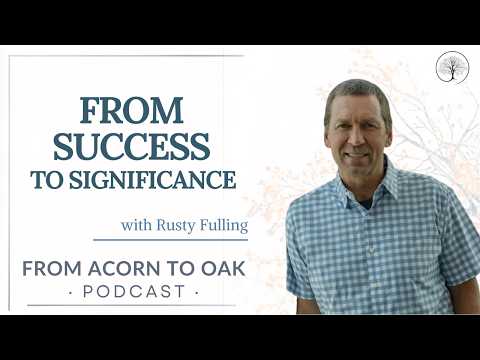
Rusty Fulling, founder and CEO of Fulling Management and Accounting, reveals key insights on overcoming growth bottlenecks, the importance of vision, building a strong company culture, client engagement strategies, and the innovative revenue share model. He also discusses integrating personal purpose with business goals and shares his mission-driven approach to leadership and impact.
Welcome to an in-depth exploration of business growth, leadership, and profit strategies with Rusty Fulling, founder and CEO of Fulling Management and Accounting. Since 2000, Rusty has been helping business owners understand their numbers, grow profits, and gain peace of mind. In this article, we delve into his journey, strategies for overcoming growth bottlenecks, building company culture, client engagement, and his unique revenue share model.
One of the biggest bottlenecks Rusty identifies for firms aiming to hit their growth goals is the lack of a clear vision. Many businesses start without a defined vision, hoping that success will come by showing up. Rusty admits that for the first ten years of his company, they lacked a clear vision, which held them back.
He emphasizes the importance of creating and sharing a vision, even if it seems ambitious or unclear at first. Bringing others into the process can help solidify and propel that vision forward. This strategic clarity is essential for momentum and growth.
Rusty's journey includes unique experiences, such as working on a pig farm in Ethiopia and participating in mission trips to Honduras, Ethiopia, and Kenya. These experiences shaped his perspective on business and leadership.
At one point, Rusty and his wife considered leaving business to pursue missions full-time. However, a trusted friend's insight—that the mission might be the business he already had—sparked a renewed vision for his company. This realization led to setting big, audacious goals and has driven the company’s growth ever since.
From a small team of two, Fulling Management and Accounting has grown to nearly 20 team members. Initially all in-person, the company transitioned to a fully virtual model during the COVID-19 pandemic.
Rusty highlights the proactive measures taken to maintain mental health and connection among remote employees, such as buddy check-ins, leadership training during staff meetings, and small group discussions. This intentional culture-building has led to employees feeling closer to their teams than ever before, despite the physical distance.
Employees have worked from various locations across the United States and even internationally, embracing the freedom and flexibility of remote work. This approach supports personal goals and work-life integration, allowing employees to balance professional responsibilities with personal life seamlessly.
In the finance and accounting industry, trust is paramount. Rusty stresses the importance of identifying an ideal client profile (ICP) to ensure alignment and sustainable growth. Early in the company’s history, they learned the hard way that taking on clients too large or misaligned with their values can be detrimental.
The ICP for Fulling Management includes leaders with high integrity who value outsourcing. Working with like-minded clients accelerates trust and fosters long-term relationships.
To attract clients within their ICP, the company focuses on deep, meaningful relationships rather than broad outreach. They engage in serving before selling, participating in business roundtable groups to listen and provide value before formal client engagements. This approach builds credibility and trust organically.
As the company grew, Rusty recognized that being the bottleneck by handling everything himself was unsustainable. To address this, they created an ideal organizational chart and elevated a team member to a Chief Operating Officer (COO) role. This allowed Rusty to focus on visionary leadership while others managed day-to-day operations.
Rusty also introduced the concept of working within one’s "zone of genius," ensuring that each team member, including leadership, focuses on their strengths and passions. The team even underwent training based on Patrick Lencioni’s "The Six Types of Working Genius" to better understand individual strengths and frustrations, enhancing team dynamics and productivity.
A standout aspect of Fulling Management’s client relationships is their revenue share model. Instead of a fixed monthly retainer, many clients opt for a model where the company receives a small monthly fee plus a percentage of the client’s revenue.
This model aligns incentives, sharing both risk and reward. Clients have even voluntarily increased the percentage paid, recognizing the value provided. This approach fosters a partnership mentality rather than a traditional vendor-client relationship.
Rusty advises finance leaders to view their businesses as assets, not merely income streams. While many service businesses are seen as hard to sell, he argues that with developed clients, processes, and revenue streams, these businesses can be valuable assets.
He encourages leaders to understand their business’s current value and implement value accelerators to grow that asset over time. This mindset prepares business owners for eventual transitions, whether planned or unexpected.
Rusty’s personal mission work deeply influences his business philosophy. His company incorporates serving opportunities and tracks "raving fan shoutouts"—client compliments and positive feedback—as part of their culture and goals.
He shares his personal purpose statement centered on five words: encourage, guide, equip, serve, and listen. Aligning personal purpose with business activities creates meaningful impact beyond financial success.
Rusty acknowledges that motivation can be fleeting. He recommends focusing on purpose and small achievements to maintain momentum. He also shares his practice of choosing a "word of the year" to guide personal and professional focus; for example, his current word is "mission," emphasizing missional impact in daily work.
Rusty recommends two books that have influenced his leadership and life philosophy:
Rusty Fulling’s insights offer valuable lessons for finance leaders and business owners aiming to grow profitably and meaningfully. From the critical importance of vision and culture to innovative client engagement and revenue models, his approach blends business acumen with personal purpose and impact.
For those interested in learning more, Rusty can be found on LinkedIn, at fullingmt.com, and his personal blog rustyfulling.com, where he shares ongoing business and life lessons.
This comprehensive overview captures Rusty Fulling’s journey and strategies, providing actionable advice for firms looking to scale with integrity, vision, and a focus on lasting impact.



















