
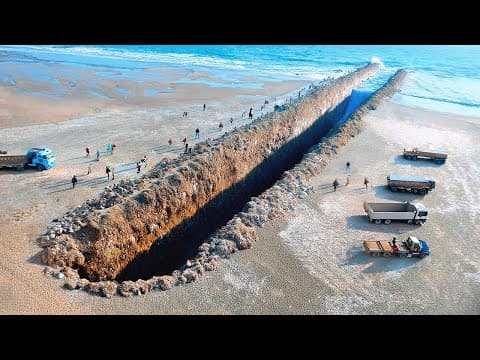
Saudi Arabia is tackling its severe water shortage by constructing an underground river that transports desalinated water from the Red Sea across the desert. This innovative project aims to alleviate reliance on dwindling groundwater sources and support the country's ambitious greening initiatives.
Saudi Arabia is renowned for its mega projects, from skyscrapers that reach nearly a mile high to the ambitious Mega City that spans the size of a small country. However, beneath these impressive constructions lies a pressing issue: the country is facing a severe water shortage crisis. As drinking water sources rapidly deplete, the need for innovative solutions has become paramount.
Despite its vast desert landscape, Saudi Arabia has no natural rivers. Instead, the country has built 522 dams to manage seasonal water flows, with a total storage capacity of 607 billion gallons. For instance, the Holly Dam near Mecca holds nearly 66 billion gallons of water, making it the second-largest dam in the country. These dams are crucial for supplying water to agriculture and industry, but they are not enough to meet the growing demands of the population.
The primary source of water in Saudi Arabia is groundwater, with estimates suggesting that between 68 to 201 trillion gallons lie beneath the surface. However, the renewable groundwater that can be extracted is limited to about 739 billion gallons per year, while the country pumps approximately 5 trillion gallons annually. This unsustainable extraction rate raises concerns about the future availability of this vital resource.
To address the water scarcity, Saudi engineers proposed an ambitious project: an artificial underground river. This pipeline, stretching 8,700 miles, will transport desalinated water from the Red Sea to various regions across the country. This innovative solution aims to reduce the reliance on groundwater and provide a sustainable water supply.
Desalination has become a cornerstone of Saudi Arabia's water strategy. The country has invested heavily in desalination plants, increasing their number from 30 in 2011 to 43 by 2024. Currently, Saudi Arabia is the largest producer of desalinated water globally, with facilities like the Ras Al Khair plant producing nearly 792 million gallons of freshwater daily. The water from these plants will feed into the underground river, ensuring a steady supply of fresh water across the nation.
In conjunction with the underground river project, Saudi Arabia has launched a national initiative aimed at combating desertification and enhancing green spaces. The goal is to protect 30% of the land area and plant 10 billion trees, which will require significant amounts of water. The underground river will play a crucial role in supporting this initiative, helping to sustain the new greenery and improve air quality in urban areas.
One of the most ambitious urban greening projects is the Green Riyadh initiative, which aims to transform the capital city into a more attractive and livable environment. Plans include planting over 7.5 million trees and increasing green space per person significantly. The King Salman Park, built on a former airbase, will be a centerpiece of this initiative, providing recreational areas and cultural facilities.
Constructing the underground river presents numerous challenges, including navigating mountainous terrain and extreme desert conditions. The project requires a robust pipeline capable of transporting 5 billion gallons of water daily, ensuring that all regions of Saudi Arabia receive adequate water supply.
As the country continues to grow, the demand for water will only increase. The underground river and associated projects represent a significant step towards sustainable water management in Saudi Arabia, aiming to secure the future of its population and environment.
In conclusion, Saudi Arabia's innovative approach to addressing its water crisis through the construction of an underground river and extensive greening initiatives showcases the country's commitment to sustainability and resilience in the face of environmental challenges.



















