
This blog post discusses the key environmental initiatives in India as of September 2024, focusing on water conservation efforts and the newly approved Mission Mausam aimed at enhancing weather forecasting capabilities. It highlights community participation in water management, the challenges faced, and the significance of these initiatives in addressing climate change and human-animal conflicts.
In this blog post, we will explore the significant environmental initiatives in India as of September 2024. The focus will be on water conservation efforts and the newly approved Mission Mausam, which aims to enhance weather forecasting capabilities. These initiatives are crucial in addressing the challenges posed by climate change and human-animal conflicts.
One of the prominent initiatives discussed is Jal Sanchar and Jan Bhagidari, which translates to water conservation and community participation. This initiative aims to raise awareness about water conservation and promote community involvement in managing water resources effectively.
The primary goal is to create 24,800 rain harvesting structures with the help of local communities. This initiative emphasizes the importance of long-term water sustainability and aims to mobilize citizens, local bodies, and industries to participate actively in water conservation efforts.
The initiative builds on the success of previous water conservation efforts in Gujarat, where community mobilization has proven effective. The Ministry of Jal Shakti is leading this initiative, focusing on traditional Indian consciousness regarding water management, which has historically treated water as a sacred resource.
Community participation is vital for the success of water conservation efforts. Engaging local knowledge and insights allows for tailored solutions to specific regional water needs. For instance, in regions like Bundelkhand, local water committees have successfully implemented conservation practices that align with cultural traditions.
Despite the positive aspects, challenges remain, including limited access to water resource data and the dominance of technical specialists over community voices. Additionally, ceremonial involvement often overshadows genuine community engagement, leading to ineffective participation.
Another significant initiative is Mission Mausam, recently approved by the Union Cabinet with a budget of 2,000 crores. This mission aims to enhance India's weather forecasting capabilities through advanced technology and research.
Mission Mausam seeks to improve the accuracy of weather predictions by expanding the observation network, including the installation of Doppler radars and wind profilers. The initiative will also leverage artificial intelligence and machine learning to provide timely updates on weather conditions.
The mission is expected to make India more resilient to climate change by providing timely updates and services that benefit various sectors, including agriculture, disaster management, and urban planning. It aims to empower citizens and local stakeholders to tackle extreme weather events effectively.
However, the mission faces challenges, such as the complexity of tropical weather patterns and the need for improved local forecasting capabilities. The Indian Meteorological Department (IMD) currently lacks sufficient Doppler radars compared to other countries, which hampers accurate forecasting.
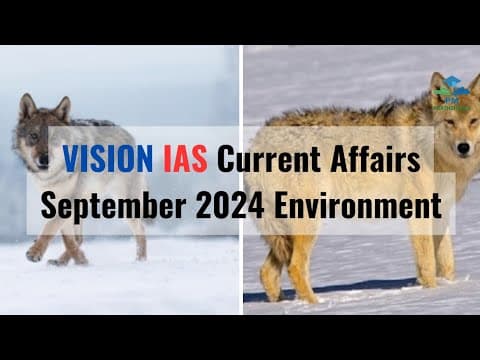
The issue of human-animal conflict has gained attention due to recent wolf attacks in Uttar Pradesh, resulting in fatalities and injuries. This highlights the growing concern over wildlife encroachment into human habitats.
Human-wildlife conflict arises from ecological changes, habitat loss due to human activities, and climate change. As wildlife populations and human settlements overlap, the risk of conflict increases, leading to negative impacts on both communities and wildlife.
In response to these challenges, the Kerala government has declared human-wildlife conflict a state-specific disaster, shifting responsibility to the State Disaster Management Authority. Initiatives such as creating protective area networks and implementing specific species guidelines are being developed to mitigate these conflicts.
The environmental initiatives discussed in this blog post reflect India's commitment to addressing pressing issues related to water conservation, climate change, and human-animal conflicts. By promoting community participation and leveraging technology, these initiatives aim to create a sustainable future for both people and wildlife. As we move forward, it is essential to continue fostering collaboration between communities, governments, and organizations to ensure the success of these initiatives.



















